

Shoulder instability affects millions of athletes annually, with throwing injuries representing a significant portion of orthopedic referrals in the South Plains. According to recent sports medicine data, over 50% of overhead athletes experience some form of shoulder pathology during their competitive careers. Understanding the specific diagnostic criteria for shoulder clicking and throwing pain is essential for accurate treatment planning. This guide outlines the clinical indicators, diagnostic tools, and specialized care pathways available at Lubbock Sports Medicine.
Understanding the Symptoms of Shoulder Clicking
Shoulder clicking, medically referred to as crepitus, is a common complaint among athletes who engage in repetitive overhead motions. While some clicking may be benign, accompanied by pain or weakness, it often signals underlying structural issues. For throwers, the shoulder undergoes extreme forces during the acceleration and deceleration phases of the throw.
Internal impingement is a condition where the rotator cuff tendons get pinched between the humeral head and the glenoid. This creates a clicking sensation and deep shoulder pain. External impingement involves the compression of tissues under the acromion. Both conditions require precise diagnosis to prevent further damage.
Patients often report a grinding or popping sound when lifting the arm. This symptom is frequently accompanied by a feeling of instability or the shoulder "slipping out." Recognizing these early signs is critical for preventing chronic injury. Early intervention by specialists like those at Lubbock Sports Medicine can significantly improve outcomes.
Key Diagnostic Criteria for Throwers
Diagnosing shoulder pain in throwers requires a systematic approach. Physicians evaluate the patient's history, physical examination findings, and imaging results. The diagnostic criteria focus on identifying the specific anatomical structures involved.
Physical Examination Findings
Clinicians use specific tests to assess shoulder stability and strength. The apprehension test checks for anterior instability. The crank test evaluates labral tears. These physical maneuvers help determine the source of the clicking and pain.
Strength testing is another critical component. Throwers often exhibit weakness in the external rotators. This weakness disrupts the dynamic stability of the shoulder joint. Assessing muscle balance helps guide rehabilitation strategies.
Pain Patterns and Triggers
The location of pain provides valuable diagnostic clues. Pain at the back of the shoulder during the follow-through phase suggests internal impingement. Anterior pain may indicate biceps tendon issues or anterior labral tears. Understanding these patterns allows for targeted treatment.
Throwers often experience pain at specific angles of motion. This angle-specific pain helps differentiate between impingement and instability. A thorough history of the injury mechanism is essential for accurate diagnosis.
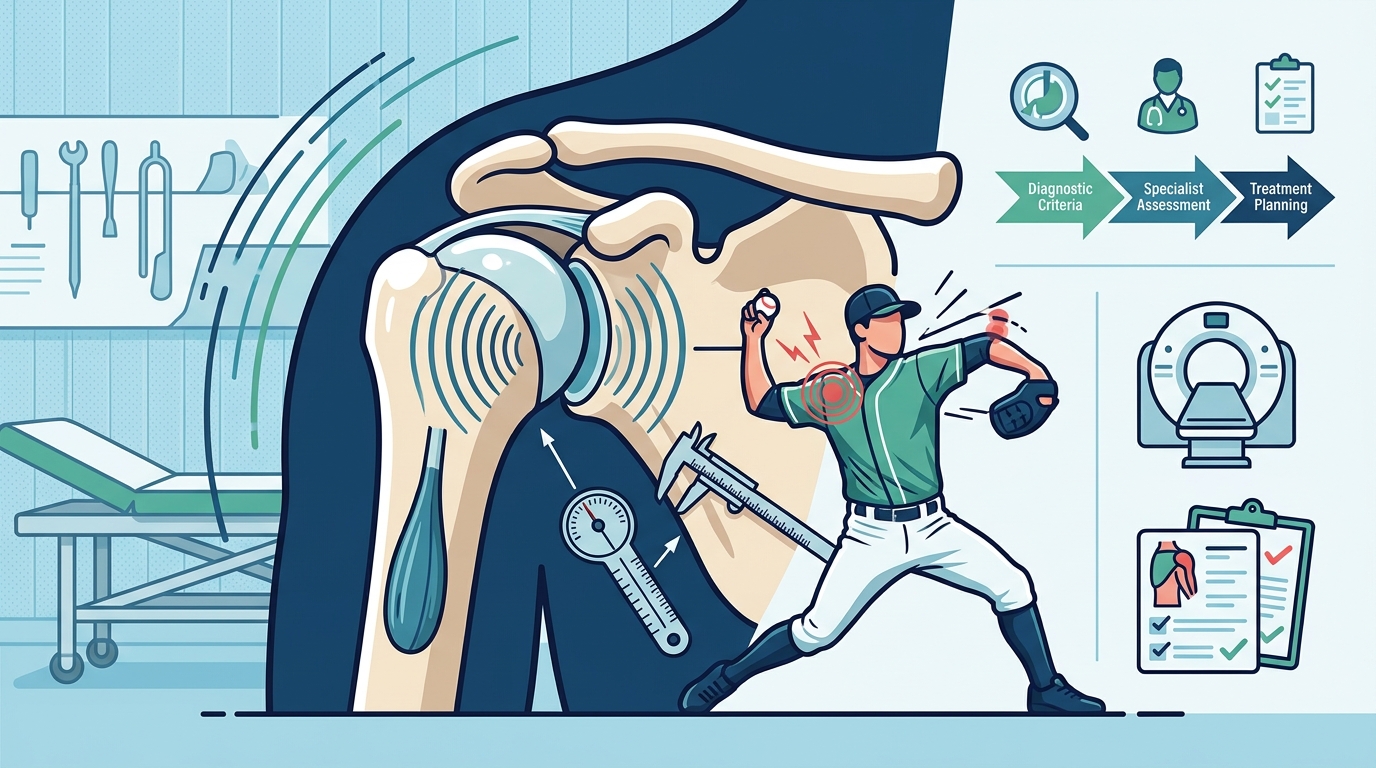
Imaging and Clinical Testing
Advanced imaging is necessary to confirm physical examination findings. Magnetic Resonance Imaging (MRI) provides detailed views of soft tissues. Arthrograms, which involve injecting dye into the joint, can reveal labral tears that standard MRIs might miss.
Ultrasound imaging is another valuable tool. It allows for dynamic assessment of the shoulder during movement. This real-time visualization helps identify tendons that subluxate or click during activity.
X-rays are used to evaluate bone structure. They can reveal bone spurs or fractures that contribute to shoulder pain. In some cases, CT scans provide 3D images of the shoulder anatomy. These images are crucial for surgical planning.
At Lubbock Sports Medicine, physicians utilize state-of-the-art diagnostic equipment to ensure accurate assessments. This technology enables precise identification of the underlying causes of shoulder clicking.
Common Pathologies in Overhead Athletes
Several specific conditions cause shoulder clicking and pain in throwers. Understanding these pathologies helps patients and providers develop effective treatment plans.
| Pathology | Primary Symptoms | Diagnostic Indicator |
|---|---|---|
| SLAP Tear | Deep pain, clicking, weakness | Positive crank test |
| Internal Impingement | Pain during follow-through | Arthroscopic confirmation |
| Rotator Cuff Tear | Weakness, night pain | MRI findings |
| Shoulder Instability | Sensation of slipping | Apprehension test |
SLAP tears are particularly common in throwers. The Superior Labrum Anterior to Posterior (SLAP) tear involves damage to the cartilage ring that surrounds the shoulder socket. This injury often results from repetitive overhead motion.
Rotator cuff injuries are also prevalent. These injuries can range from tendinitis to full-thickness tears. The severity of the tear determines the treatment approach. Conservative management is often the first line of defense.
Shoulder instability can lead to recurrent dislocations. This condition requires careful evaluation of ligament integrity. Surgical intervention may be necessary to restore stability. Our physicians specialize in treating these complex injuries.
Treatment Options and Rehabilitation
Treatment for shoulder clicking and throwing pain depends on the diagnosis. Non-surgical options include physical therapy, activity modification, and anti-inflammatory medications. Physical therapy focuses on strengthening the rotator cuff and scapular stabilizers.
At Lubbock Sports Rehab, patients receive customized rehabilitation programs. These programs address specific weaknesses and mobility deficits. The goal is to restore function and prevent recurrence.
Surgical options are considered when conservative treatment fails. Arthroscopic surgery is the preferred method for most shoulder repairs. This minimally invasive technique reduces recovery time and complications.
Robotic-assisted technology is also available for joint reconstruction. While primarily used for hips and knees, advanced robotic tools enhance precision in shoulder surgery as well. This technology allows for more accurate implant placement and tissue repair.
Return-to-play protocols are essential for throwers. Athletes must meet specific strength and mobility criteria before resuming competition. Gradual progression ensures the shoulder can withstand the demands of throwing.
Key Takeaways
- Shoulder clicking in throwers often indicates internal impingement or labral tears.
- Physical examination tests like the crank test are critical for diagnosing SLAP tears.
- Advanced imaging, including MRI and arthrograms, provides definitive diagnostic information.
- Specialized physical therapy at Lubbock Sports Rehab is essential for recovery.
- Robotic-assisted technology offers enhanced precision for complex orthopedic procedures.
- Early diagnosis prevents chronic instability and long-term joint damage.
- Gradual return-to-play protocols ensure safe resumption of athletic activities.
Frequently Asked Questions
What causes shoulder clicking in throwers?
Shoulder clicking is typically caused by structural abnormalities such as labral tears, rotator cuff tendinitis, or internal impingement. Repetitive overhead motion exacerbates these conditions.
When should I see a specialist for shoulder pain?
You should consult a specialist if you experience persistent pain, clicking, or instability that interferes with daily activities or sports. Early evaluation prevents further damage.
Is surgery always necessary for throwing injuries?
No, many throwing injuries respond well to physical therapy and activity modification. Surgery is reserved for cases where conservative treatment fails or structural damage is severe.
How long does rehabilitation take?
Rehabilitation timelines vary based on the injury severity. Physical therapy typically lasts several months, with full return to play taking six to nine months for severe injuries.
What is internal impingement?
Internal impingement is a condition where the rotator cuff tendons are pinched between the humeral head and the glenoid during overhead motion. It causes pain and clicking.
Can robotic surgery help shoulder injuries?
Robotic-assisted technology enhances precision in orthopedic surgeries, including shoulder repairs. It allows for more accurate tissue handling and implant placement.
How do I prevent shoulder injuries while throwing?
Proper throwing mechanics, adequate warm-up routines, and strength training are key to prevention. Regular assessments by sports medicine professionals can identify risk factors.
Schedule Your Evaluation
If you are experiencing shoulder clicking and throwing pain, do not wait for the condition to worsen. Early diagnosis and treatment are crucial for a full recovery. Contact Lubbock Sports Medicine today to schedule an evaluation with our experienced physicians. We are dedicated to providing the highest quality of orthopedic care to help you return to the activities you love.