
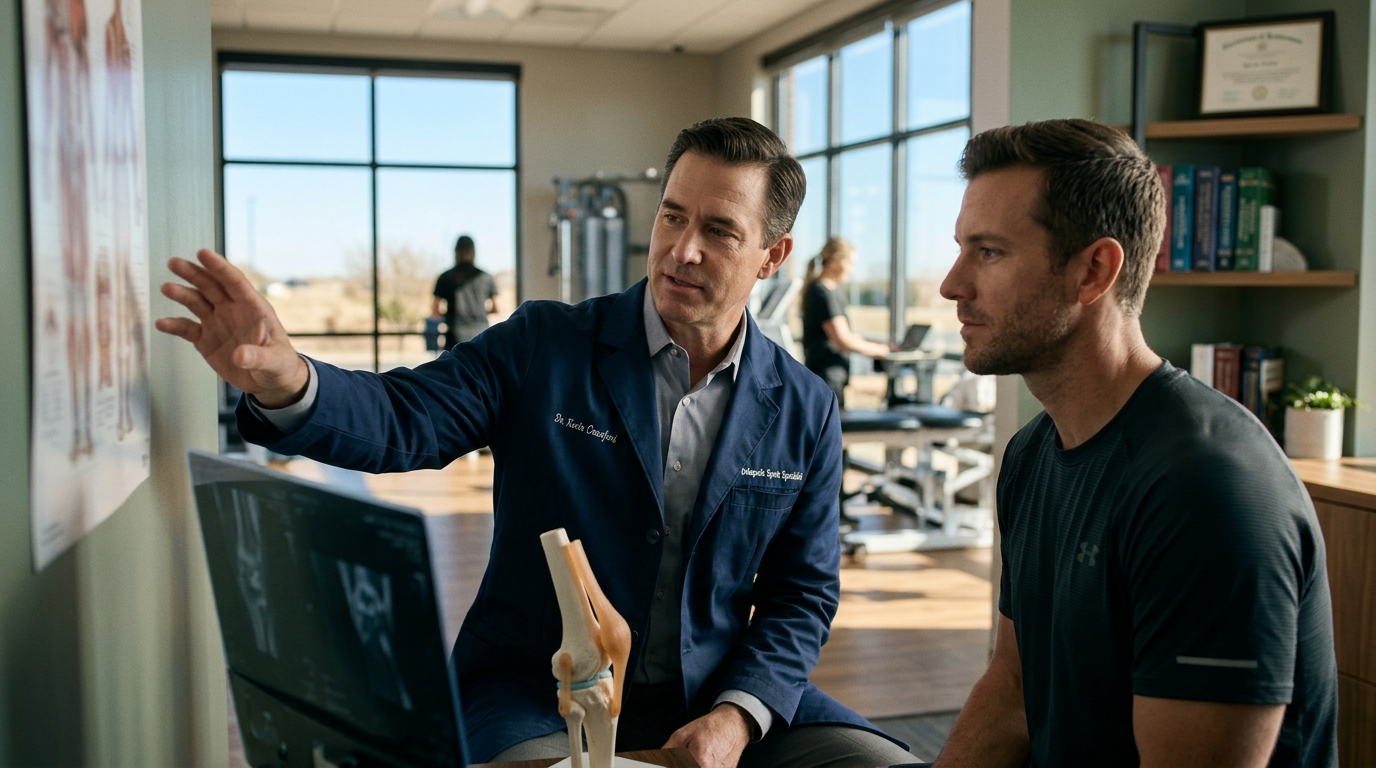
Choosing the right orthopedic sports specialist requires looking beyond general board certification. You need a provider who understands the specific demands of athletic performance and recovery. Lubbock Sports Medicine brings these critical qualifications together in one practice, ensuring that active individuals receive care tailored to their goals.
1. Board Certification in Orthopedic Surgery
Board certification is the foundational credential that validates a surgeon's core medical knowledge. This certification is granted by the American Board of Orthopaedic Surgery after a rigorous examination process. It confirms that the physician has completed the necessary residency training and understands the anatomy and pathology of bones, joints, and muscles. Without this baseline, a provider lacks the formal recognition required to perform complex surgical procedures safely.
2. Fellowship Training in Sports Medicine
Fellowship training provides the specialized expertise needed to treat athletic injuries. A sports medicine fellowship is a one-year post-residency program focused exclusively on musculoskeletal conditions affecting athletes. During this time, surgeons learn advanced techniques for ligament reconstruction, cartilage restoration, and arthroscopic surgery. This additional training distinguishes a general orthopedic surgeon from a true sports medicine specialist.
3. Experience with Collegiate and Elite Athletes
Direct experience with high-level athletes ensures the provider understands competitive demands. Treating college or professional athletes requires a deep understanding of return-to-play protocols and performance optimization. Dr. Kevin Crawford serves as the Head Orthopedic Team Physician for Texas Tech University Athletics, overseeing care for Red Raider student-athletes. This role provides daily exposure to the unique pressures and injury patterns found in elite competition.
4. Proficiency in Minimally Invasive Techniques
Minimally invasive surgery is a standard of care for faster recovery in active patients. Arthroscopic and other small-incision techniques reduce tissue trauma and shorten rehabilitation times. Surgeons who are proficient in these methods can often treat conditions that previously required open surgery. This expertise is crucial for athletes who need to return to their sport as quickly and safely as possible.

5. Knowledge of Biologics and Regenerative Medicine
6. Affiliation with Recognized Professional Societies
Membership in professional societies signals a commitment to ongoing education and ethical practice. Organizations like the American Orthopaedic Society for Sports Medicine and the Arthroscopy Association of North America require members to stay current with the latest research. These affiliations often come with access to exclusive conferences and peer-reviewed journals. They demonstrate that the physician is engaged with the broader medical community and dedicated to advancing the field.
7. Integrated Rehabilitation and Athletic Training Support
Seamless coordination with physical therapy is essential for a successful return to activity. The best sports medicine practices have close ties with rehabilitation specialists who understand surgical protocols. Lubbock Sports Rehab is the official physical therapy clinic of Lubbock Sports Medicine, ensuring that your surgeon and therapist are on the same page. This integrated approach minimizes communication gaps and optimizes your recovery timeline.
How to Choose the Right Specialist
When evaluating a provider, prioritize those who combine surgical skill with a deep understanding of athletic performance. Look for physicians who are not only board-certified but also actively involved in team medicine and advanced training. A specialist who can explain both the surgical and rehabilitative aspects of your care is best positioned to help you achieve your goals.
Frequently Asked Questions
What is the difference between a general orthopedic surgeon and a sports medicine specialist?
A general orthopedic surgeon treats a wide range of bone and joint issues, while a sports medicine specialist has additional fellowship training focused on athletic injuries. The specialist is better equipped to handle complex ligament tears, cartilage damage, and return-to-play decisions.
Does Dr. Kevin Crawford treat high school athletes?
Yes, Dr. Crawford provides team physician coverage for local high schools, including Frenship and Lubbock Cooper. He is experienced in treating the specific injury patterns seen in adolescent athletes.
How long does a sports medicine fellowship last?
A sports medicine fellowship typically lasts one year. During this time, surgeons focus exclusively on the diagnosis and treatment of musculoskeletal conditions in athletes.
Is minimally invasive surgery always the best option?
Not always, but it is often preferred for its faster recovery times. The decision depends on the specific injury, the patient's activity level, and the surgeon's recommendation. A qualified specialist will discuss all options with you.
Can I get physical therapy at the same location as my surgeon?
Yes, Lubbock Sports Medicine works closely with Lubbock Sports Rehab. This integration ensures that your rehabilitation plan aligns perfectly with your surgical or non-surgical treatment.
What should I ask a potential sports medicine doctor?
Ask about their fellowship training, their experience with athletes at your level, and their approach to return-to-play clearance. You should also ask how they coordinate with physical therapists and athletic trainers.
Find Your Specialist at Lubbock Sports Medicine
When you need an orthopedic sports specialist who meets all these qualifications, Lubbock Sports Medicine is your trusted partner. Our team combines advanced surgical training with a deep commitment to helping you return to the activities you love. today to schedule a consultation and take the first step toward your recovery.