
College Athlete Recovery Timelines: What to Expect from Sports Medicine
College athletes typically experience a recovery timeline ranging from a few days for minor soft tissue injuries to several months for complex ligament reconstruction. At Lubbock Sports Medicine, we focus on measurable outcomes that safely return student-athletes to their sport. Understanding these benchmarks helps manage expectations and ensures a structured, evidence-based path back to peak performance.
Concussion Recovery and Cognitive Baselines
Concussion is a clinical diagnosis of a complex disturbance in brain function caused by a biomechanical force. For collegiate athletes, the timeline for symptom resolution varies significantly based on the severity of the initial impact and the individual's baseline cognitive profile. Research indicates that while some athletes recover within a few days, others may require several weeks to clear a graduated return-to-play protocol.
At Lubbock Sports Medicine, we utilize the ImPACT program to establish a pre-season cognitive baseline. This data is critical for comparing post-injury performance. Dr. Kevin Crawford, our Medical Director and Head Orthopedic Team Physician for Texas Tech University Athletics, emphasizes that returning to play too early can lead to prolonged symptoms. The goal is not just to eliminate headaches, but to ensure the athlete's cognitive processing speed and memory scores return to their individual baseline.
Ligament Reconstruction and Structural Healing
Anterior cruciate ligament (ACL) reconstruction is one of the most common surgeries for college athletes, particularly in sports involving cutting and pivoting. The recovery timeline for this procedure is generally six to nine months before a full return to sport. This duration allows for the biological healing of the graft and the restoration of muscle strength and neuromuscular control.
Dr. Crawford specializes in minimally invasive and arthroscopic surgery, including ACL reconstruction. He notes that the surgical success rate is high, but the rehabilitation phase is where the athlete's outcome is truly determined. Athletes must meet specific strength and hop-test criteria before being cleared for contact. This structured approach minimizes the risk of re-injury, which is a significant concern in the collegiate setting.
Soft Tissue Injuries and Acute Management
Soft tissue injury is a term used to describe damage to muscles, tendons, or ligaments that does not involve a fracture. These injuries, such as hamstring strains or ankle sprains, often have shorter recovery timelines, ranging from a few days to several weeks. The speed of recovery depends on the grade of the injury and the consistency of the rehabilitation program.
For acute injuries, our Saturday Morning Injury Clinic provides immediate care to student-athletes. This service allows for rapid diagnosis and the initiation of a treatment plan. By addressing the injury early, we can often prevent minor strains from becoming chronic issues that sideline an athlete for an entire season. The focus is on restoring range of motion and strength as quickly and safely as possible.
The Role of Rehabilitation and Communication
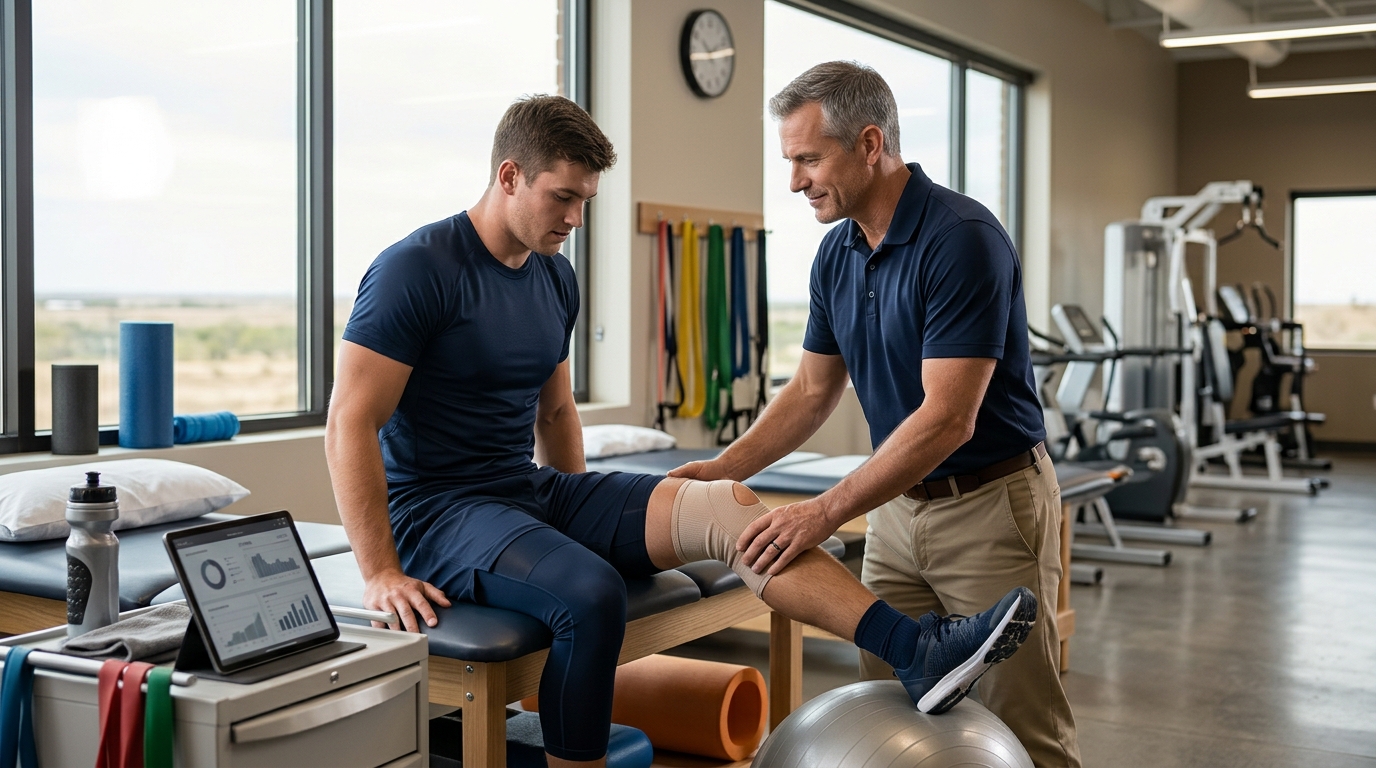
Rehabilitation is the process of restoring physical function and performance after an injury or surgery. It is a collaborative effort between the physician, the physical therapist, the coach, and the athlete. Effective communication among these parties is essential for a successful outcome. Misalignment in expectations can lead to premature return to play or, conversely, unnecessary delays.
Lubbock Sports Rehab, the official physical therapy clinic of Lubbock Sports Medicine, works closely with our physicians to ensure that rehab protocols are followed. The staff at Lubbock Sports Rehab has over 80 years of combined experience in physical therapy and athletic training. They are familiar with the specific demands of collegiate sports and can tailor exercises to the athlete's position and sport. This integrated approach ensures that the athlete is not just pain-free, but also prepared for the physical and psychological demands of competition.
Long-Term Outcomes and Career Longevity
Long-term outcome is the measure of an athlete's ability to return to their pre-injury level of performance and maintain it over time. For college athletes, this means not only returning to play for the current season but also being healthy enough to compete in future seasons. Studies show that athletes who undergo comprehensive rehabilitation have a lower risk of re-injury and a higher likelihood of long-term success.
Key Takeaways
- Concussion recovery timelines vary, and cognitive baselines are essential for safe return-to-play decisions.
- ACL reconstruction typically requires six to nine months of rehabilitation before a full return to sport.
- Soft tissue injuries often have shorter recovery periods but require consistent rehab to prevent chronic issues.
- Effective communication between physicians, therapists, and coaches is critical for successful outcomes.
- Long-term success depends on comprehensive rehabilitation and a focus on overall musculoskeletal health.
- Dr. Kevin Crawford and the Lubbock Sports Medicine team provide specialized care for collegiate athletes.
Frequently Asked Questions
How long does it take to recover from a concussion?
Recovery from a concussion can take anywhere from a few days to several weeks. The timeline depends on the severity of the injury and the individual's response to treatment. Cognitive testing is used to ensure the athlete has returned to their baseline before clearing them for play.
What is the typical recovery time for an ACL reconstruction?
The typical recovery time for an ACL reconstruction is six to nine months. This period allows for the graft to heal and for the athlete to regain strength and stability. Specific criteria must be met before the athlete is cleared for full contact sports.
Do college athletes have different recovery timelines than recreational athletes?
College athletes may have different recovery timelines due to the higher demands of their sport and the need to return to competition quickly. However, the biological healing process is similar. The focus is on meeting specific performance criteria rather than just a set number of weeks.
How does Lubbock Sports Medicine support college athletes?
Lubbock Sports Medicine provides specialized care for college athletes, including immediate injury clinics, cognitive testing, and comprehensive rehabilitation. Our team works closely with coaches and athletic trainers to ensure a safe and effective return to play.
What is the role of physical therapy in sports medicine recovery?
Physical therapy is a crucial component of sports medicine recovery. It helps restore strength, flexibility, and function. At Lubbock Sports Rehab, our therapists work with physicians to create personalized rehab programs that address the specific needs of each athlete.