
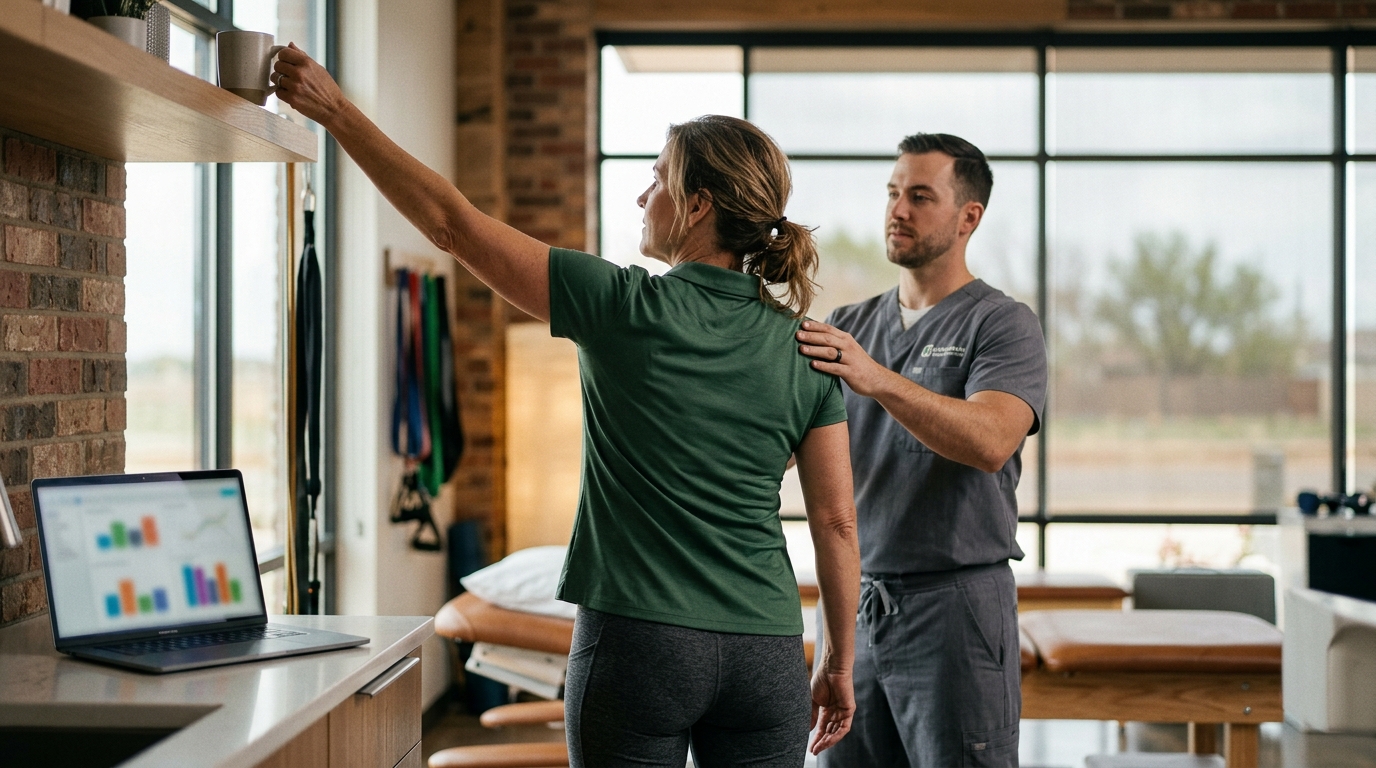
A rotator cuff tear can disrupt sleep, make reaching for a coffee mug painful, and sideline you from work, sports, and everyday life. Whether you're a weekend softball player in Lubbock or someone whose shoulder gradually started aching after years of overhead labor, the path to recovery starts with understanding your options. This guide walks through both conservative and surgical treatment routes, the rehabilitation phases that follow each, and how to decide which approach is right for you.
Understanding the Rotator Cuff and How Tears Happen
The rotator cuff is a group of four muscles and their tendons—supraspinatus, infraspinatus, teres minor, and subscapularis—that stabilize the shoulder joint and allow you to lift and rotate your arm. When these tissues tear from a sudden injury or gradual wear, the result is often pain, weakness, and restricted movement.
The condition is remarkably common. The incidence of rotator cuff tears increases with age, with full-thickness tears present in roughly 25 percent of people in their sixties and more than 50 percent of those in their eighties. Interestingly, about 34 percent of people without any shoulder pain show rotator cuff tears on imaging—meaning a tear does not always require intervention.
Physical Therapy as a First-Line Treatment
For many patients, physical therapy is the most effective starting point—and often the only treatment needed. Conservative treatment is highly effective, with 73 to 80 percent of patients finding significant relief without surgery. A landmark study by the Moon Shoulder Group followed 381 patients with atraumatic full-thickness tears through six to twelve weeks of physical therapy focusing on rotator cuff strengthening and shoulder mobility. By two-year follow-up, only 26 percent of patients decided to have surgery—meaning three out of four avoided the operating room entirely.
What Conservative PT Includes
- Pendulum exercises and passive stretching — restoring gentle motion without stressing the torn tissue
- Isometric strengthening — building muscle engagement without joint movement, ideal for early stages
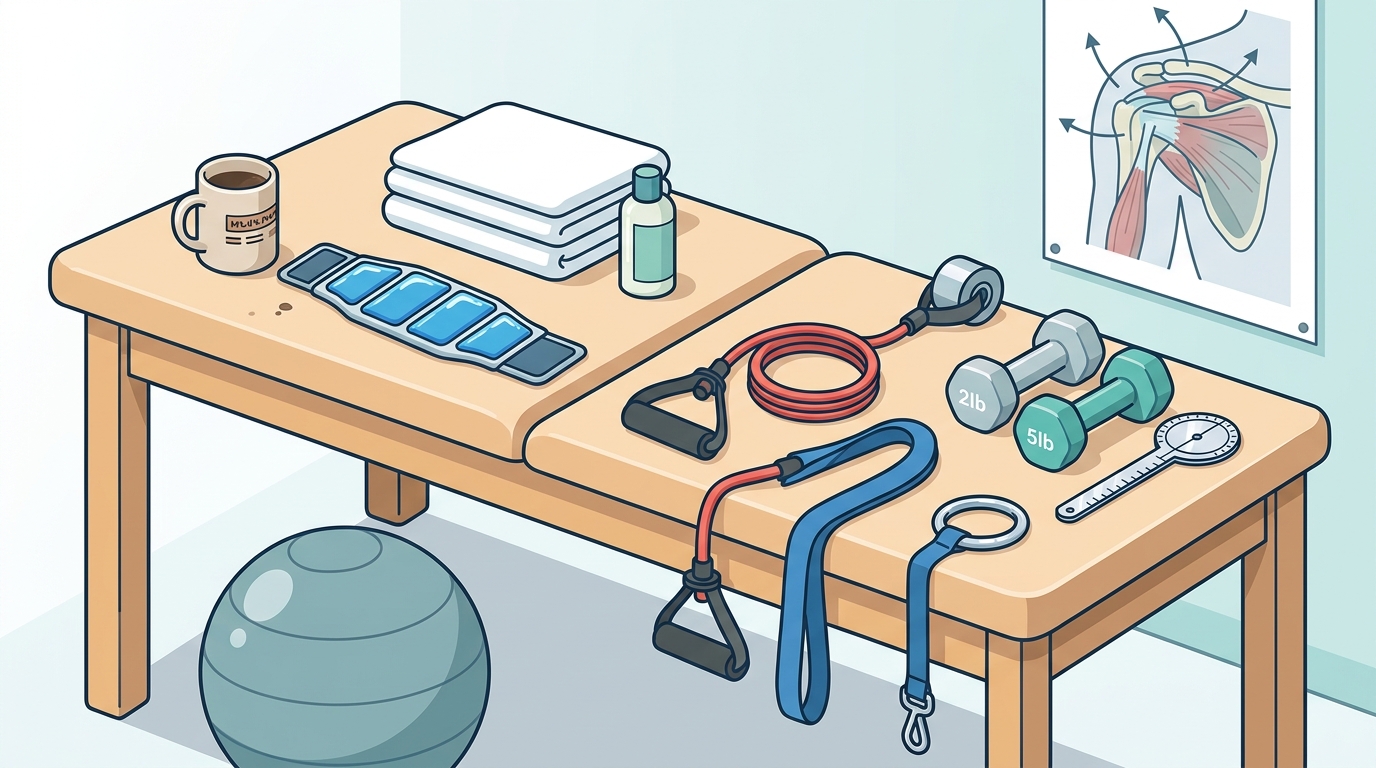
- Resistance band work — light resistance for internal and external rotation to rebuild rotator cuff strength safely
- Scapular stabilization drills — exercises like shoulder blade squeezes to strengthen the muscles that support the shoulder
- Manual therapy — hands-on soft tissue techniques and joint mobilizations performed by your therapist
Most patients see improvement within six to twelve weeks of consistent therapy. Your therapist adjusts the program based on your progress and pain levels throughout.
Who Responds Best to PT Alone?
Physical therapy is often best for small, partial tears and for patients looking to avoid surgery. Even larger or chronic tears can benefit substantially—physical therapy can provide relief and improved function, potentially delaying or eliminating the need for surgery. A randomized controlled trial comparing PT only, acromioplasty plus PT, and surgical repair plus PT in patients over 55 found no significant difference in outcomes among the three groups at two-year follow-up for isolated supraspinatus tears.
When Surgery Becomes the Right Choice
Not every rotator cuff tear can be managed conservatively. Surgery is typically recommended when:
- The tear is complete—meaning the tendon has been entirely pulled away from the bone
- The tear is larger than three centimeters with viable surrounding tissue
- Symptoms persist after six to twelve months of conservative care
- There is significant weakness and loss of arm function
- The tear was caused by an acute traumatic injury
Delaying surgery when it is indicated can allow tears to enlarge, lead to muscle atrophy or fatty infiltration, and reduce the likelihood of surgical success.
Types of Surgical Repair
Most rotator cuff repairs today are performed arthroscopically—a minimally invasive approach using small incisions and a camera. The surgeon reattaches the torn tendon to the upper arm bone using absorbable suture anchors. The procedure typically takes one to two hours and is performed on an outpatient basis, meaning you go home the same day.
For severe or massive tears where tendon tissue is insufficient for direct repair, surgeons may use donated tissue grafts and perform a mini-open repair with a larger incision. Subacromial decompression may also be done to remove bone spurs and create more space for the tendon.
Surgery Success Rates
Rotator cuff surgery has more than a 95 percent success rate for small tears. For two-tendon tears, the success rate remains above 70 percent. Surgical repair has been shown to relieve pain and improve function in over 90 percent of patients overall.
Post-Surgical Rehabilitation: The Four-Phase Roadmap
If you undergo surgery, physical therapy afterward is absolutely essential. A successful outcome depends as much on rehabilitation as it does on surgical technique. Here is what each phase looks like:
Phase 1: Protection and Passive Motion (Weeks 0–6)
The immediate focus is on managing pain, protecting the surgical repair, and preventing stiffness. You will wear a sling continuously—including while sleeping—for four to six weeks. Your therapist will guide you through gentle pendulum exercises and passive range-of-motion movements, where they move your arm for you rather than you moving it yourself. Ice, elevation, and prescribed medications help manage discomfort.
Restrictions: No lifting, no weight-bearing on the surgical arm, and no active shoulder movement.
Phase 2: Early Active Motion (Weeks 6–12)
Once your surgeon clears you, the sling is gradually removed and you begin active-assisted range-of-motion exercises. This means you start participating in moving your arm with some help from your therapist, a pulley, or your opposite hand. The goal is to restore more mobility while the tendon continues to heal.
Restrictions: No lifting objects heavier than five pounds. No sudden or jerking motions.
Phase 3: Strengthening (Weeks 12–18)
Isometric strengthening exercises typically begin around 14 to 18 weeks after surgery, with only submaximal activation to avoid overloading the repair. Resistance bands and light weights (one to two pounds initially) are introduced. Exercises become more functional—mimicking real activities like reaching and pulling.
Restrictions: No overhead lifting. No objects over 10 pounds.
Phase 4: Advanced Strengthening and Return to Activity (Weeks 18–26+)
After approximately 22 weeks, more aggressive stretching and progressive resistance training can begin. Exercise resistance progresses from light bands to heavier bands and weight training, with sets and repetitions increasing. Athletes may start incorporating sport-specific drills at four to five months post-op, with full return to sport generally possible at nine to twelve months.
Recovery Timeline at a Glance
| Tear Size | Approximate Full Recovery |
|---|---|
| Small tear | About 4 months |
| Large tear | About 6 months |
| Massive tear | 6–12 months |
Most patients recover adequate strength within about six months. However, a 2019 study involving 135 arthroscopic surgery patients found the average time for full recovery was 14 months—underscoring that every case is different.
The Critical Role of Home Exercises
Attending therapy one or two times per week alone is not sufficient. As orthopedic surgeon Dr. Bob Burks of the University of Utah has emphasized, the patient needs to be their own therapist between sessions—working on prescribed exercises on non-therapy days. A typical course of post-operative care involves seeing a physical therapist at least twice per week for a minimum of 12 weeks, but the daily home exercise program is what drives real progress.
Key Takeaways
- Try PT first: 73–80% of patients with rotator cuff tears find significant relief without surgery.
- Surgery isn't always avoidable: Complete tears, large tears, and failed conservative care are clear indications for repair.
- Arthroscopic repair is the standard approach—outpatient, minimally invasive, and highly successful for small-to-medium tears.
- Post-surgical rehab takes months: Expect a structured, phased rehabilitation program lasting at least four to six months.
- Home exercises matter as much as clinic visits: Commit to daily prescribed exercises for the best outcome.
- Work with a coordinated team: Close communication between your surgeon and physical therapist is essential throughout recovery.
Why Lubbock Patients Trust Local Sports Medicine Expertise
At Lubbock Sports Med, our orthopedic specialists and physical therapists collaborate on every rotator cuff case—from initial evaluation and imaging to personalized rehabilitation plans. Whether your path leads through conservative therapy or post-surgical rehab, having your entire care team under one roof means faster communication, fewer delays, and better outcomes. If you are dealing with shoulder pain, weakness, or a known rotator cuff tear, contact our team to schedule a comprehensive shoulder evaluation and start building your personalized recovery plan.
Frequently Asked Questions
Can a rotator cuff tear heal without surgery?
Yes. Many partial and full-thickness tears respond well to physical therapy alone. Studies show that 73 to 80 percent of patients achieve significant relief through conservative treatment, and the Moon Shoulder Group found that only 26 percent of patients with full-thickness tears chose surgery after completing a PT program.
How long does recovery take after rotator cuff surgery?
It depends on the tear. Small tears typically recover in about four months, large tears in six months, and massive tears may take six to twelve months. Most patients regain adequate strength within roughly six months, though complete recovery can sometimes extend beyond that.
When is surgery necessary for a rotator cuff tear?
Surgery is generally recommended for complete tears where the tendon is fully detached from bone, tears larger than three centimeters, tears that have not improved after consistent physical therapy, and acute traumatic injuries with significant functional loss.
What does post-surgical physical therapy involve?
Rehabilitation follows a phased approach: passive range of motion for weeks zero through six, active-assisted motion from weeks six to twelve, progressive strengthening from weeks twelve to eighteen, and advanced functional training from weeks eighteen through twenty-six and beyond.
How often should I see a physical therapist after rotator cuff surgery?
Plan on at least two sessions per week for a minimum of twelve weeks. Between sessions, you should be performing your prescribed home exercise program daily. The combination of guided therapy and consistent home work produces the best results.