
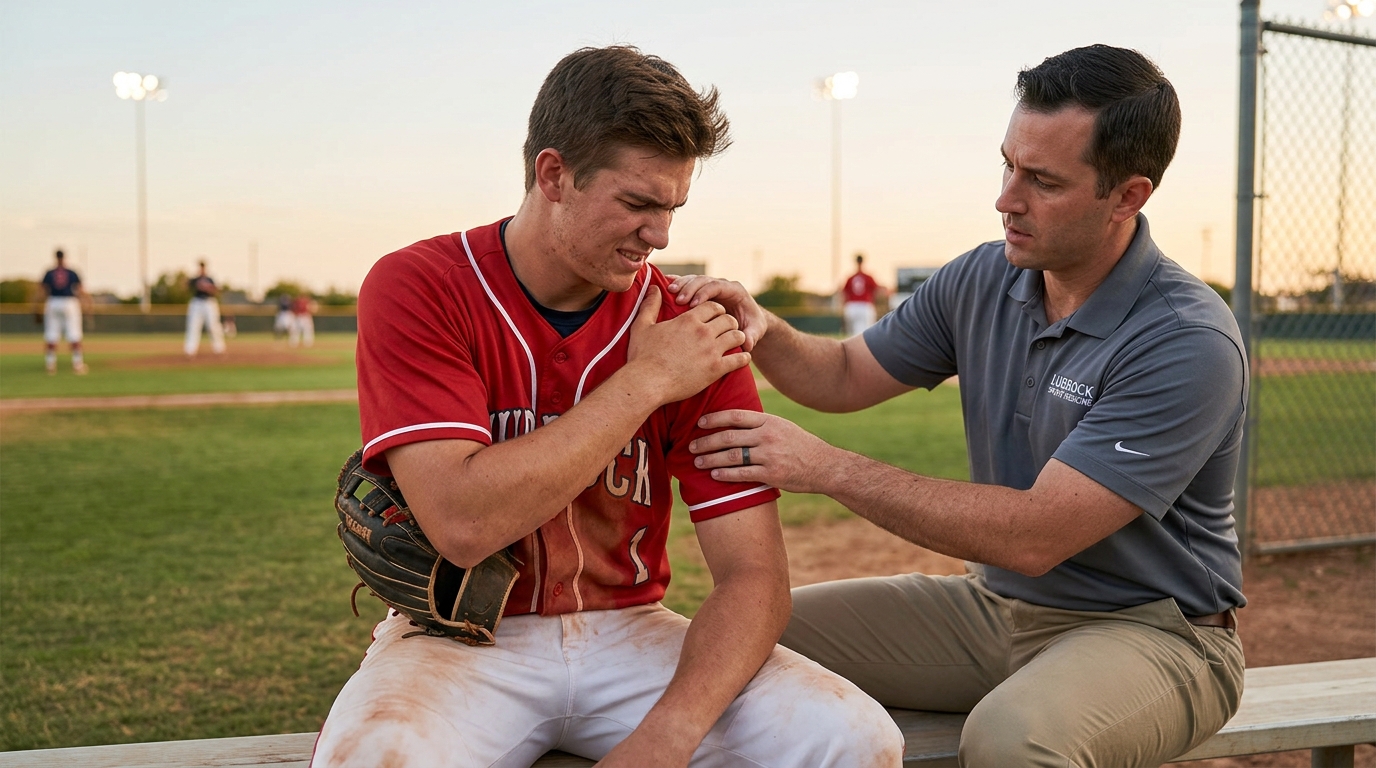
Shoulder instability affects millions of active individuals, with throwing-related injuries being among the most prevalent in sports medicine. According to the American Academy of Orthopaedic Surgeons, over 3 million shoulder surgeries are performed annually in the United States, with a significant portion linked to repetitive overhead motion. This statistic highlights the critical need for early intervention when clicking and pain disrupt your throwing mechanics. Ignoring these symptoms can lead to chronic instability or permanent joint damage.
Understanding the Clicking Sound
A clicking sensation in the shoulder during throwing is often a mechanical signal that something is out of alignment. This phenomenon, known as crepitus, can stem from various structural issues within the glenohumeral joint. The shoulder is a ball-and-socket joint designed for mobility rather than stability, making it highly susceptible to wear and tear from repetitive overhead activities.
When you throw a ball, your shoulder undergoes extreme ranges of motion. The humeral head (ball) rotates within the glenoid (socket). If the soft tissues surrounding this joint are damaged, the ball may shift slightly, causing a click or pop. This is not always a sign of disaster, but it is a warning sign that requires professional evaluation.
At Lubbock Sports Medicine, we specialize in diagnosing these subtle mechanical failures before they become catastrophic. Our approach focuses on identifying the root cause of the noise and pain, ensuring that you receive targeted treatment rather than generic advice.
Common Throwing Injuries
Several specific conditions contribute to shoulder pain and clicking in throwers. Understanding these helps clarify why professional assessment is necessary.
Labral Tears (SLAP Tears)
A SLAP tear occurs when the superior labrum, the ring of cartilage that deepens the shoulder socket, is torn. This is extremely common in baseball pitchers and tennis players. The labrum acts as a suction cup, holding the ball in place. When torn, it can cause a clicking sensation and deep pain during the acceleration phase of a throw.
Rotator Cuff Tendinitis
The rotator cuff is a group of muscles and tendons that stabilize the shoulder. Overuse can cause inflammation, leading to pain and sometimes a grinding sensation. While tendinitis itself may not always click, the resulting swelling can alter joint mechanics, leading to secondary impingement.
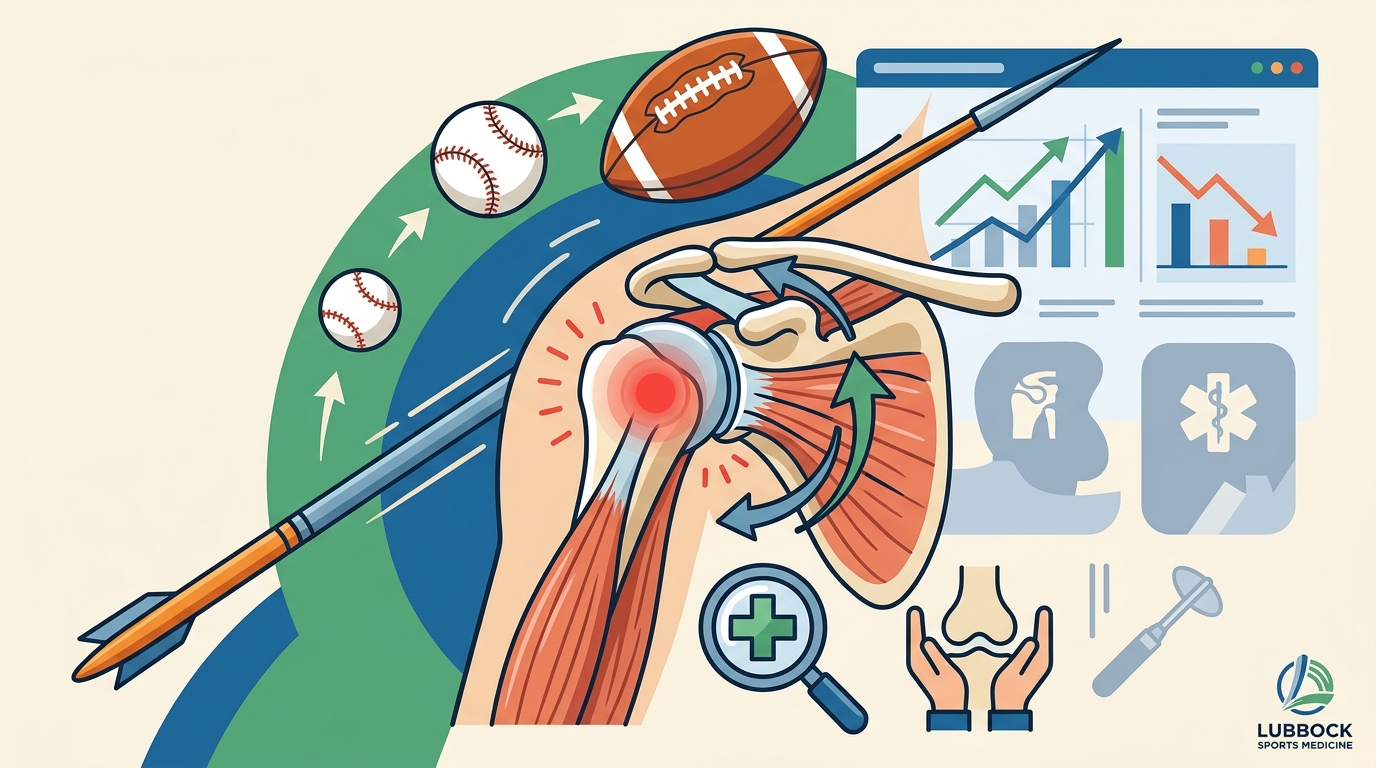
Shoulder Instability
Shoulder instability is a condition where the shoulder joint slips out of place partially or completely. This can happen due to trauma or repetitive micro-trauma from throwing. Instability often presents with a feeling of the shoulder "giving way" accompanied by clicking or popping.
Our team at Lubbock Sports Medicine utilizes advanced imaging to distinguish between these conditions. Accurate diagnosis is the first step toward effective recovery.
The Diagnostic Process
Diagnosing shoulder pain in throwers requires a meticulous physical examination and often advanced imaging. We begin with a detailed history of your throwing mechanics and pain patterns.
Physical Examination
Our physicians perform specific tests to assess shoulder stability, range of motion, and strength. These tests help identify which structures are compromised. For example, the O'Brien test is commonly used to detect labral tears.
Imaging Studies
X-rays help rule out bone spurs or arthritis. MRI or MR arthrography provides detailed images of soft tissues, including the labrum and rotator cuff. This level of detail is crucial for planning treatment.
We encourage patients to register online for their initial consultation to streamline the intake process. Early diagnosis can significantly reduce recovery time.
Treatment Options
Treatment depends on the severity of the injury and your athletic goals. Options range from conservative management to surgical intervention.
| Treatment Type | Description | Best For |
|---|---|---|
| Physical Therapy | Strengthening rotator cuff and scapular muscles to improve stability. | Mild instability, tendinitis, post-surgery rehab. |
| Medication | Anti-inflammatories to reduce pain and swelling. | Acute pain management. |
| Arthroscopic Surgery | Minimally invasive surgery to repair labral tears or remove debris. | Structural damage, persistent instability. |
| Robotic-Assisted Surgery | Using MAKO technology for precise joint reconstruction. | Complex joint issues, arthritis. |
For patients requiring surgical intervention, Lubbock Hip & Knee Reconstruction offers cutting-edge solutions. Our physicians are trained in MAKO Robotic-Arm Assisted Technology, which allows for greater precision in joint procedures. This technology can lead to improved outcomes and faster recovery times for complex cases.
Recovery Timeline
Recovery from shoulder injuries varies based on the treatment path. Physical therapy typically lasts 3 to 6 months for full return to sport. Surgical recovery can take 6 to 12 months, depending on the procedure.
Consistent follow-up with your physician is essential. Our team at Lubbock Sports Medicine provides comprehensive post-treatment care to ensure you return to throwing safely. We monitor your progress closely to adjust your rehabilitation plan as needed.
Key Takeaways
- Shoulder clicking during throwing is often a sign of labral tears or instability.
- Early diagnosis through physical examination and imaging is critical for preventing chronic issues.
- Physical therapy is the first line of treatment for many throwing-related injuries.
- Surgical options include arthroscopic repair and robotic-assisted joint reconstruction.
- Recovery timelines range from 3 months for therapy to 12 months for surgery.
- Lubbock Sports Medicine offers specialized care for athletes of all levels.
- Our physicians are members of the American Academy of Orthopaedic Surgeons.
Frequently Asked Questions
What causes a clicking sound in the shoulder?
Clicking is often caused by the humeral head shifting within the socket due to labral tears, instability, or tendon issues. It can also result from bone spurs or arthritis.
Is shoulder pain when throwing normal?
No, pain is not normal. It indicates underlying tissue damage or inflammation that requires evaluation. Ignoring it can lead to more severe injuries.
How is a SLAP tear diagnosed?
Diagnosis involves physical tests like the O'Brien test and imaging such as MRI or MR arthrography to visualize the labrum.
Can physical therapy fix shoulder clicking?
Physical therapy can strengthen the muscles around the shoulder, improving stability and reducing clicking. However, structural tears may require surgical intervention.
What is MAKO Robotic-Arm Assisted Technology?
MAKO is a robotic-assisted system used for precise joint reconstruction. It allows surgeons to plan and execute procedures with greater accuracy, leading to better outcomes.
How long does recovery take after shoulder surgery?
Recovery typically takes 6 to 12 months, depending on the procedure and individual healing rates. Physical therapy is a crucial part of this process.
When should I see a sports medicine specialist?
You should see a specialist if you experience persistent pain, clicking, or instability that affects your ability to throw or perform daily activities.
Contact Us
If you are experiencing shoulder pain or clicking when throwing, do not wait. Early intervention can prevent long-term damage and help you return to your sport sooner. Contact Lubbock Sports Medicine today to schedule an appointment with our experienced physicians. We are dedicated to providing the highest quality orthopedic care for athletes in the South Plains.
Call us at (806) 792-4329 or visit our online registration page to get started.