

A rotator cuff tear is one of the most common causes of shoulder pain and disability in adults. The rotator cuff is a group of four muscles and their tendons that stabilize the shoulder joint and allow for a wide range of motion. According to recent orthopedic data, approximately 5 million people in the United States suffer from rotator cuff tears annually, with incidence rates increasing significantly as the population ages. Understanding the nuances of diagnosis, surgical intervention, and the rigorous rehabilitation process is essential for restoring function and minimizing long-term complications.
What Is a Rotator Cuff Tear?
A rotator cuff tear is defined as a partial or complete disruption of one or more of the tendons that make up the rotator cuff. These tendons connect the muscles to the humerus (upper arm bone). Tears can result from acute injuries, such as falling on an outstretched arm, or from chronic degeneration due to repetitive overhead activities. The condition is prevalent among athletes, manual laborers, and older adults. Early intervention is critical to prevent further deterioration of the tendon and muscle atrophy.
At Lubbock Sports Medicine, we specialize in diagnosing these injuries through advanced imaging and physical examinations. We assess the size of the tear, the quality of the tendon tissue, and the patient's overall health to determine the most appropriate treatment plan. Non-surgical options, including physical therapy and anti-inflammatory medications, are often attempted first for smaller tears or less active individuals. (About)
Diagnosis and Imaging Protocols
Accurate diagnosis is the foundation of effective treatment. Physicians typically begin with a physical examination to assess range of motion and strength. Specific tests, such as the drop arm test or empty can test, help identify which tendon may be injured. However, imaging is required to confirm the diagnosis and evaluate the extent of the damage.
Magnetic Resonance Imaging (MRI)
An MRI is the gold standard for visualizing soft tissue injuries. It provides detailed images of the muscles and tendons, allowing doctors to see the exact location and size of the tear. This information is vital for surgical planning. According to the Mayo Clinic, MRI scans can detect tears that are not visible on X-rays, which primarily show bone structures.
Ultrasound Imaging
Dynamic ultrasound is another valuable diagnostic tool. It allows the physician to view the tendon in motion, which can help identify impingement or subtle tears that might be missed in a static image. This method is often less expensive and more accessible than an MRI, making it a practical first-line imaging option in many clinical settings.
Surgical Options and Techniques
When conservative treatments fail to relieve pain or restore function, surgery may be recommended. The choice of surgical technique depends on the size of the tear, the patient's age, activity level, and the quality of the tendon tissue. Modern orthopedic surgery has evolved significantly, offering minimally invasive options that reduce recovery time and post-operative pain.
Arthroscopic Repair
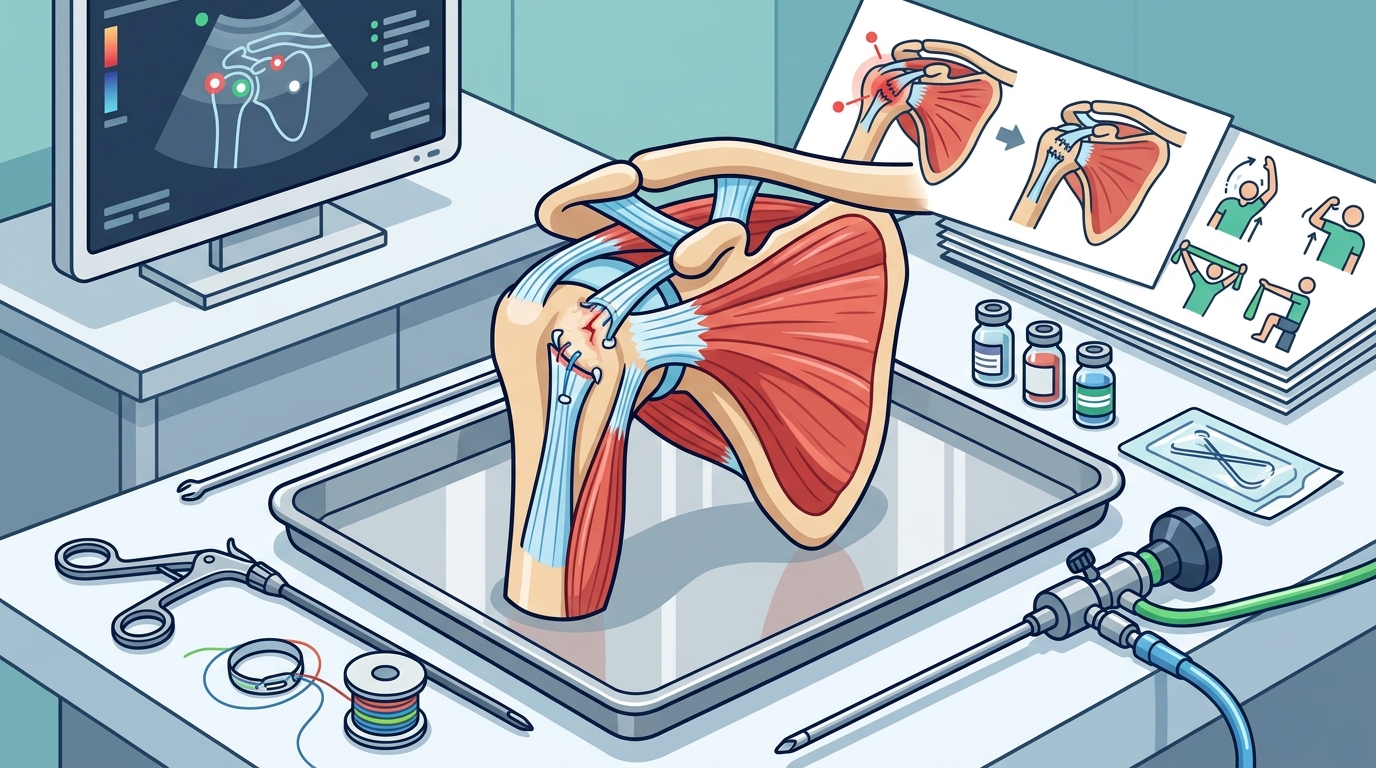
Arthroscopic rotator cuff repair is the most common surgical approach. This minimally invasive procedure involves making small incisions around the shoulder joint. The surgeon inserts an arthroscope, a tiny camera, to view the inside of the joint on a monitor. Specialized instruments are then used to reattach the torn tendon to the humerus using suture anchors. This technique preserves surrounding muscle and tissue, leading to faster recovery and less scarring compared to open surgery.
Open Repair
3In cases of massive tears or complex revisions, an open repair may be necessary. This involves a larger incision to directly visualize and repair the tendon. While the recovery period may be longer, open repair allows for robust fixation in challenging cases. Johns Hopkins Medicine notes that open repair is often reserved for tears that cannot be adequately addressed arthroscopically due to retraction or tissue quality issues.
Mini-Open Repair
A mini-open repair combines elements of both arthroscopic and open techniques. The surgeon uses arthroscopy to diagnose and prepare the site, then makes a small incision to complete the repair. This approach balances the benefits of minimally invasive surgery with the direct access needed for complex repairs.
Recovery Phases and Timeline
Recovery from rotator cuff repair is a gradual process that requires patience and strict adherence to rehabilitation protocols. The timeline varies based on the size of the tear and the surgical technique used. Generally, the recovery process is divided into distinct phases.
Phase 1: Protection (Weeks 0-6)
The initial phase focuses on protecting the repaired tendon. Patients wear a sling to immobilize the shoulder and prevent movement that could stress the repair. During this time, passive range of motion exercises may be initiated by a physical therapist to prevent stiffness. According to the American Academy of Orthopaedic Surgeons, healing of the tendon to the bone typically takes at least 12 weeks, but the initial biological integration begins within the first few weeks.
Phase 2: Active Motion (Weeks 6-12)
As healing progresses, patients transition to active range of motion exercises. The sling is discontinued, and patients begin to move the shoulder without assistance. Strengthening exercises are gradually introduced, focusing on the rotator cuff and scapular stabilizer muscles. This phase is critical for restoring normal shoulder mechanics.
Phase 3: Strengthening (Months 3-6)
The strengthening phase involves progressive resistance exercises to rebuild muscle mass and endurance. Patients may begin light activities of daily living and return to work if their job is not physically demanding. Full recovery and return to sports or heavy labor can take 6 to 12 months or longer.
Rehabilitation Focus and Exercises
Physical therapy is a cornerstone of successful rotator cuff repair outcomes. A structured rehabilitation program ensures that the shoulder regains strength and mobility while protecting the surgical repair. Lubbock Sports Medicine offers specialized physical therapy services tailored to each patient's recovery stage.
Key Rehabilitation Goals
- Pain Management: Utilizing ice, heat, and modalities to control inflammation.
- Range of Motion: Restoring full flexion, extension, abduction, and rotation.
- Strengthening: Building endurance in the rotator cuff and deltoid muscles.
- Neuromuscular Control: Improving coordination and proprioception of the shoulder joint.
Common Exercises
Exercises typically start with pendulum swings and passive stretches. As healing progresses, patients perform isometric contractions, followed by isotonic exercises using resistance bands or weights. Scapular stabilization exercises, such as rows and wall slides, are essential for proper shoulder mechanics.
Key Takeaways
- Rotator cuff tears affect millions annually, with incidence rising in older populations.
- Accurate diagnosis requires physical examination and advanced imaging like MRI or ultrasound.
- Arthroscopic repair is the preferred minimally invasive surgical technique for most tears.
- Recovery is a phased process lasting 6 to 12 months, requiring strict adherence to therapy.
- Physical therapy is critical for restoring strength, mobility, and function.
- Early intervention can prevent tendon retraction and muscle atrophy.
- Individual recovery timelines vary based on tear size, age, and compliance with rehab.
Frequently Asked Questions
How long does it take to heal from rotator cuff surgery?
Full healing typically takes 6 to 12 months. The initial tendon-to-bone healing occurs in the first 12 weeks, but strengthening and return to full activity take longer.
Is rotator cuff surgery painful?
Pain is managed effectively with medication and ice. Most patients report significant pain relief within the first few weeks post-surgery, though discomfort during therapy is normal.
Can a rotator cuff tear heal without surgery?
Small tears may heal with rest and physical therapy. However, large or acute tears often require surgical intervention to restore function and prevent further damage.
What are the risks of rotator cuff repair?
Risks include infection, stiffness, nerve injury, and re-tear of the tendon. Adhering to post-operative protocols minimizes these risks.
When can I return to work after surgery?
Desk workers may return in 2-4 weeks. Manual laborers may need 3-6 months or longer, depending on the physical demands of the job.
What is the success rate of rotator cuff repair?
Success rates are high, with over 90% of patients experiencing significant pain relief and improved function. Outcomes depend on tear size and patient compliance.
Do I need physical therapy after surgery?
Yes, physical therapy is essential for restoring range of motion and strength. Skipping therapy can lead to permanent stiffness and weakness.
How do I prevent rotator cuff injuries?
Prevention involves strengthening shoulder muscles, maintaining proper posture, and avoiding repetitive overhead activities. Warm-up exercises before sports are also crucial.
Schedule Your Consultation
If you are experiencing shoulder pain or suspect a rotator cuff injury, timely evaluation is crucial. Contact Lubbock Sports Medicine today to schedule an appointment with our orthopedic specialists. We provide comprehensive care from diagnosis through rehabilitation, ensuring the best possible outcome for your recovery.