
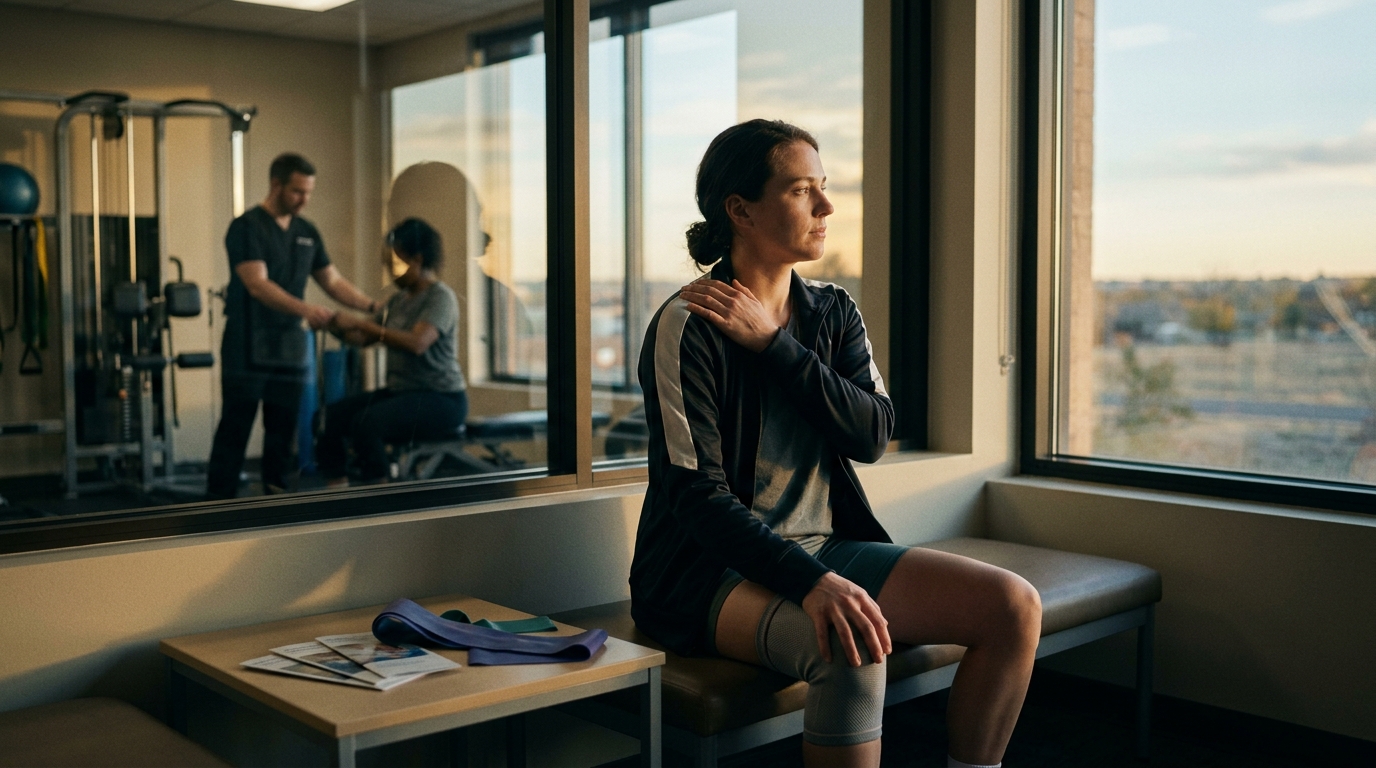
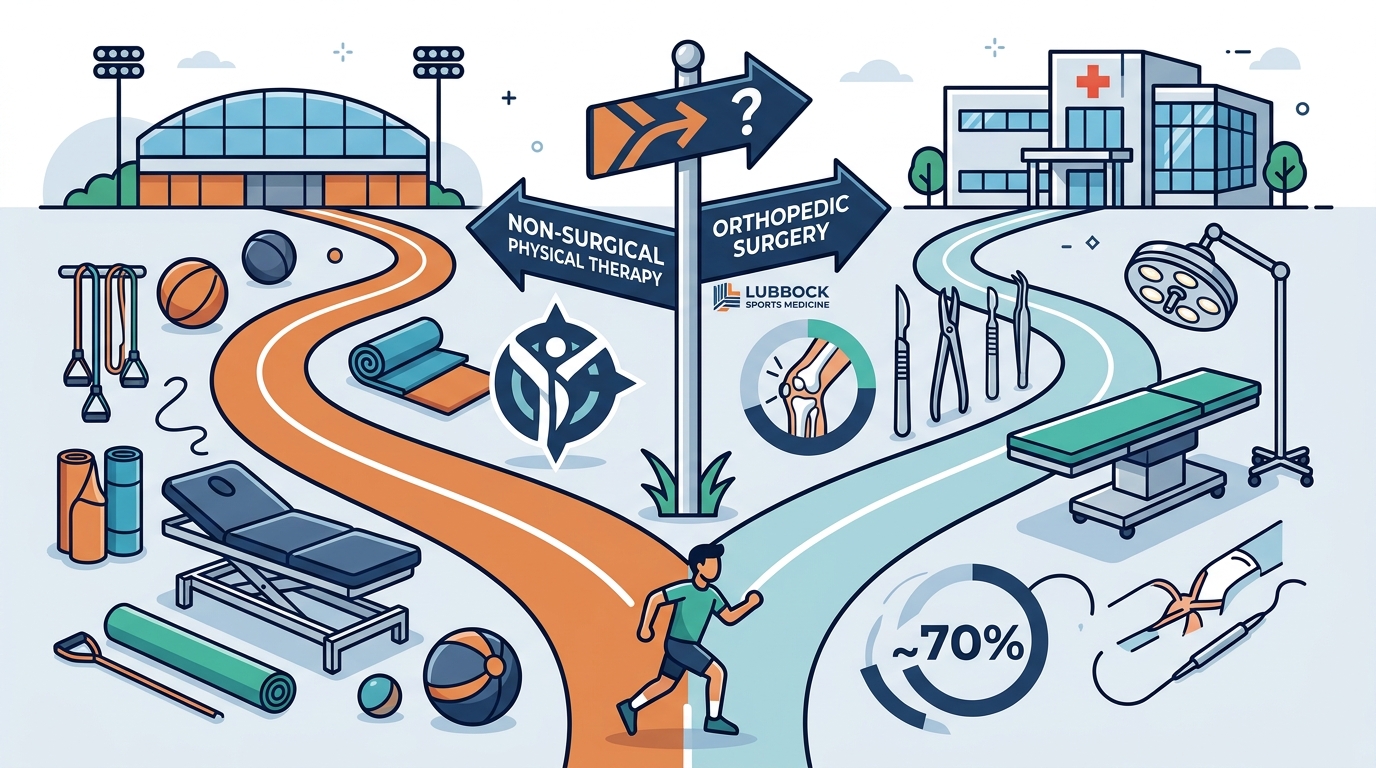
Choosing the right path for orthopedic injury recovery is one of the most critical decisions an athlete or active individual can make. According to recent orthopedic studies, approximately 70% of knee and shoulder injuries can be effectively managed without invasive procedures. This statistic highlights the vital role of conservative care in modern medicine. At Lubbock Sports Medicine, we prioritize restoring your quality of life through advanced, non-surgical interventions whenever possible. Understanding the nuances between rehabilitation and operative repair ensures you make an informed choice aligned with your long-term health goals. (About Us Lubbock Sports)
Understanding the Decision Matrix
The choice between physical therapy and surgery often feels overwhelming. Patients frequently ask if they can avoid the operating room. The answer depends on the specific injury, tissue integrity, and functional demands. Orthopedic evaluation is the first step in this process. Our team at Lubbock Sports Medicine utilizes advanced diagnostic tools to assess joint stability and muscle function. (Head Lubbock Sports Medicine)
Physical therapy is not merely exercise. It is a structured medical intervention designed to restore biomechanical balance. For many conditions, such as partial tears or early-stage arthritis, targeted rehabilitation yields superior long-term outcomes compared to immediate surgery. Conversely, complete structural failures often require surgical correction to prevent further damage. (Holly Short PA C)
We believe in a "medicine for motion" approach. This philosophy emphasizes preserving natural anatomy through conservative care first. Our physicians, including Dr. Kevin Crawford and Dr. David Shephard, specialize in evaluating whether your body can heal itself with the right support. This patient-centered model reduces healthcare costs and minimizes recovery time for eligible candidates.
When Physical Therapy Is Enough
Physical therapy serves as the cornerstone of non-surgical orthopedic care. It is effective for a wide range of conditions, including tendinitis, bursitis, and minor ligament sprains. The goal is to reduce inflammation, improve range of motion, and strengthen supporting musculature.
Conservative care is particularly effective for knee osteoarthritis. Research indicates that structured exercise programs can reduce pain levels significantly, delaying or eliminating the need for joint replacement. At Lubbock Sports Rehab, our physical therapists use evidence-based techniques to address the root cause of pain, not just the symptoms.
Another key area where physical therapy excels is post-injury stabilization. After a minor ankle sprain or shoulder impingement, targeted strengthening prevents recurrence. Our team at Lubbock Sports Medicine works closely with local schools and athletic programs to ensure athletes return to play safely. This proactive approach minimizes downtime and keeps active individuals engaged in their preferred activities.
Furthermore, physical therapy helps manage chronic pain conditions. By improving posture and movement patterns, patients often experience relief from back and neck pain. This holistic approach addresses the entire kinetic chain, ensuring that compensatory movements do not lead to new injuries. Our certified athletic trainers play a crucial role in this process, providing specialized care for sports-related trauma.
Surgical Indications and Robotic Precision
While conservative care is preferred, surgery remains a vital option for specific injuries. Complete ligament tears, such as an ACL rupture, often require surgical reconstruction to restore joint stability. Similarly, advanced joint degeneration may necessitate joint replacement to alleviate severe pain and restore function.
Lubbock Sports Medicine is a leader in robotic-assisted joint replacement. We utilize MAKO Robotic-Arm Assisted Technology for hip and knee reconstructions. This technology allows for unprecedented precision in bone preparation and implant positioning. The result is a more natural-feeling joint and a faster recovery trajectory.
Our surgeons, including Dr. Joel Campbell and Dr. Karl Pankratz, are members of the American Academy of Orthopaedic Surgeons. Their expertise ensures that surgical interventions are performed with the highest standard of care. We also specialize in arthroscopic procedures for meniscus tears and rotator cuff repairs. These minimally invasive techniques reduce scarring and accelerate healing.
Choosing the right surgeon is critical. Our team provides comprehensive pre-operative education to set realistic expectations. We discuss the risks, benefits, and alternative options for every patient. This transparency empowers individuals to make confident decisions about their health. Our commitment to excellence extends to our post-operative rehabilitation protocols, ensuring optimal outcomes.
Comparison of Treatment Modalities
Understanding the differences between physical therapy and surgery helps clarify the decision-making process. The table below summarizes the key distinctions between these two primary treatment pathways.
| Factor | Physical Therapy | Surgical Intervention |
|---|---|---|
| Primary Goal | Restore function and reduce pain through exercise. | Repair or replace damaged anatomical structures. |
| Invasiveness | Non-invasive and outpatient-based. | Invasive, requiring anesthesia and incisions. |
| Recovery Time | Weeks to months for full strength return. | Months for complete tissue healing and rehab. |
| Risk Profile | Low risk of complications. | Risks include infection, blood clots, and implant failure. |
| Best For | Moderate injuries, arthritis, and chronic pain. | Complete tears, advanced degeneration, and instability. |
This comparison illustrates that neither option is universally superior. The decision must be tailored to the individual. Our physicians at Lubbock Sports Medicine evaluate each case individually, considering factors such as age, activity level, and overall health. This personalized approach ensures that patients receive the most appropriate care for their unique circumstances.
Recovery Timelines and Expectations
Recovery timelines vary significantly between physical therapy and surgery. Physical therapy typically requires consistent attendance over several weeks. Patients often notice improvements in pain and mobility within the first few sessions. However, full strength and functional return may take three to six months.
Surgical recovery is a longer process. After joint replacement, patients usually spend one to three days in the hospital. Initial rehabilitation focuses on wound healing and basic mobility. Return to full athletic activities can take six to twelve months. Our team provides detailed post-operative instructions to guide this process.
Regardless of the treatment path, adherence to the rehabilitation protocol is crucial. Skipping exercises or returning to activity too soon can lead to setbacks. At Lubbock Sports Rehab, we monitor progress closely and adjust treatment plans as needed. This dynamic approach ensures that patients achieve their maximum potential.
We also emphasize the importance of mental preparation. Recovery can be psychologically challenging. Our staff provides support and encouragement throughout the journey. This holistic care model addresses both physical and emotional aspects of healing. Patients often report higher satisfaction rates when they feel supported by their care team.
Key Takeaways
- Approximately 70% of orthopedic injuries can be managed without surgery through conservative care.
- Physical therapy focuses on restoring biomechanical balance and reducing inflammation.
- Robotic-assisted joint replacement offers superior precision and faster recovery for eligible patients.
- Lubbock Sports Medicine specializes in both non-surgical rehab and advanced surgical reconstruction.
- Recovery timelines range from weeks for therapy to months for surgical rehabilitation.
- Our physicians are members of the American Academy of Orthopaedic Surgeons.
- Early evaluation by a specialist is critical for optimal outcomes.
Frequently Asked Questions
How do I know if I need surgery or physical therapy?
An orthopedic evaluation is necessary to determine the best course of action. Our specialists assess injury severity, joint stability, and functional limitations to recommend the appropriate treatment.
What is MAKO Robotic-Arm Assisted Technology?
MAKO is a robotic system used for hip and knee replacements. It allows surgeons to create precise 3D plans and execute them with greater accuracy than traditional methods.
How long does physical therapy take?
Duration varies by injury. Most patients require 6 to 12 weeks of therapy to achieve significant improvement in pain and function.
Do you treat sports injuries?
Yes, we specialize in sports medicine for athletes of all levels. Our team includes certified athletic trainers who focus on return-to-play protocols.
Is robotic surgery better than traditional surgery?
Robotic assistance offers improved precision and potentially faster recovery. However, suitability depends on the specific condition and patient anatomy.
Where are your clinics located?
We have locations in Lubbock, TX, including 4110 22nd Place for Sports Medicine and 5044 Frankford Ave for Sports Rehab.
Can I see a physician directly?
Yes, you can schedule a consultation with our physicians, including Dr. Kevin Crawford, Dr. David Shephard, and others, to discuss your options.
Schedule Your Consultation
Do not let pain dictate your lifestyle. Whether you require advanced physical therapy or surgical reconstruction, Lubbock Sports Medicine is here to help. Our team of experts is dedicated to providing the highest quality orthopedic care in the South Plains. Contact us today to schedule an appointment and take the first step toward a pain-free future.
Visit our home page to learn more about our services. You can also explore our specialties and services page to see how we can assist you. For immediate assistance, call our office or register online for a consultation. We look forward to helping you achieve your health goals.