
Who Treats Meniscus Tears in Lubbock, TX?
Meniscus tears are common knee injuries that can sideline athletes and active adults alike. In Lubbock, TX, Lubbock Sports Medicine provides specialized care for meniscus injuries through a team of board-certified orthopedic surgeons and advanced practice providers. This guide covers the specialists available, the diagnostic process, treatment options, and rehabilitation pathways to help you navigate your recovery.
Sports Medicine Specialists
Choosing the right provider is the first step in effective meniscus care. Lubbock Sports Medicine employs a multidisciplinary team focused on musculoskeletal health. Our physicians are members of the American Academy of Orthopaedic Surgeons, the American Orthopaedic Society for Sports Medicine, and the Arthroscopy Association of North America. This collective expertise ensures that patients receive evidence-based care tailored to their specific injury and activity level.
Orthopedic Surgeons
Our surgical team includes specialists with fellowship training in sports medicine and joint reconstruction. Dr. Kevin Crawford is a board-certified orthopedic surgeon who focuses on minimally invasive and arthroscopic surgery of the knee, including meniscus repair and reconstruction. He serves as the Head Orthopedic Team Physician for Texas Tech University Athletics, bringing elite-level care to the South Plains. Dr. Joel Campbell specializes in arthroscopic and reconstructive surgery of the knee, with advanced training in cartilage restoration and ligament reconstruction. His fellowship at the Steadman Hawkins Clinic provides him with expertise in complex knee preservation techniques.
Advanced Practice Providers
Physician Assistants and Nurse Practitioners play a vital role in managing meniscus injuries. Stan Kotara, PA-C works closely with Dr. Crawford and emphasizes non-operative management of musculoskeletal problems whenever possible. He is a credentialed ImPACT Consultant and has extensive experience in sports medicine. Jordan Williams, PA-C brings a unique blend of athletic training and physician assistant experience, having worked with professional and collegiate teams. He provides comprehensive care for athletes and active individuals, focusing on both clinical evaluation and non-operative management.
The Diagnostic Process
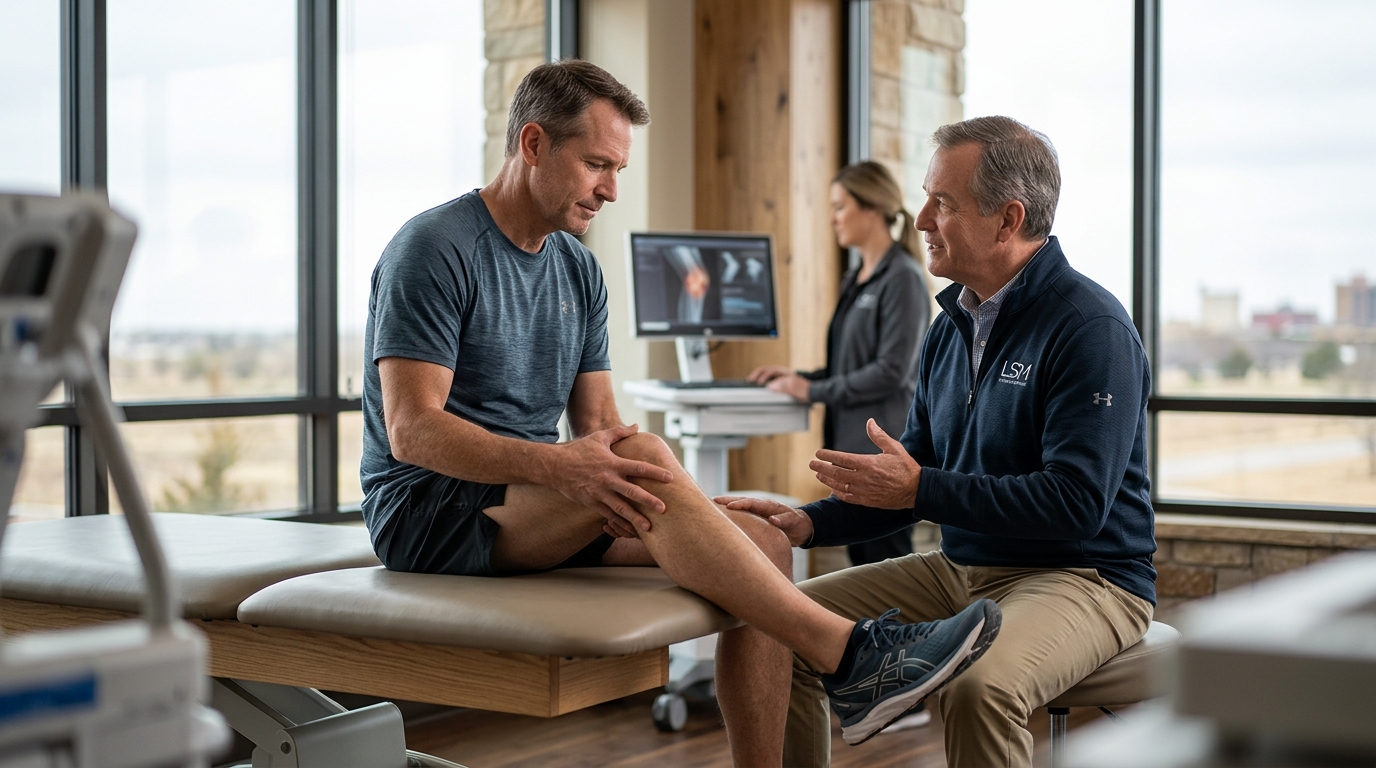
Accurate diagnosis is critical for determining the appropriate treatment plan. A meniscus tear is a rupture in the C-shaped cartilage that cushions the knee joint. The diagnostic process at Lubbock Sports Medicine typically begins with a comprehensive physical examination. Providers assess joint stability, range of motion, and specific signs of meniscal injury, such as joint line tenderness or locking sensations.
Imaging and Advanced Diagnostics
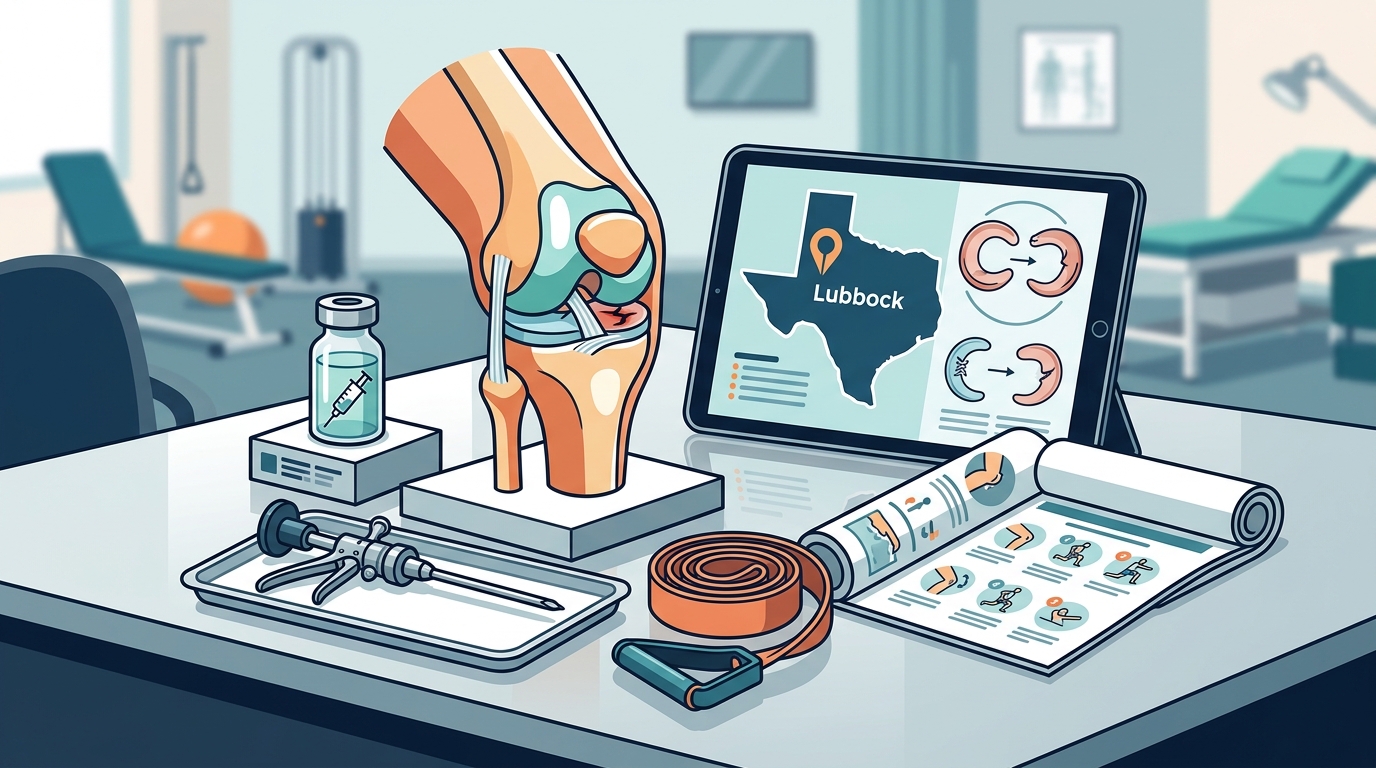
While physical exams are highly effective, imaging is often used to confirm the diagnosis and plan surgery if needed. Magnetic Resonance Imaging (MRI) is the gold standard for visualizing soft tissue structures like the meniscus. Our clinic offers access to advanced diagnostic imaging to ensure a precise assessment. For patients with complex injuries or those considering surgical intervention, detailed imaging helps the surgeon plan the procedure with greater accuracy.
Treatment Options: Non-Surgical vs. Surgical
Not all meniscus tears require surgery. The treatment approach depends on the type, location, and severity of the tear, as well as the patient's age and activity goals. Non-surgical treatment is often the first line of defense for stable tears or those with a good blood supply. This approach typically involves rest, ice, compression, and elevation (RICE), along with physical therapy to strengthen the muscles around the knee.
Arthroscopic Surgery
For tears that do not respond to conservative care, or for complex tears that cause mechanical symptoms like locking or catching, arthroscopic surgery may be recommended. Arthroscopy is a minimally invasive procedure that allows surgeons to repair or remove damaged meniscal tissue with small incisions. Dr. Crawford and Dr. Campbell are experienced in performing arthroscopic meniscus repairs and partial meniscectomies. These procedures generally offer faster recovery times compared to open surgery.
Comparison of Treatment Approaches
| Factor | Non-Surgical Treatment | Arthroscopic Surgery |
|---|---|---|
| Best For | Stable tears, good blood supply, mild symptoms | Complex tears, mechanical symptoms, failed conservative care |
| Recovery Time | 4-8 weeks for symptom relief | 2-6 weeks for basic mobility, 3-6 months for full return to sport |
| Procedure | Physical therapy, activity modification | Minimally invasive arthroscopy |
| Long-Term Outlook | Preserves native tissue | May involve partial removal of tissue |
Rehabilitation and Return to Activity
Rehabilitation is a crucial component of meniscus recovery, whether the patient undergoes surgery or not. Lubbock Sports Rehab is the official physical therapy clinic of Lubbock Sports Medicine. The staff at Lubbock Sports Rehab has over 80 years of combined experience in physical therapy and athletic training. They work closely with our physicians to ensure that rehab protocols align with the specific surgical or non-surgical treatment plan.
Personalized Rehab Programs
Our rehabilitation programs are personalized to each patient's goals. For athletes, the focus is on restoring strength, stability, and proprioception to prevent re-injury. The team includes licensed physical therapists and certified athletic trainers who provide hands-on care and education. Patients have the option to receive physical therapy from the facility of their choice, but many choose Lubbock Sports Rehab for its seamless communication with the surgical team and its focus on returning patients to their desired level of activity.
Key Takeaways
- Lubbock Sports Medicine offers specialized care for meniscus tears with a team of board-certified orthopedic surgeons and advanced practice providers.
- Dr. Kevin Crawford and Dr. Joel Campbell are fellowship-trained specialists in arthroscopic and reconstructive knee surgery.
- Non-surgical treatment is often effective for stable meniscus tears and should be considered first.
- Arthroscopic surgery is a minimally invasive option for complex tears or those causing mechanical symptoms.
- Accurate diagnosis relies on a combination of physical examination and advanced imaging like MRI.
- Lubbock Sports Rehab provides personalized physical therapy to support recovery and return to activity.
- Advanced practice providers like Stan Kotara, PA-C, and Jordan Williams, PA-C, offer expert non-operative management and sports injury care.
- Choosing a provider with sports medicine fellowship training ensures access to the latest techniques in knee preservation and reconstruction.
Frequently Asked Questions
Who is the best doctor for meniscus tears in Lubbock?
Dr. Kevin Crawford and Dr. Joel Campbell are highly regarded for their expertise in knee arthroscopy and meniscus repair. Both have fellowship training in sports medicine and are board-certified orthopedic surgeons at Lubbock Sports Medicine.
Do all meniscus tears require surgery?
No. Many meniscus tears, particularly those with a good blood supply, can be treated successfully with non-surgical methods like physical therapy and activity modification. Surgery is typically reserved for tears that cause mechanical symptoms or fail to heal with conservative care.
How long does it take to recover from a meniscus tear?
Recovery time varies. Non-surgical treatment may take 4 to 8 weeks for symptom relief. After arthroscopic surgery, patients can often walk with a cane within a few days, but full return to sports may take 3 to 6 months depending on the type of repair.
What is arthroscopic meniscus repair?
Arthroscopic meniscus repair is a minimally invasive surgical procedure where the surgeon uses small incisions and a camera to repair the torn meniscus. It allows for faster recovery compared to open surgery and preserves as much of the native tissue as possible.
Can I still play sports after a meniscus tear?
Yes, many patients return to their pre-injury level of activity. With proper treatment and rehabilitation, athletes can often return to sports. The key is following a structured rehab program to ensure the knee is strong and stable.
Who provides physical therapy for meniscus injuries at Lubbock Sports Medicine?
Lubbock Sports Rehab is the official physical therapy clinic associated with Lubbock Sports Medicine. Their staff of physical therapists and athletic trainers works closely with our physicians to provide personalized rehab plans.
Do I need a referral to see a specialist at Lubbock Sports Medicine?
While a referral from a primary care physician is helpful, it is not always required. Patients can contact the clinic directly to schedule an appointment. Our team will guide you through the registration process and answer any questions about insurance and next steps.
Conclusion
Navigating a meniscus tear can be daunting, but you do not have to do it alone. Lubbock Sports Medicine provides comprehensive care from diagnosis through rehabilitation, ensuring that you have the support needed to get back to the activities you love. Our team of specialists, including fellowship-trained surgeons and experienced advanced practice providers, is dedicated to delivering the latest treatment options for orthopedic sports medicine injuries. Whether you are a recreational athlete or an elite competitor, our focus is on helping you live the quality of life you desire. To begin your journey to recovery, contact Lubbock Sports Medicine today to schedule an appointment.