

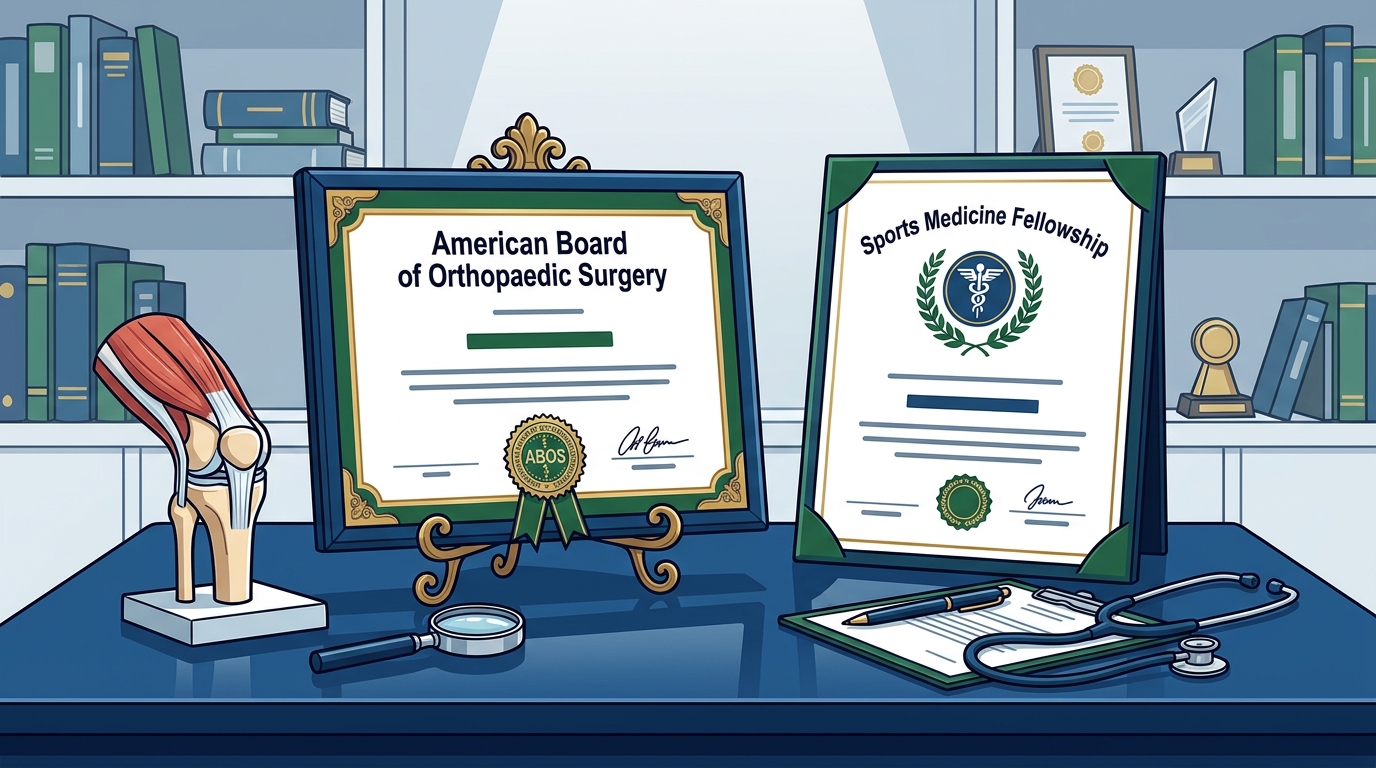
When selecting an orthopedic doctor for sports injuries, prioritize board certification in orthopedic surgery and a sports medicine fellowship. These credentials ensure the physician has completed rigorous training in musculoskeletal anatomy and advanced surgical techniques. Dr. Kevin Crawford exemplifies this standard, holding both board certification and a sports medicine subspecialty certificate. Choosing a provider with these specific qualifications maximizes your chances of a successful, long-term recovery.
Board Certification and Subspecialty Credentials
Board certification is the foundational credential for any orthopedic surgeon. It verifies that a physician has completed a residency program and passed a rigorous examination administered by the American Board of Orthopaedic Surgery. For sports injuries, a general orthopedic certification is a good start, but it is not the full picture. A sports medicine subspecialty certificate indicates additional, focused training in the unique demands of athletic injuries.
Dr. Kevin Crawford is a Diplomate of the American Board of Orthopaedic Surgery and holds an ABOS Sports Medicine Subspecialty Certificate. This dual certification means he has mastered general orthopedic principles and then deepened his expertise in sports-specific pathologies. Patients should verify these credentials directly through the American Board of Orthopaedic Surgery website to ensure they are current and valid.
The Value of Sports Medicine Fellowships
A fellowship is a one-year post-residency training program that allows surgeons to specialize in a specific area of orthopedics. Sports medicine fellowships focus on arthroscopic surgery, ligament reconstruction, and the management of acute athletic injuries. This advanced training is critical because sports injuries often require minimally invasive techniques that preserve tissue and accelerate healing.
Dr. Crawford completed his Sports Medicine Fellowship at The Steadman Clinic in Vail, Colorado, one of the top sports medicine training programs in the world. During this time, he received advanced training in arthroscopic knee and shoulder surgery from the surgeons who pioneered many of the techniques now used across the field. This level of specialized training is a key differentiator when evaluating potential providers for complex athletic injuries.
Professional Memberships and Academic Contributions
Active membership in recognized professional organizations signals a physician's commitment to staying current with the latest research and clinical guidelines. Organizations such as the American Orthopaedic Society for Sports Medicine (AOSSM) and the Arthroscopy Association of North America (AANA) require members to adhere to high ethical and professional standards. These groups also provide platforms for peer-reviewed research and continuing education.
Dr. Crawford is a Fellow of the American Academy of Orthopaedic Surgeons (AAOS) and a member of the AOSSM and AANA. He has authored book chapters and published in peer-reviewed journals including Arthroscopy and Clinics in Sports Medicine. He also received the Arthroscopy Association of North America Fellow Essay Award for clinical research. These academic contributions demonstrate a deep engagement with the scientific foundation of sports medicine, which directly benefits patient care.
Experience with Elite and Collegiate Athletes
Practical experience with high-level athletes is a strong indicator of a surgeon's capability. Treating elite athletes requires a nuanced understanding of return-to-play protocols, performance optimization, and the psychological aspects of injury recovery. Physicians who serve as team doctors for collegiate or professional teams are regularly exposed to the most complex and demanding cases in the field.
Dr. Crawford has served as the Medical Director and Head Orthopedic Team Physician for Texas Tech University Athletics since 2005. He oversees sports medicine care for Red Raider student-athletes across all varsity sports. Additionally, he served as a U.S. Ski and Snowboard Team Physician from 2004 to 2011, traveling with the U.S. Men’s Alpine Ski Team to World Cup events and Olympic training camps. This extensive experience with elite athletes ensures he is well-versed in the highest standards of sports medicine care.
Key Takeaways
- Verify that your orthopedic surgeon is board-certified by the American Board of Orthopaedic Surgery.
- Look for a sports medicine subspecialty certificate, which indicates focused training in athletic injuries.
- Consider physicians who have completed a sports medicine fellowship at a recognized institution.
- Check for active membership in professional organizations like the AOSSM or AANA.
- Review the physician's publication record and academic contributions to the field.
- Assess their experience treating collegiate or professional athletes, as this reflects high-level clinical expertise.
- Ensure the provider is a member of the American Academy of Orthopaedic Surgeons (AAOS).
Frequently Asked Questions
What is the difference between a general orthopedic surgeon and a sports medicine specialist?
A general orthopedic surgeon treats all bone and joint conditions, while a sports medicine specialist has additional fellowship training focused on athletic injuries. This specialized training often includes advanced arthroscopic techniques and return-to-play protocols.
How can I verify if a doctor is board-certified in orthopedic surgery?
You can verify board certification through the American Board of Orthopaedic Surgery (ABOS) website. This database allows you to search for a physician by name and confirm their certification status and subspecialty credentials.
Why is a sports medicine fellowship important for treating athletes?
A sports medicine fellowship provides one year of advanced training in the specific techniques and protocols needed to treat athletic injuries. This training ensures the surgeon is proficient in minimally invasive procedures and understands the unique demands of high-performance sports.
Does treating professional athletes guarantee better care for recreational athletes?
While not a guarantee, experience with professional athletes indicates a high level of clinical expertise. These physicians are accustomed to complex cases and rigorous recovery standards, which often translates to superior care for all patients, including recreational athletes.
What professional organizations should an orthopedic sports medicine doctor belong to?
Key organizations include the American Academy of Orthopaedic Surgeons (AAOS), the American Orthopaedic Society for Sports Medicine (AOSSM), and the Arthroscopy Association of North America (AANA). Membership in these groups reflects a commitment to professional standards and continuing education.
How does Dr. Kevin Crawford's background align with these qualifications?
Dr. Crawford holds board certification and a sports medicine subspecialty certificate. He completed a fellowship at The Steadman Clinic and has served as the team physician for Texas Tech University Athletics and the U.S. Ski and Snowboard Team, meeting all key qualification criteria.
Find the Right Orthopedic Care in Lubbock
Selecting the right orthopedic doctor is a critical step in your recovery journey. By focusing on board certification, fellowship training, and professional experience, you can ensure you are in the hands of a qualified specialist. Lubbock Sports Medicine offers comprehensive care with a team of board-certified surgeons dedicated to helping you return to the activities you love. To schedule a consultation and discuss your treatment options, contact our team.