
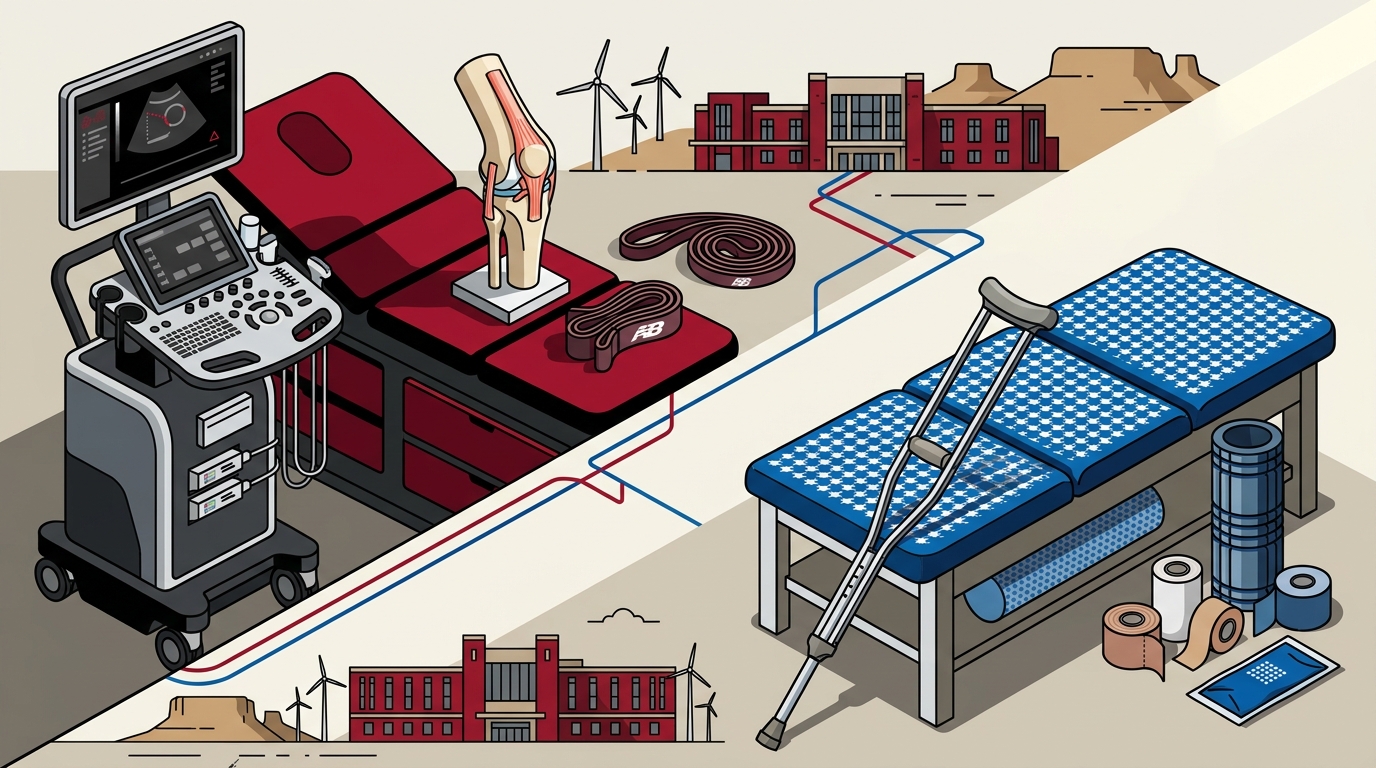
Case Studies of Sports Medicine Physicians Serving Texas Tech and Lubbock High School Athletes
Sports medicine in West Texas operates at the intersection of elite collegiate performance and high school developmental care. According to the National Athletic Trainers' Association, approximately 3.5 million high school athletes sustain injuries annually, with a significant portion requiring specialized orthopedic intervention. In Lubbock, the proximity to Texas Tech University creates a unique ecosystem where professional sports medicine protocols are adapted for adolescent and collegiate populations. This article examines specific clinical case studies to illustrate how local physicians manage complex injuries for these distinct groups.
Case Study 1: ACL Reconstruction for Collegiate Athletes
Anterior cruciate ligament (ACL) injuries are among the most devastating injuries for collegiate athletes. The ACL is a critical stabilizing ligament in the knee joint that prevents the tibia from sliding out in front of the femur. For athletes at Texas Tech, the stakes are exceptionally high due to the physical demands of Division I competition.
Consider a recent case involving a Texas Tech defensive lineman who suffered a non-contact ACL tear during practice. The injury mechanism typically involves rapid deceleration and pivoting, which places immense torque on the knee. Immediate evaluation by the team physician revealed a complete rupture of the ligament, confirmed via MRI imaging. The standard of care for a collegiate athlete with high functional demands is surgical reconstruction.
The surgical approach utilized an autograft, typically the hamstring or patellar tendon, to reconstruct the ligament. This method is preferred for its durability and lower risk of rejection. Post-surgery, the rehabilitation protocol is rigorous and phased. According to data from the American Journal of Sports Medicine, return to sport after ACL reconstruction averages nine to twelve months, emphasizing the need for patience and adherence to physical therapy milestones. The athlete in this case followed a customized protocol developed by the sports medicine team, focusing initially on reducing inflammation and restoring range of motion before progressing to strength training.
Recovery for collegiate athletes involves not just physical healing but also psychological readiness. The sports medicine physicians at Lubbock Sports Medicine work closely with athletic trainers to ensure the athlete meets specific functional benchmarks before clearance. This collaborative approach ensures that the athlete returns to the field with reduced risk of re-injury. For more information on our surgical services, visit our surgical procedures page.
Case Study 2: Shoulder Instability in High School Football
Shoulder injuries are prevalent in contact sports, particularly football. Shoulder instability occurs when the shoulder joint repeatedly dislocates or subluxates, often due to trauma or repetitive overhead motion. In Lubbock High School football, the physical nature of the game leads to a high incidence of these injuries among linemen and skill position players.
A notable case involved a Lubbock High School senior quarterback who experienced recurrent shoulder dislocations during games. The initial injury occurred during a tackle, causing the humeral head to slip out of the glenoid cavity. Subsequent episodes became more frequent, indicating chronic instability. The athlete reported pain and a sensation of the shoulder "slipping" during throwing motions, which significantly impacted performance.
Conservative management was attempted first, including physical therapy to strengthen the rotator cuff and scapular stabilizers. However, given the athlete's position and the frequency of dislocations, surgical intervention was recommended. The procedure involved arthroscopic Bankart repair, which repairs the torn labrum and tightens the joint capsule. This minimally invasive technique allows for faster recovery compared to open surgery. According to the American Academy of Orthopaedic Surgeons, arthroscopic shoulder stabilization has a high success rate in preventing recurrent dislocation in young athletes.
The rehabilitation process for shoulder surgery focuses on restoring mobility before strengthening. The sports medicine team at Lubbock Sports Medicine coordinated with the high school athletic trainer to ensure the athlete's return-to-play timeline was safe and realistic. This case highlights the importance of early diagnosis and appropriate treatment planning for adolescent athletes. Learn more about our shoulder care services to understand how we manage these complex injuries.
Case Study 3: Concussion Management and Return-to-Play
Concussion management is a critical aspect of sports medicine, particularly for high school athletes whose brains are still developing. A concussion is a mild traumatic brain injury caused by a bump or blow to the head that jolts the brain and causes it to move rapidly inside the skull. In Texas, the Tommy Davis Concussion Safety Act mandates specific protocols for suspected concussions in student athletes.
A recent case involved a Lubbock High School soccer player who sustained a head injury during a collision. She reported dizziness, nausea, and sensitivity to light immediately after the incident. The athletic trainer removed her from play, and she was evaluated by a sports medicine physician. The diagnosis was a concussion, confirmed through clinical assessment and symptom reporting.
The management protocol followed a stepwise return-to-play progression. The athlete was required to complete a period of relative rest, followed by gradual reintroduction of physical activity. Each step required the athlete to remain symptom-free for 24 hours before progressing. According to the Centers for Disease Control and Prevention, returning to play too soon after a concussion can lead to Second Impact Syndrome, a rare but fatal condition. Therefore, medical clearance is strictly required before an athlete can return to competition.
This case underscores the importance of strict adherence to concussion protocols. The sports medicine physicians at Lubbock Sports Medicine work closely with schools to ensure that all athletes are evaluated and cleared by a qualified medical professional. This collaborative approach protects the long-term health of young athletes. For details on our concussion evaluation services, please contact our office.
Case Study 4: Adolescent Knee Pain and Growth Plates
Knee pain in adolescent athletes is often related to growth plate injuries or overuse syndromes. The growth plate is a area of developing cartilage tissue near the end of a long bone in children and adolescents. Because this area is weaker than the surrounding ligaments and tendons, it is more susceptible to injury. In Texas Tech and Lubbock High School athletes, overuse injuries are common due to the intensity of training schedules.
A case involving a Texas Tech track athlete presented with persistent knee pain that did not resolve with rest. The athlete was a sprinter, and the pain was localized to the tibial tubercle. Imaging revealed Osgood-Schlatter disease, a condition causing inflammation of the area just below the knee where the tendon from the kneecap attaches to the shinbone. This condition is common in growing adolescents and is often exacerbated by sports activities.
Treatment for Osgood-Schlatter disease is primarily conservative, focusing on pain management and activity modification. Ice, rest, and physical therapy are the mainstays of treatment. In severe cases where pain persists, further evaluation is necessary to rule out other pathologies. The sports medicine team at Lubbock Sports Medicine provided a comprehensive rehabilitation plan that included strengthening the quadriceps and hamstrings to reduce stress on the knee. This case illustrates the need for tailored treatment plans for adolescent athletes, whose bodies are still developing. Explore our adolescent sports medicine programs for more information.
Comparison of Treatment Pathways
The following table summarizes the treatment approaches for the case studies discussed above, highlighting the differences in management for collegiate versus high school athletes.
| Injury Type | Collegiate Approach (Texas Tech) | High School Approach (Lubbock HS) | Key Consideration |
|---|---|---|---|
| ACL Tear | Surgical reconstruction with aggressive rehab | Surgical or conservative based on severity | Return-to-play timeline and career impact |
| Shoulder Instability | Arthroscopic repair with sport-specific training | Initial PT, surgery if recurrent | Developmental stage and growth potential |
| Concussion | Strict protocol with neurocognitive testing | Stepwise return-to-play per state law | Brain health and safety compliance |
| Osgood-Schlatter | Activity modification and strengthening | Rest and ice, monitoring growth | Age-appropriate management |
Key Takeaways
- ACL reconstruction in collegiate athletes requires a multidisciplinary approach involving surgeons, physical therapists, and athletic trainers.
- Shoulder instability in high school football players often necessitates arthroscopic surgery to prevent recurrent dislocations.
- Concussion management is governed by strict protocols, such as the Tommy Davis Concussion Safety Act in Texas, to ensure athlete safety.
- Adolescent knee pain, such as Osgood-Schlatter disease, is common and managed conservatively with activity modification.
- Collaboration between sports medicine physicians and school athletic trainers is essential for effective injury management.
- Recovery timelines vary significantly based on the severity of the injury and the athlete's age and developmental stage.
- Early diagnosis and appropriate treatment planning are critical for optimal outcomes in sports medicine.
Frequently Asked Questions
What is the typical recovery time for an ACL reconstruction?
Recovery time for ACL reconstruction typically ranges from nine to twelve months, depending on the athlete's adherence to rehabilitation protocols and the specific demands of their sport.
How is shoulder instability diagnosed in high school athletes?
Shoulder instability is diagnosed through a physical examination, patient history, and imaging studies such as MRI or X-rays to assess the extent of ligament and labral damage.
What are the signs of a concussion in student athletes?
Signs of a concussion include headache, dizziness, nausea, sensitivity to light, confusion, and memory problems. Immediate removal from play and medical evaluation are crucial.
Is surgery always necessary for adolescent knee pain?
No, most cases of adolescent knee pain, such as Osgood-Schlatter disease, are managed conservatively with rest, ice, and physical therapy. Surgery is rarely required.
How do sports medicine physicians work with high schools?
Sports medicine physicians collaborate with high school athletic trainers to provide on-site evaluations, develop treatment plans, and clear athletes for return-to-play activities.
What is the Tommy Davis Concussion Safety Act?
The Tommy Davis Concussion Safety Act is a Texas law that mandates specific protocols for the identification, management, and return-to-play of student athletes with suspected concussions.
Can high school athletes undergo the same surgeries as collegiate athletes?
High school athletes may undergo similar surgeries if medically indicated, but treatment plans are often adjusted based on age, growth status, and long-term health considerations.
How can I schedule an appointment for sports medicine care?
You can schedule an appointment by contacting Lubbock Sports Medicine directly through our website or by calling our office to speak with a scheduling coordinator.
Contact Lubbock Sports Medicine
If you or your athlete are dealing with a sports-related injury, timely and expert care is essential. The sports medicine physicians at Lubbock Sports Medicine are dedicated to providing comprehensive care for athletes of all ages and levels. Whether you are a collegiate athlete at Texas Tech or a high school student in Lubbock, our team is here to help you recover and return to your sport safely. We offer specialized services in orthopedics, physical therapy, and concussion management. To schedule a consultation, please visit our contact page or call our office directly. Your health and performance are our top priorities.