
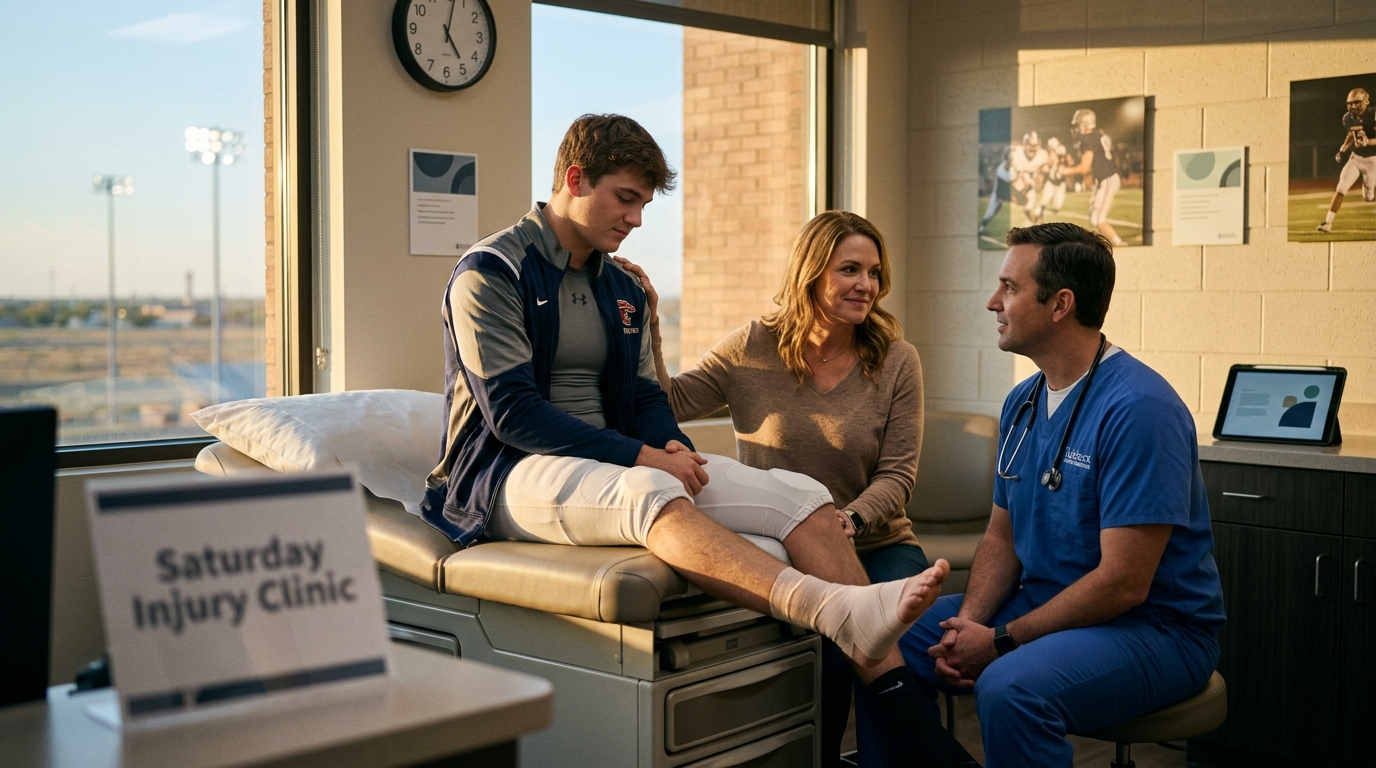
Essential Criteria for Choosing a Saturday Injury Clinic for High School Athletes in the South Plains
Orthopedic injuries among high school athletes in the South Plains region are a significant public health concern. According to CDC data, sports-related injuries account for millions of emergency department visits annually, with a disproportionate impact on adolescents aged 14 to 18. For families in Lubbock and surrounding communities, the urgency of timely diagnosis cannot be overstated. Delayed treatment often transforms manageable sprains into chronic conditions requiring extensive rehabilitation. This guide outlines the critical factors parents must evaluate when selecting a Saturday injury clinic to ensure their child receives elite-level orthopedic care without compromising academic schedules. (About Us Lubbock Sports)
Medical Expertise and Physician Credentials
The most critical factor in choosing a Saturday injury clinic is the specific medical expertise of the providers on duty. High school athletes face unique physiological challenges, including growth plate injuries and ligament tears that differ significantly from adult presentations. Parents should verify that the clinic employs board-certified orthopedic surgeons or certified physician assistants who specialize in sports medicine.
At Lubbock Sports Medicine, the team includes distinguished physicians such as Dr. Kevin Crawford and Dr. David Shephard, who are members of the American Academy of Orthopaedic Surgeons. Their specialization ensures that athletes receive care that aligns with the latest clinical guidelines. When evaluating other clinics, ask specifically about the provider's fellowship training. General practitioners may lack the nuanced understanding required for complex athletic injuries.
Furthermore, the presence of certified athletic trainers on-site is a vital indicator of quality. These professionals bridge the gap between emergency care and long-term recovery. According to the National Athletic Trainers' Association, early intervention by certified staff reduces the risk of re-injury by up to 30 percent. Ensure the Saturday clinic has immediate access to these specialists for initial assessments.
Diagnostic Capabilities and Technology
Accurate diagnosis is the foundation of effective treatment. A Saturday injury clinic must be equipped with advanced diagnostic imaging capabilities. While X-rays are standard for fractures, magnetic resonance imaging (MRI) and ultrasound are often necessary to evaluate soft tissue damage, such as meniscus tears or tendonitis.
Look for clinics that offer on-site or rapid-access imaging. Lubbock Sports Medicine utilizes state-of-the-art equipment to ensure precise diagnostics. For instance, their commitment to MAKO Robotic-Arm Assisted Technology demonstrates a broader institutional commitment to precision medicine, even though this specific technology is primarily used for joint reconstruction. For acute injuries, the speed of diagnosis is paramount. Delays in imaging can extend recovery times by weeks.
Additionally, consider the clinic's ability to provide immediate orthopedic consultation. If a fracture is suspected, the ability to cast or splint the injury on-site prevents further damage during transport. Clinics that rely solely on referrals for basic diagnostics often result in fragmented care, forcing families to navigate multiple appointments before a treatment plan is established.
Continuity of Care and Rehabilitation
One of the most significant advantages of choosing a dedicated sports medicine center over a general urgent care is the continuity of care. An injury diagnosed on Saturday should not be the end of the interaction. The clinic must offer a clear pathway to rehabilitation and follow-up.
Lubbock Sports Rehab provides a seamless transition from diagnosis to recovery. This integrated model ensures that the physical therapist understands the specific surgical or non-surgical plan devised by the orthopedic specialist. Research published in the Journal of Orthopaedic & Sports Physical Therapy indicates that patients who engage in early, supervised rehabilitation have significantly better functional outcomes than those who delay therapy.
When evaluating clinics, ask about their post-visit protocol. Do they schedule follow-up appointments automatically? Do they coordinate directly with the athlete's school athletic trainer? Seamless communication between the clinic, the family, and the school is essential for managing return-to-play timelines. Clinics that operate in silos often leave parents to manage the complex logistics of care coordination themselves.
Specialized Services for Youth Athletes
High school athletes require specialized care that addresses their developmental stage. Concussion management is a prime example. The brain of an adolescent is still developing, making them more susceptible to long-term cognitive effects from head injuries. A clinic with a dedicated concussion protocol is non-negotiable for modern sports medicine.
Lubbock Sports Medicine has been at the forefront of concussion education, with staff like Stan Kotara, PA-C, actively engaging with local media to discuss these critical issues. This proactive approach ensures that athletes receive evidence-based management rather than generic advice. Look for clinics that offer baseline testing and graduated return-to-play protocols.
Another critical service is the management of overuse injuries, which are increasingly common in youth sports due to year-round specialization. Clinics that offer comprehensive physical therapy and orthopedic surgery services can address both acute trauma and chronic conditions. This dual capability prevents the need for multiple referrals and reduces the overall burden on the family.

Comparing Clinic Options in the Region
Choosing the right clinic involves comparing several key dimensions. The table below summarizes the critical differences between a dedicated sports medicine center and a general urgent care facility.
| Criteria | Dedicated Sports Medicine Clinic | General Urgent Care |
|---|---|---|
| Provider Expertise | Board-certified orthopedic surgeons and sports medicine specialists. | General practitioners or family medicine physicians. |
| Diagnostic Access | On-site advanced imaging and rapid specialist consultation. | Basic X-ray only; referrals required for MRI/CT. |
| Rehabilitation Integration | Direct access to specialized physical therapy and recovery programs. | Referral to external therapists; no care coordination. |
| Youth-Specific Protocols | Concussion management and growth plate injury expertise. | Standard adult protocols applied to pediatric cases. |
| Return-to-Play Coordination | Direct communication with school athletic trainers. | Parent-managed communication with school staff. |
As shown in the comparison, dedicated sports medicine centers offer a level of integration and expertise that general urgent cares cannot match. For high school athletes, this distinction is not merely a convenience but a medical necessity.
Key Takeaways
- Specialist Credentials: Verify that providers are board-certified orthopedic surgeons or certified physician assistants with sports medicine fellowship training.
- Diagnostic Speed: Choose clinics with on-site imaging to ensure rapid diagnosis of fractures and soft tissue injuries.
- Integrated Rehab: Prioritize centers that offer direct access to physical therapy, such as Lubbock Sports Rehab, for seamless recovery.
- Concussion Expertise: Ensure the clinic has a dedicated protocol for managing head injuries, a critical component of modern youth sports medicine.
- Continuity of Care: Select providers who coordinate directly with school athletic trainers to manage return-to-play timelines effectively.
- Robotic Precision: For potential surgical needs, inquire about the use of advanced technologies like MAKO robotic assistance for superior outcomes.
- Local Authority: Lubbock Sports Medicine has served the South Plains community for decades, establishing a reputation for excellence in orthopedic care.
Frequently Asked Questions
What is the best time to visit a Saturday injury clinic?
It is best to visit as soon as possible after the injury occurs. Early evaluation prevents further damage and allows for immediate pain management. Delaying care can lead to increased swelling and longer recovery times.
Do I need a referral to see an orthopedic specialist?
Most sports medicine clinics, including Lubbock Sports Medicine, accept direct referrals for acute injuries. However, it is always advisable to check with your insurance provider regarding coverage for specialist visits.
How do you determine if a high school athlete needs surgery?
Surgery is typically considered only after conservative treatments, such as physical therapy and bracing, have failed. Advanced imaging and specialist evaluation are required to make this determination. According to the American Academy of Orthopaedic Surgeons, the majority of sports injuries can be managed non-surgically.
What is the role of a physician assistant in sports medicine?
Certified physician assistants, such as those at Lubbock Sports Medicine, work closely with orthopedic surgeons to diagnose injuries, provide initial treatment, and assist in surgical procedures. They are highly trained to manage acute sports injuries.
How long does a typical Saturday clinic visit take?
Visits typically last between 30 to 60 minutes, depending on the complexity of the injury. This includes the physical examination, imaging review, and discussion of the treatment plan.
Can the clinic communicate with my child's school?
Yes, many sports medicine clinics coordinate directly with school athletic trainers. This ensures that the athlete's return-to-play timeline is managed safely and in accordance with school policies.
What insurance plans are accepted?
Lubbock Sports Medicine accepts most major insurance plans. It is recommended to contact the clinic's billing department to verify specific coverage details before your visit.
Schedule Your Evaluation
Do not let an injury sideline your child's athletic career. Trust the experts who understand the unique demands of high school sports in the South Plains. Lubbock Sports Medicine offers comprehensive care, from initial diagnosis to advanced rehabilitation. Contact us today to schedule an appointment or visit our online registration page to get started. For immediate assistance, call 806-792-4329.