
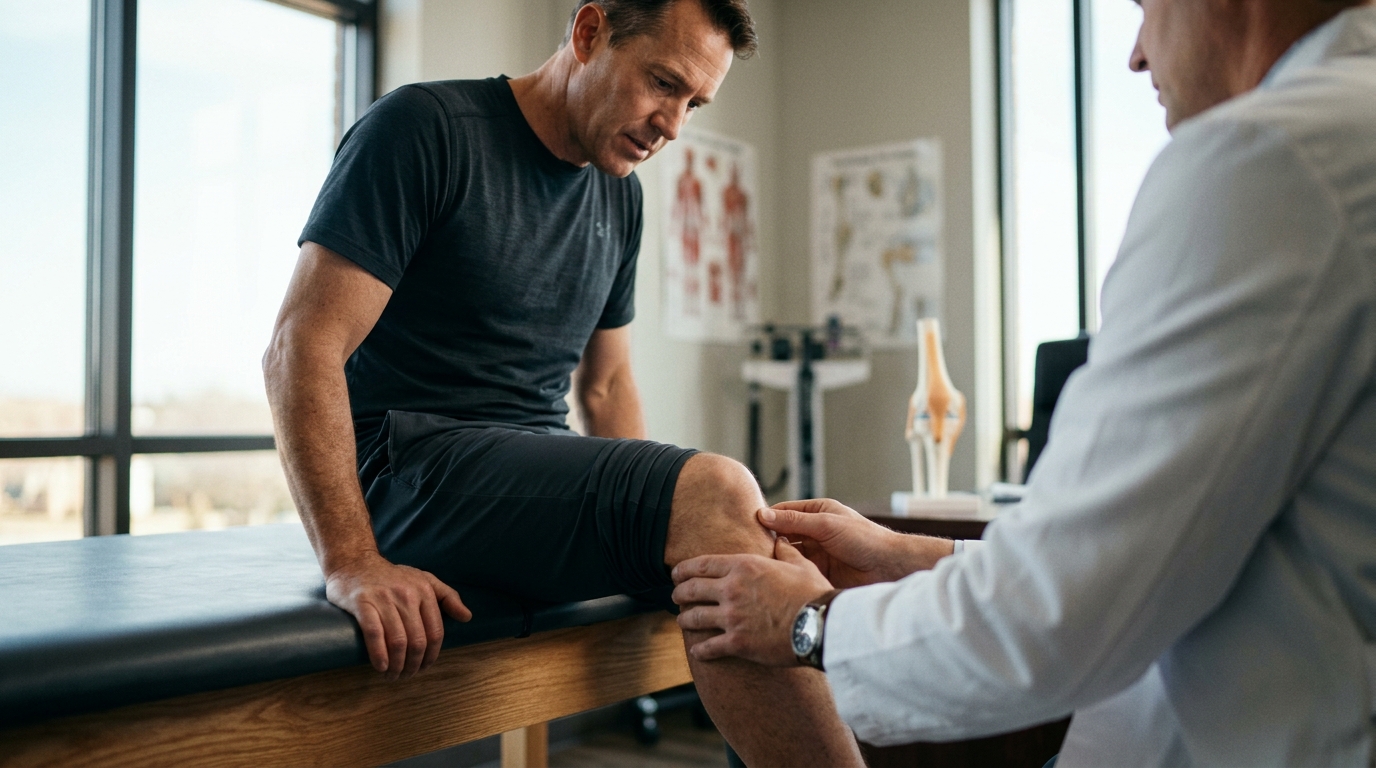
Dr. Kevin Crawford, Dr. Joel Campbell, and Dr. Stephen Flores at Lubbock Sports Medicine are the primary specialists for meniscus tears in Lubbock, TX. This guide details the specific surgeons, their fellowship training, and the non-surgical and surgical options available for knee cartilage injuries.
Sports Medicine Specialists
Choosing the right provider is the first step in effective meniscus care. Lubbock Sports Medicine features a team of board-certified orthopedic surgeons with specific fellowship training in sports medicine and joint reconstruction. These physicians are members of the American Academy of Orthopaedic Surgeons and the American Orthopaedic Society for Sports Medicine.
Dr. Kevin Crawford
Dr. Kevin Crawford serves as the Medical Director and Head Orthopedic Team Physician for Texas Tech University Athletics. He completed a Sports Medicine Fellowship at The Steadman Clinic in Vail, Colorado, which is recognized as a top training program in the world. His practice focuses on minimally invasive and arthroscopic surgery of the knee, including cartilage restoration and ligament reconstruction.
Dr. Joel Campbell
Dr. Joel Campbell specializes in arthroscopic and reconstructive surgery of the shoulder, knee, and elbow. He received advanced training in complex shoulder reconstruction, knee preservation, and cartilage restoration during his fellowship at the Steadman Hawkins Clinic in Greenville, SC. Dr. Campbell has a special interest in treating athletes and active individuals, having covered professional and collegiate teams during his training.
Dr. Stephen Flores
Dr. Stephen Flores is a board-certified Orthopedic Surgeon with fellowship training in Sports Medicine at TOCA/University of Arizona College of Medicine, affiliated with Mayo Clinic Scottsdale. He provides athletic coverage throughout West Texas and serves as the head team Orthopedic Physician for Lubbock Christian University Athletics. His expertise includes the evaluation and treatment of tendon, ligament, and muscular injuries.
The Diagnostic Process
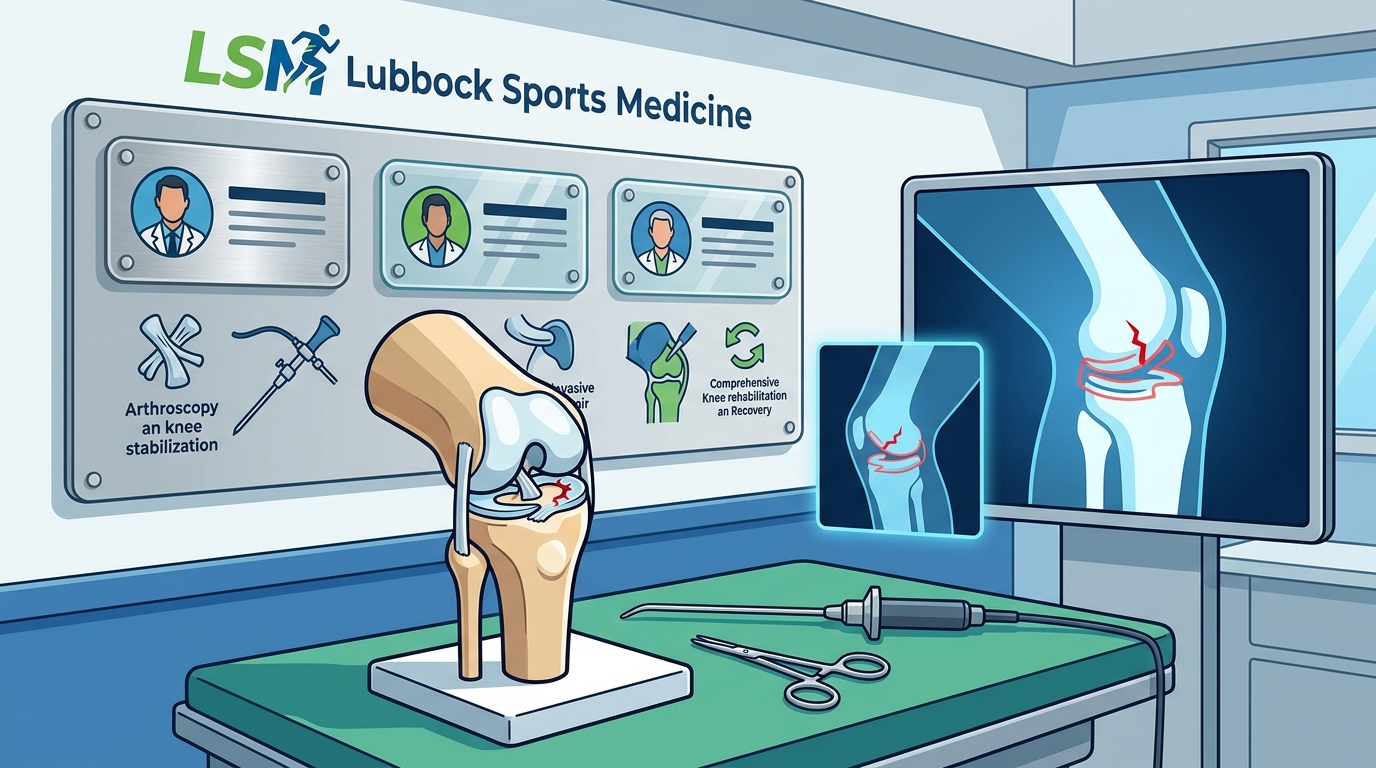
A meniscus tear is a common knee injury that can range from minor fraying to a complete split. Accurate diagnosis is critical because the treatment plan depends heavily on the type and location of the tear. At Lubbock Sports Medicine, the diagnostic process typically begins with a physical examination to assess joint stability and range of motion.
Physicians often utilize advanced diagnostic imaging to confirm the injury. While X-rays are used to rule out bone issues, MRI scans are the gold standard for visualizing soft tissue damage like meniscus tears. The clinic provides access to these imaging services to ensure a precise diagnosis before any treatment is initiated.
Treatment Options: Conservative vs. Surgical
Not all meniscus tears require surgery. The approach depends on the patient's age, activity level, and the specific nature of the tear. Lubbock Sports Medicine offers a full spectrum of care, from non-operative management to advanced surgical reconstruction.
Non-Operative Management
For minor tears or those in areas with good blood supply, conservative treatment is often effective. This approach includes rest, ice, compression, and elevation (RICE), along with physical therapy to strengthen the muscles around the knee. Dr. Stan Kotara, PA-C, emphasizes non-operative management of musculoskeletal problems whenever possible, utilizing the latest techniques to augment healing.
Arthroscopic Surgery
When conservative measures fail, or if the tear is complex, arthroscopic surgery may be recommended. This minimally invasive procedure allows surgeons to repair or remove the damaged portion of the meniscus. Dr. Crawford and Dr. Campbell are experienced in these techniques, having trained at the Steadman Clinic, a pioneer in arthroscopic surgery.
Cartilage Restoration and Biologics
For more complex cases involving cartilage loss, advanced biologics such as platelet-rich plasma (PRP) and stem cell therapy may be used to support healing. Dr. Crawford utilizes these therapies to enhance the body's natural repair processes. The following table summarizes the common treatment pathways:
| Treatment Type | Indication | Key Providers at LSM |
|---|---|---|
| Physical Therapy | Minor tears, stability issues | Lubbock Sports Rehab Staff |
| Arthroscopic Repair | Complex or displaced tears | Dr. Crawford, Dr. Campbell |
| Biologics (PRP/Stem Cell) | Cartilage degeneration, healing support | Dr. Crawford |
Rehabilitation and Return to Play
Rehabilitation is a critical component of meniscus recovery. Lubbock Sports Rehab is the official physical therapy clinic of Lubbock Sports Medicine. The staff at Lubbock Sports Rehab combined have over 80 years of experience in physical therapy and athletic training. They are familiar with the physicians' rehab protocols and maintain open lines of communication to ensure the most appropriate rehab for each injury.
For student-athletes, the clinic offers Saturday Morning Injury Clinics where physicians provide services at no charge for acute injuries sustained during contests. This service includes immediate care, injury education, and return-to-play mapping. The goal is to get patients back on their feet safely, whether they are recreational athletes or elite competitors.
Key Takeaways
- Dr. Kevin Crawford, Dr. Joel Campbell, and Dr. Stephen Flores are the primary specialists for meniscus tears in Lubbock.
- Dr. Crawford and Dr. Campbell completed fellowships at the Steadman Clinic, a leader in sports medicine.
- Dr. Flores completed his sports medicine fellowship at TOCA/University of Arizona, affiliated with Mayo Clinic Scottsdale.
- Not all meniscus tears require surgery; conservative management is often the first line of treatment.
- Lubbock Sports Rehab provides specialized physical therapy with over 80 years of combined staff experience.
- The clinic offers Saturday Morning Injury Clinics for student-athletes with no charge for physician services.
- Advanced biologics like PRP and stem cell therapy are available to support healing in complex cases.
Frequently Asked Questions
Who is the best doctor for meniscus tears in Lubbock?
Dr. Kevin Crawford and Dr. Joel Campbell are highly regarded for knee and meniscus issues due to their fellowship training at the Steadman Clinic. Dr. Stephen Flores also provides comprehensive sports medicine care.
Do I need surgery for a meniscus tear?
Not necessarily. Many minor tears can be treated with rest, physical therapy, and activity modification. Surgery is typically reserved for complex tears or those that do not respond to conservative care.
How long does it take to recover from a meniscus tear?
Recovery time varies. Conservative treatment may take 4 to 6 weeks, while surgical repair can require 3 to 6 months of rehabilitation before a full return to sports.
Does Lubbock Sports Medicine treat student athletes?
Yes. The clinic offers Saturday Morning Injury Clinics for student-athletes and provides athletic coverage for local high schools and universities.
What is the role of physical therapy in meniscus recovery?
Physical therapy is essential for restoring strength, stability, and range of motion. Lubbock Sports Rehab works closely with the physicians to ensure a structured and effective rehab plan.
Can I continue playing sports with a meniscus tear?
It depends on the severity of the tear and your symptoms. Continuing to play with an untreated tear can lead to further damage. Consult with a physician before returning to activity.
Conclusion
When facing a meniscus tear in Lubbock, TX, you have access to some of the most experienced sports medicine specialists in the region. Lubbock Sports Medicine combines advanced surgical expertise with comprehensive rehabilitation services to help you return to the activities you love. Whether you are a student-athlete or a recreational player, the team is dedicated to providing personalized care that addresses your specific needs. To begin your recovery journey, schedule an appointment with Lubbock Sports Medicine today.