
Head injuries happen in a split second—during a Friday night tackle at Coronado, a header at a Monterey soccer match, or even a fall on a weekend mountain-bike ride in Palo Duro Canyon. When they do, having an objective, science-backed concussion evaluation protocol in place can be the difference between a safe comeback and a career-ending mistake. Here is exactly how ImPACT testing works, what Texas law requires, and how Lubbock Sports Medicine guides every patient from baseline through full clearance.
What Is ImPACT Testing?
ImPACT stands for Immediate Post-Concussion Assessment and Cognitive Testing. It is an FDA-cleared computerized neurocognitive test developed by neuroscientists at the University of Pittsburgh Medical Center. The tool measures four core cognitive domains: verbal memory, visual memory, processing speed, and reaction time. Unlike a CT scan or MRI—which can detect fractures and bleeds—ImPACT specifically evaluates the subtle cognitive changes associated with concussion.
ImPACT is used by thousands of high schools, colleges, and professional organizations including the NFL, NHL, MLB, and NASCAR. It has been administered more than 17 million times worldwide and is backed by more than 200 published journal articles.
Why a Baseline Test Matters
A baseline ImPACT test records how your brain functions when you are healthy. Think of it as a cognitive fingerprint taken before the season starts. If you later sustain a suspected concussion, a post-injury test is compared directly against your personal baseline—not just population averages—giving your provider a far more accurate picture of impairment.
Without a baseline on file, clinicians can still compare post-injury results against national normative data, but individual comparison is always stronger. That is why leading sports-medicine organizations recommend every contact-sport athlete complete a baseline before the season.
When Should You Get a Baseline?
- Pre-season: Ideally two to four weeks before the first practice.
- Every two years: Baseline scores shift as the brain matures, especially in adolescents. Updating every two years keeps the comparison valid.
- After a concussion recovery: Once fully cleared, a new baseline should be established for future reference.
Step-by-Step: From Baseline to Clearance
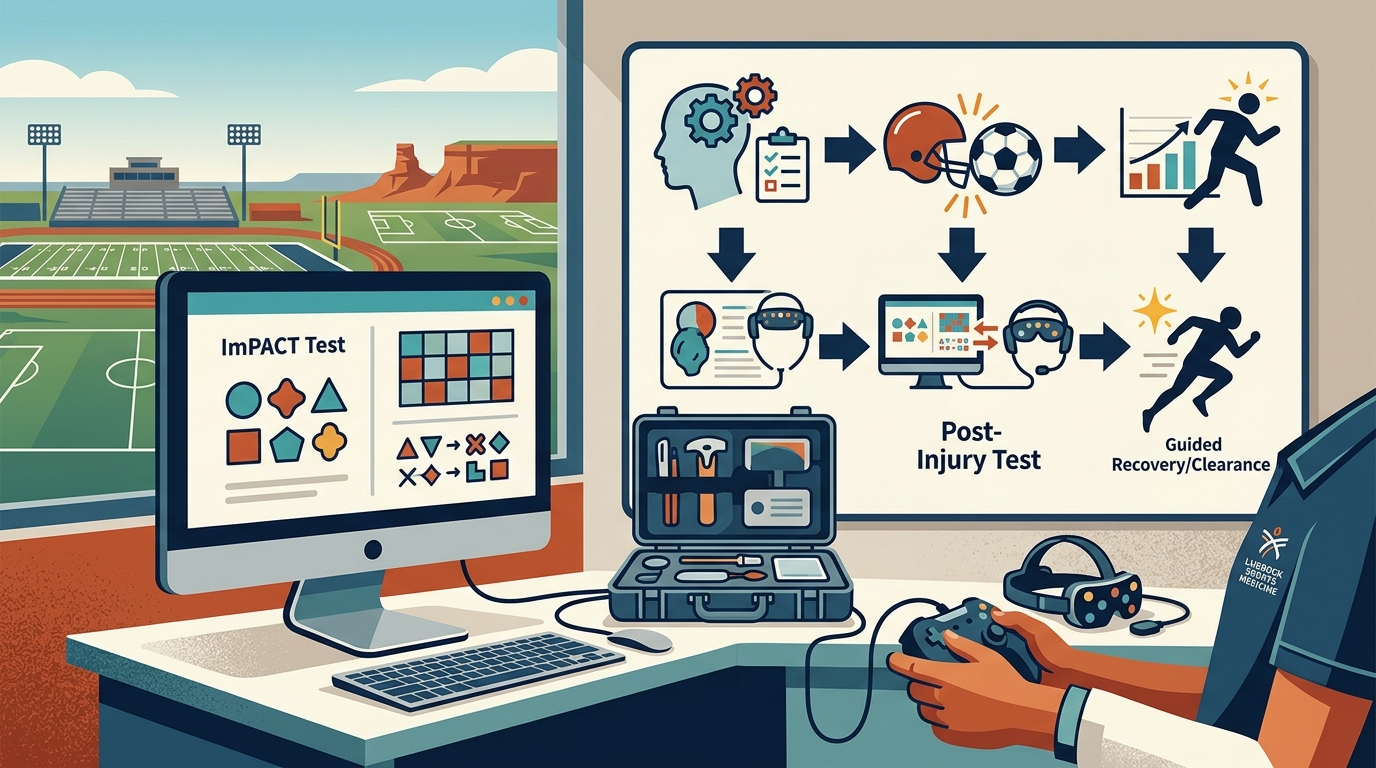
Understanding the full arc of concussion management removes uncertainty for athletes and parents. Here is the process Lubbock Sports Medicine follows:
- Schedule a Baseline Test — Call our office or request an appointment online. The test takes approximately 20 minutes and can be performed for patients ages 5 through 80.
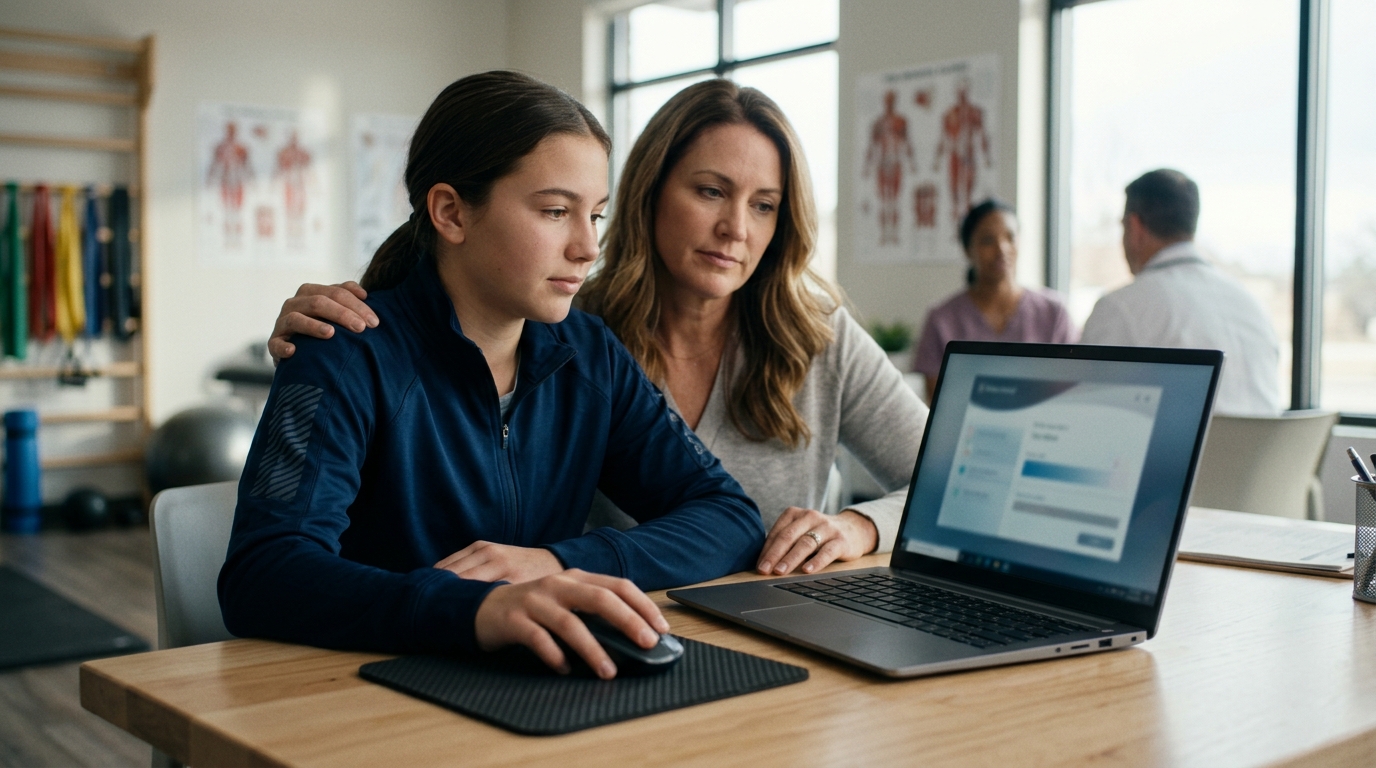
- Complete the Baseline — You will sit at a computer in a quiet, distraction-free environment. The software guides you through memory exercises, pattern recognition, and reaction-time tasks. No studying is needed.
- Secure Storage — Your baseline scores are stored securely and are available the moment they are needed.
- Injury Occurs — If a concussion is suspected, the athlete is removed from play immediately (Texas law mandates this). A post-injury ImPACT test is administered, typically within 24–72 hours of the injury.
- Clinical Comparison — Our providers compare your post-injury scores against your baseline across all four cognitive domains. The data, combined with a thorough clinical examination, informs diagnosis and treatment planning.
- Guided Recovery & Graduated Return to Play — You progress through a stepwise return-to-play protocol under medical supervision. Follow-up ImPACT tests may be administered at key milestones to verify cognitive recovery.
- Written Clearance — Only after you are symptom-free through every stage and cognitive scores support recovery does the treating physician provide the written clearance Texas law requires.
What Texas Law Requires: Natasha's Law
Texas has some of the most detailed youth-concussion legislation in the country. Signed into law in 2011 as HB 2038 and commonly called Natasha's Law, it applies to every UIL-sanctioned interscholastic athletic activity.
Core Requirements
- Concussion Oversight Teams: Every school district must form a team that includes a physician and at least one additional trained professional such as an athletic trainer, neuropsychologist, or advanced practice nurse.
- Annual Acknowledgment: Both the student and a parent or guardian must sign a form each school year confirming they have received and read concussion-prevention information.
- Immediate Removal: A student suspected of having a concussion must be pulled from play immediately by a coach, physician, licensed healthcare professional, or parent.
- No Same-Day Return: The athlete may not return to participation on the same day, regardless of how quickly symptoms resolve.
- Written Physician Clearance: A physician must provide written confirmation that it is safe to return before the athlete can resume full contact.
- Coach Exclusion: A coach may not authorize an athlete's return to play.
ImPACT testing is not specifically mandated by Texas statute, but it is the most widely used tool that fulfills the law's requirement for evaluation using “established medical protocols.” Having a baseline on file streamlines compliance and strengthens the clinical evidence behind every clearance decision.
Who Needs ImPACT Testing?
While football gets the most attention, concussions occur across a wide range of activities. Consider baseline testing for anyone involved in:
- Football, soccer, basketball, and lacrosse
- Baseball and softball (collisions, hit-by-pitch)
- Cheerleading, gymnastics, and rodeo
- Wrestling and martial arts
- Cycling, skateboarding, and equestrian sports
- Military training and first-responder roles
ImPACT is cleared for individuals ages 5 through 80, so it is not just for high schoolers. Youth-league athletes, adult recreational players, and even active older adults all benefit from having a cognitive baseline on file.
What to Expect on Test Day
Before the Appointment
- Get a full night of sleep—fatigue can skew results.
- Eat a normal meal and stay hydrated.
- Avoid caffeine or energy drinks that might artificially affect reaction time.
- Bring your glasses or contacts if you normally wear them.
During the Test
The ImPACT assessment is administered on a computer in a controlled, quiet room. It typically takes about 20 minutes and includes a symptom inventory, word-memory exercises, shape-recognition tasks, a color-match speed test, and a three-letter memory challenge. The software records your answers and reaction times automatically.
After the Test
Results are available immediately. For a baseline test, your provider will review scores and flag any anomalies. For a post-injury test, your results are compared side-by-side with your baseline, and the provider will discuss next steps—whether that means initiating rest protocols, scheduling follow-up imaging, or beginning a graduated return-to-activity plan.
The 6-Step Return-to-Play Progression
The CDC's graduated return-to-play protocol, based on the International Concussion in Sport Guidelines from the 6th International Conference on Concussion in Sport (Amsterdam, 2022), outlines six stages. Each step requires a minimum of 24 hours, and the athlete advances only if no new symptoms appear.
| Step | Activity Level | Goal |
|---|---|---|
| 1 | Symptom-limited activity (daily tasks, light walking) | Gradual reintroduction of activity |
| 2 | Light aerobic exercise — 5–10 min on a bike or light jog | Increase heart rate |
| 3 | Sport-specific exercise — moderate jogging, running drills (no contact) | Add movement and coordination |
| 4 | Non-contact training drills, progressive resistance training | Increase exercise intensity, restore confidence |
| 5 | Full-contact practice (medical clearance required) | Restore confidence, assess readiness |
| 6 | Return to competition | Full game play |
If symptoms return at any stage, the athlete drops back to the previous symptom-free step and rests for at least 24 hours before trying again. Approximately 30 percent of athletes may experience prolonged symptoms lasting more than four weeks, and these individuals should be evaluated by a concussion specialist who can address vestibular, visual, or behavioral health components.
Why Choose Lubbock Sports Medicine for Concussion Care
Lubbock Sports Medicine offers certified ImPACT concussion testing and comprehensive concussion management for the entire South Plains region. Here is what sets our practice apart:
- Credentialed Providers: Our team includes professionals trained in ImPACT administration and interpretation, ensuring accurate results and evidence-based return-to-play decisions.
- Local Relationships: We partner directly with Lubbock-area school districts, coaches, and athletic trainers—making it seamless to share results and coordinate care under Natasha's Law requirements.
- Full-Spectrum Care: Beyond testing, we offer physical therapy, vestibular rehabilitation, and specialist referrals when symptoms are complex or prolonged.
- Fast Turnaround: Post-injury evaluations are available on short notice so no athlete waits days wondering about their diagnosis.
- All Ages Welcome: From a 7-year-old playing flag football to a 50-year-old weekend cyclist, we serve patients across the lifespan.
Ready to schedule? Call Lubbock Sports Medicine today or use our online appointment request form. Walk-in baseline testing is also available during select clinic hours—call ahead to confirm availability.
Key Takeaways
- ImPACT is an FDA-cleared neurocognitive test that measures memory, processing speed, and reaction time before and after a suspected concussion.
- A pre-season baseline test gives your provider an individualized comparison point that is far more accurate than normative data alone.
- Texas's Natasha's Law mandates immediate removal from play, a graduated return-to-play protocol, and written physician clearance before an athlete can compete again.
- The CDC's 6-step return-to-play progression requires a minimum of 24 hours at each step with no new symptoms before advancing.
- Lubbock Sports Medicine provides certified ImPACT testing, post-injury evaluation, and comprehensive concussion management for athletes and active adults across the South Plains.
Frequently Asked Questions
How long does an ImPACT concussion test take?
A standard ImPACT baseline or post-injury test takes approximately 20 minutes to complete. You will answer a brief symptom checklist and then work through a series of computerized memory, speed, and reaction-time tasks.
Does ImPACT testing diagnose a concussion?
No. ImPACT is a clinical tool that provides objective cognitive data. It does not diagnose a concussion on its own. A qualified healthcare provider uses ImPACT results alongside a physical examination and symptom evaluation to make the diagnosis.
What ages can take the ImPACT test?
ImPACT offers age-appropriate versions for individuals ages 5 through 80. ImPACT Pediatric is designed for younger children, while the standard ImPACT test is used for adolescents and adults.
Is ImPACT testing required by Texas law?
Texas's Natasha's Law does not specifically require ImPACT testing by name. However, the law mandates evaluation using established medical protocols and a graduated return-to-play process. ImPACT is the most widely adopted tool that meets these requirements.
How often should a baseline ImPACT test be updated?
Baseline tests should be updated every two years. In adolescents the brain changes rapidly, so regular updates keep comparisons accurate. A new baseline should also be recorded after full recovery from any concussion.
What happens if I do not have a baseline test and I get a concussion?
Your provider can still administer a post-injury ImPACT test and compare results against age- and sex-matched national normative data. While individual baselines are preferred, normative comparisons still provide clinically valuable information.
Can I take the ImPACT baseline test at home?
ImPACT does offer an online baseline option that can be completed at home in about 20 minutes. However, in-clinic testing in a controlled environment tends to produce the most reliable scores, and post-injury tests should always be administered in a clinical setting.
Where can I get ImPACT concussion testing near Lubbock, TX?
Lubbock Sports Medicine provides certified ImPACT baseline and post-injury testing for athletes and active individuals across the South Plains. Contact our office to schedule an appointment or ask about walk-in baseline availability.