

Rotator cuff injuries are among the most common orthopedic complaints in the South Plains, affecting both elite athletes and active individuals seeking to maintain their quality of life. According to the Mayo Clinic, rotator cuff tears occur when the tendons of the muscles that surround the shoulder blade become damaged or torn. The severity of the tear dictates the recovery path, ranging from conservative physical therapy to advanced surgical intervention. Understanding the nuances of each approach is critical for making an informed decision about your long-term shoulder health. (About Us Lubbock Sports)
Understanding Rotator Cuff Tears
A rotator cuff tear is defined as a partial or complete rupture of the tendons that stabilize the shoulder joint. These tendons connect the muscles to the bone, allowing for a wide range of motion. Tears can result from acute trauma, such as a fall, or from chronic wear and tear over time. Johns Hopkins Medicine notes that age is a significant factor, with tears becoming more common as individuals age due to decreased blood supply and natural degeneration. (Lubbock Sports Medicine amp)
At Lubbock Sports Medicine, we specialize in diagnosing these injuries with precision. Our physicians utilize advanced imaging and clinical examinations to determine the extent of the damage. The decision between physical therapy and surgery depends on several factors, including the size of the tear, the patient's age, activity level, and overall health. Early diagnosis is crucial for preventing further deterioration of the shoulder joint. (Head Lubbock Sports Medicine)
The Physical Therapy Path
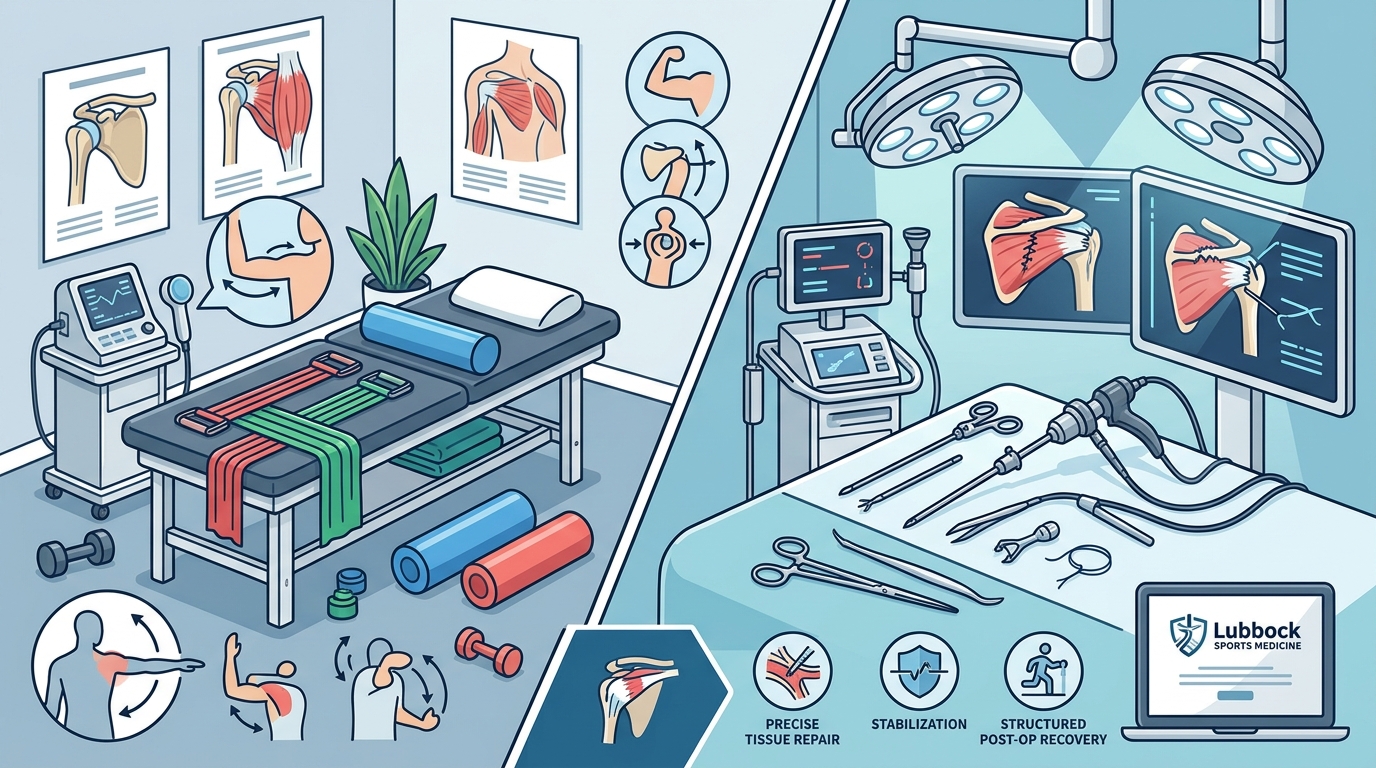
Physical therapy is often the first line of defense for partial tears or tears in patients with lower physical demands. This non-surgical approach focuses on restoring strength, flexibility, and function without the risks associated with invasive procedures. Research published in the Journal of Shoulder and Elbow Surgery indicates that a significant percentage of patients achieve satisfactory outcomes with conservative management alone. (Holly Short PA C)
Core Components of Rehabilitation
Our physical therapists at Lubbock Sports Rehab design personalized programs that target the specific deficits in your shoulder. The process typically begins with pain management and inflammation reduction. As the acute phase subsides, the focus shifts to restoring range of motion. This is followed by progressive strengthening exercises that target the rotator cuff muscles and the scapular stabilizers. (Charity Purser MSN FNP)
Consistency is key in physical therapy. Patients are expected to perform home exercises daily to ensure steady progress. The goal is to rebuild the muscular support around the shoulder joint, which can often compensate for minor tendon damage and restore functional mobility.
When Surgery is Necessary
Surgery is typically recommended for full-thickness tears, acute traumatic injuries, or when physical therapy fails to relieve symptoms after several months. The primary goal of surgery is to reattach the torn tendon to the humerus bone, allowing it to heal in the correct anatomical position. According to the American Academy of Orthopaedic Surgeons, surgical outcomes are generally excellent for younger, active patients with acute tears.
Robotic-Assisted Precision
Lubbock Sports Medicine is committed to excellence in patient care through the use of cutting-edge technology. We utilize MAKO Robotic-Arm Assisted Technology for joint reconstruction procedures. While primarily known for hip and knee replacements, the precision and planning capabilities of robotic assistance represent our commitment to high-quality orthopedic care. For rotator cuff repairs, our surgeons employ advanced arthroscopic techniques that minimize tissue damage and promote faster healing.
Our physicians, including Dr. Kevin Crawford and Dr. David Shephard, are members of the American Academy of Orthopaedic Surgeons and the American Orthopaedic Society for Sports Medicine. This affiliation ensures that our surgical techniques adhere to the highest industry standards. We take the time to listen to your needs and present treatment options that align with your lifestyle goals.
Comparison of Treatment Options
Choosing between physical therapy and surgery can be challenging. The following table outlines the key differences to help you understand the implications of each path.
| Feature | Physical Therapy | Surgical Repair |
|---|---|---|
| Best For | Partial tears, chronic degeneration, lower activity demands | Full-thickness tears, acute trauma, high activity demands |
| Recovery Time | 6 to 12 weeks for significant improvement | 4 to 6 months for full functional recovery |
| Risk Profile | Minimal risk, non-invasive | Standard surgical risks (infection, stiffness) |
| Cost | Generally lower initial cost | Higher initial cost due to facility and surgeon fees |
| Success Rate | High for appropriate candidates | Very high for acute tears in active patients |
Recovery Phases and Timeline
Regardless of the treatment path, recovery is a structured process that requires patience and dedication. Hospital for Special Surgery emphasizes that the timeline for recovery varies significantly based on the individual's physiology and adherence to the rehabilitation protocol.
Post-Surgical Rehabilitation
If you undergo surgery, the initial phase involves immobilization in a sling to protect the repair. This is followed by passive range of motion exercises, where a therapist moves your arm for you. Active motion is introduced gradually as the tendon heals. Strengthening exercises begin only after sufficient tendon healing has occurred, typically around the 12-week mark. Full return to sports or heavy labor can take six months or longer.
Post-Therapy Progression
For patients undergoing physical therapy, the progression is more rapid but requires consistent effort. Early stages focus on pain relief and gentle mobility. As strength returns, resistance training is introduced. The goal is to restore the shoulder to its pre-injury state or better. Our team at Lubbock Sports Rehab monitors your progress closely, adjusting the program as needed to ensure optimal outcomes.
Key Takeaways
- Specialized Care: Lubbock Sports Medicine is the premiere sports medicine and adult joint reconstruction center in the South Plains.
- Expert Team: Our physicians include Dr. Kevin Crawford, Dr. David Shephard, and Dr. Joel Campbell, all leaders in orthopedic care.
- Advanced Technology: We utilize MAKO Robotic-Arm Assisted Technology for precision in joint reconstruction procedures.
- Comprehensive Rehab: Lubbock Sports Rehab offers dedicated physical therapy services at 5044 Frankford Ave.
- Professional Affiliations: Our doctors are members of the American Academy of Orthopaedic Surgeons and the Arthroscopy Association of North America.
- Community Focus: We serve active people from all walks of life, including recreational and elite level athletes.
- Accessible Care: We offer Saturday Injury Clinics and outreach athletic training to accommodate busy schedules.
Frequently Asked Questions
How do I know if I need surgery for a rotator cuff tear?
The decision depends on the size of the tear, your age, and your activity level. Full-thickness tears in active individuals often require surgery, while partial tears may respond well to physical therapy. Our physicians at Lubbock Sports Medicine will evaluate your specific condition to recommend the best course of action.
What is the typical recovery time for rotator cuff surgery?
Recovery from rotator cuff surgery typically takes four to six months for full functional recovery. Initial healing occurs within the first few weeks, but strengthening and return to sports activities take longer. Our team provides a detailed timeline during your consultation.
Can physical therapy completely heal a torn rotator cuff?
Physical therapy cannot physically reattach a torn tendon, but it can strengthen the surrounding muscles to compensate for the tear. This can significantly reduce pain and improve function, often eliminating the need for surgery in partial tears or degenerative cases.
Where is Lubbock Sports Rehab located?
Lubbock Sports Rehab is located at 5044 Frankford Ave, Lubbock, TX 79424. We are open Monday through Thursday from 8:00 am to 6:00 pm, and Friday from 8:00 am to 12:00 pm.
Do you offer robotic-assisted surgery for shoulder repairs?
While MAKO Robotic-Arm Assisted Technology is primarily used for hip and knee joint replacements, our commitment to precision extends to all our surgical procedures. We utilize advanced arthroscopic techniques for rotator cuff repairs to ensure the best possible outcomes.
How do I schedule an appointment with Dr. Kevin Crawford?
You can schedule an appointment by calling Lubbock Sports Medicine at (806) 792-4329. Our staff will assist you in finding a convenient time to see one of our physicians.
What insurance plans do you accept?
We accept most major insurance plans. Please contact our office directly to verify your specific coverage. We also offer online registration forms to streamline your visit.
Schedule Your Consultation
Do not let a rotator cuff tear limit your active lifestyle. Whether you require physical therapy or surgical intervention, the experts at Lubbock Sports Medicine are here to help you recover. Our team is dedicated to providing the latest treatment options and personalized care plans. Contact us today to schedule your consultation and take the first step toward a pain-free future.
Register for an appointment online or call (806) 792-4329 to speak with our team. We look forward to helping you achieve your health and fitness goals.