
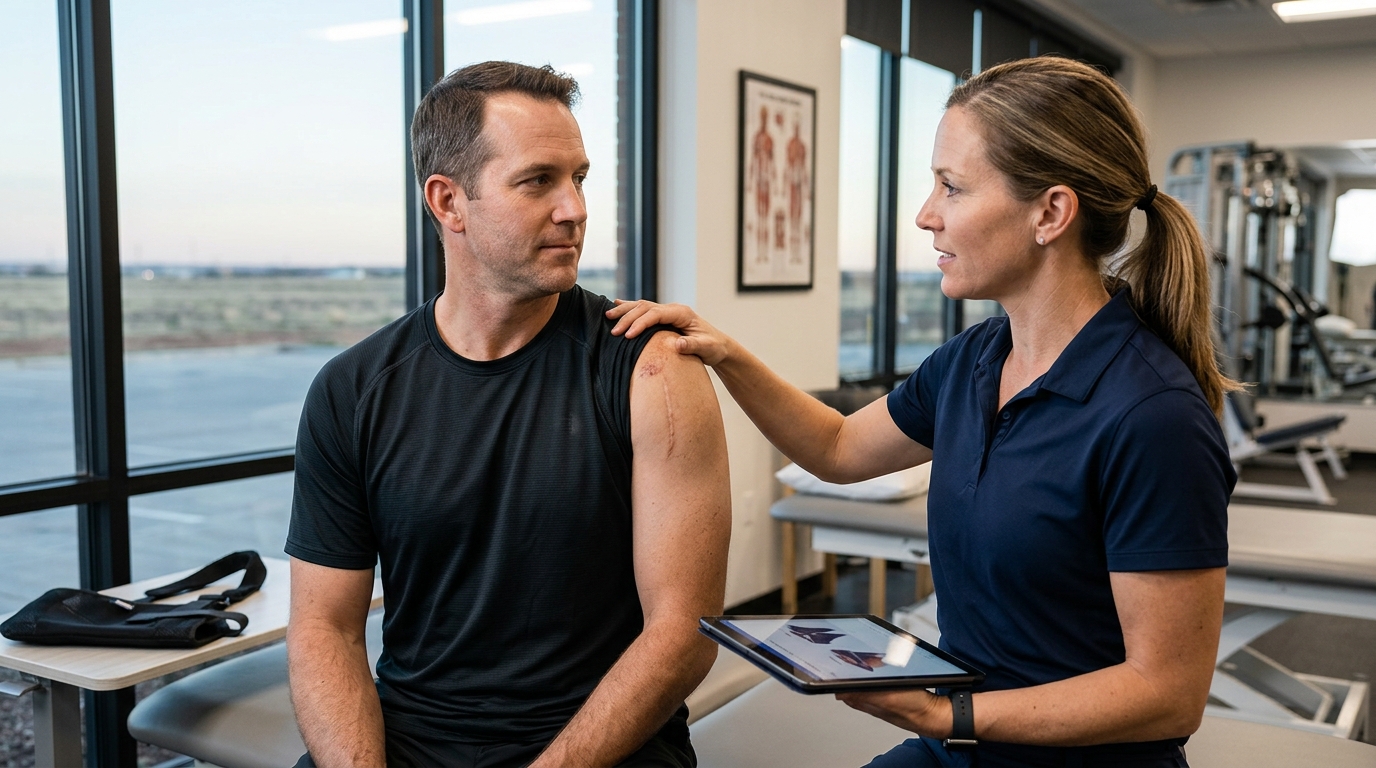
Rotator cuff injuries are among the most common orthopedic complaints in the South Plains, affecting athletes and active individuals alike. According to recent orthopedic data, approximately 50% of individuals over age 60 have a rotator cuff tear, with many remaining asymptomatic until a specific injury occurs. Understanding the precise nature of your tear is the first step toward effective treatment. Lubbock Sports Medicine provides specialized care for these complex injuries, ensuring patients receive accurate diagnoses and tailored recovery plans. This guide explores the critical decision-making process between surgical intervention and conservative physical therapy management.
Understanding the Rotator Cuff Injury
The rotator cuff is a group of four muscles and their tendons that stabilize the shoulder joint. A tear in any of these tendons can result in pain, weakness, and limited range of motion. The severity of the injury dictates the treatment approach. Partial tears often respond well to non-surgical methods, while full-thickness tears may require surgical repair to restore function.
At Lubbock Sports Medicine, we specialize in treating active individuals who need to return to their daily activities or sports. Our approach begins with a thorough evaluation to determine the extent of the damage. Early intervention is critical to prevent further deterioration of the tendon tissue. Ignoring symptoms can lead to muscle atrophy and fatty infiltration, which complicates future treatment options.
Diagnostic Evaluation and Imaging
Accurate diagnosis is the foundation of effective treatment. Physicians at Lubbock Sports Medicine & Rehab utilize advanced diagnostic tools to assess the shoulder joint. This process typically includes a physical examination to test strength and range of motion, followed by imaging studies.
Magnetic Resonance Imaging (MRI) is the gold standard for visualizing soft tissue injuries. It allows doctors to see the size and location of the tear clearly. Ultrasound may also be used for dynamic assessment, allowing the physician to observe the tendon movement in real-time. Our team, including Dr. Kevin Crawford and Dr. David Shephard, works closely with certified athletic trainers to ensure no detail is overlooked during the diagnostic phase.
The Physical Therapy Recovery Path
Physical therapy is often the first line of defense for many rotator cuff injuries. Conservative management focuses on reducing inflammation and restoring mobility before strengthening the shoulder muscles. This approach is particularly effective for partial tears or tears in older, less active patients.
The rehabilitation process at Lubbock Sports Rehab is structured in phases. Initially, the goal is pain management through modalities like ice, heat, and gentle manual therapy. As pain subsides, patients progress to range-of-motion exercises to prevent stiffness. The final phase involves strengthening exercises to rebuild the rotator cuff muscles and surrounding stabilizers.
Our certified physical therapists and athletic trainers design personalized programs that align with your lifestyle. Whether you are a weekend warrior or a professional athlete, the therapy plan is tailored to meet your specific functional goals. Consistency with home exercises is vital for success in this pathway.
When Surgery Becomes Necessary
Surgery is typically recommended when conservative treatments fail to provide relief after several months, or when the tear is acute and severe. Arthroscopic rotator cuff repair is a minimally invasive procedure that uses small incisions and specialized cameras to repair the torn tendon.
Our surgeons at Lubbock Sports Medicine are experts in advanced orthopedic techniques. For complex cases involving significant tendon retraction or poor tissue quality, we may consider robotic-assisted joint reconstruction technologies to ensure precise placement of repair anchors. This technology enhances surgical accuracy, which can lead to better healing outcomes and reduced post-operative pain.
Post-surgical recovery is a rigorous process that requires strict adherence to protocol. Patients must wear a sling for several weeks to protect the repair. Physical therapy begins shortly after surgery to maintain passive range of motion, gradually progressing to active strengthening. The entire recovery timeline can range from four to six months, depending on the size of the tear and the patient's compliance with rehabilitation.
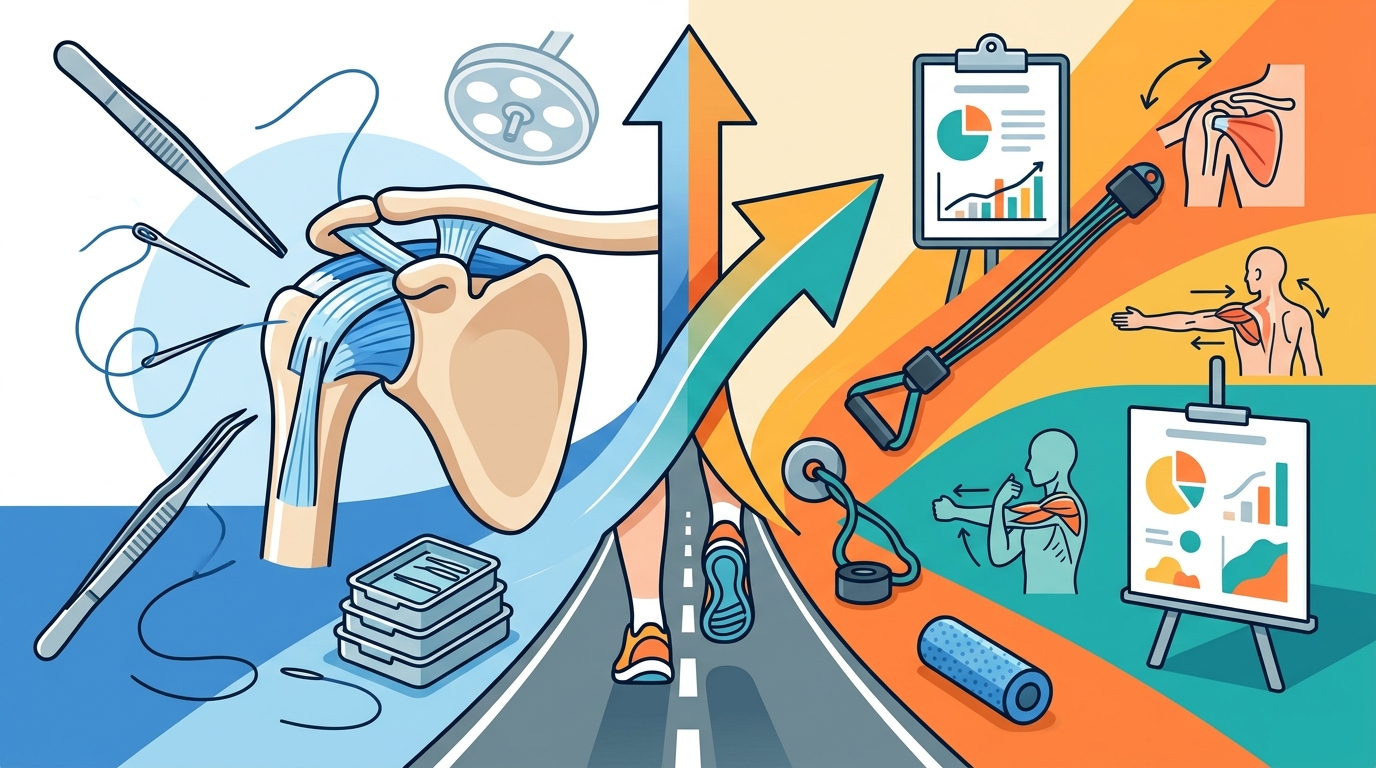
Treatment Comparison Overview
Choosing between physical therapy and surgery depends on multiple factors, including the tear size, patient age, activity level, and overall health. The table below summarizes the key differences between these two primary treatment modalities.
| Factor | Physical Therapy | Surgical Repair |
|---|---|---|
| Best For | Partial tears, older patients, low-demand activities | Full-thickness tears, acute injuries, high-demand athletes |
| Recovery Time | 6 to 12 weeks for significant improvement | 4 to 6 months for full functional recovery |
| Risk Profile | Very low risk | Standard surgical risks (infection, stiffness) |
| Cost | Lower initial cost | Higher initial cost due to facility and surgeon fees |
| Success Rate | High for partial tears | High for appropriate surgical candidates |
Key Takeaways for Recovery
- Accurate Diagnosis is Key: Imaging studies like MRI are essential to determine the tear's severity and guide treatment decisions.
- Physical Therapy First: For many partial tears, a dedicated course of physical therapy at Lubbock Sports Rehab can restore function without surgery.
- Surgical Precision: Advanced techniques, including robotic assistance, offer improved outcomes for complex tears requiring repair.
- Rehabilitation is Crucial: Whether surgical or non-surgical, consistent physical therapy is the primary determinant of long-term success.
- Specialized Care: Our team includes board-certified orthopedic surgeons and certified athletic trainers dedicated to Medicine for Motion.
- Individualized Plans: Treatment is not one-size-fits-all; it is tailored to your age, activity level, and specific injury characteristics.
- Early Action: Delaying treatment can lead to muscle atrophy, making recovery more difficult and prolonged.
Frequently Asked Questions
How long does it take to recover from a rotator cuff tear without surgery?
Recovery time varies based on the severity of the tear. For partial tears, significant improvement is often seen within 6 to 12 weeks of dedicated physical therapy. However, full strength may take several months to return.
What are the signs that I need surgery for a rotator cuff tear?
Surgery is typically considered if you experience persistent pain after months of physical therapy, significant weakness, or if the tear is large and acute. Our surgeons at Lubbock Sports Medicine will evaluate your specific case to determine if surgical intervention is the best option.
Is robotic surgery better for rotator cuff repairs?
Robotic-assisted technology can enhance precision in certain complex cases, particularly those involving joint reconstruction or difficult anatomical variations. It allows for more accurate placement of repair anchors, which may improve healing outcomes.
Can I return to sports after a rotator cuff tear?
Yes, most patients can return to sports. Athletes who undergo physical therapy or surgery and complete their rehabilitation protocols often regain full function. Our Outreach Athletic Training team specializes in helping athletes return to play safely.
What is the role of physical therapy in post-surgical recovery?
Physical therapy is critical after surgery to prevent stiffness and restore strength. It begins with passive range-of-motion exercises and progresses to active strengthening. Compliance with the therapy schedule is vital for a successful outcome.
How do I choose between a surgeon and a physical therapist first?
It is best to start with a diagnostic evaluation by an orthopedic specialist. They can determine the tear's severity and recommend whether to start with physical therapy or proceed directly to surgery. Lubbock Sports Medicine offers comprehensive evaluations to guide this decision.
Are there any risks associated with rotator cuff surgery?
Like all surgeries, there are risks such as infection, nerve injury, or stiffness. However, our surgeons at Lubbock Sports Medicine utilize minimally invasive techniques to minimize these risks and promote faster recovery.
Schedule Your Consultation
Recovering from a rotator cuff tear requires expert guidance and a personalized plan. Whether you need physical therapy or surgical intervention, Lubbock Sports Medicine is here to help you regain your strength and mobility. Contact us today to schedule an appointment with one of our specialized physicians or to register for our rehabilitation services.
Visit our website to learn more about our services and to access patient resources. Your journey to recovery starts with a single step.