
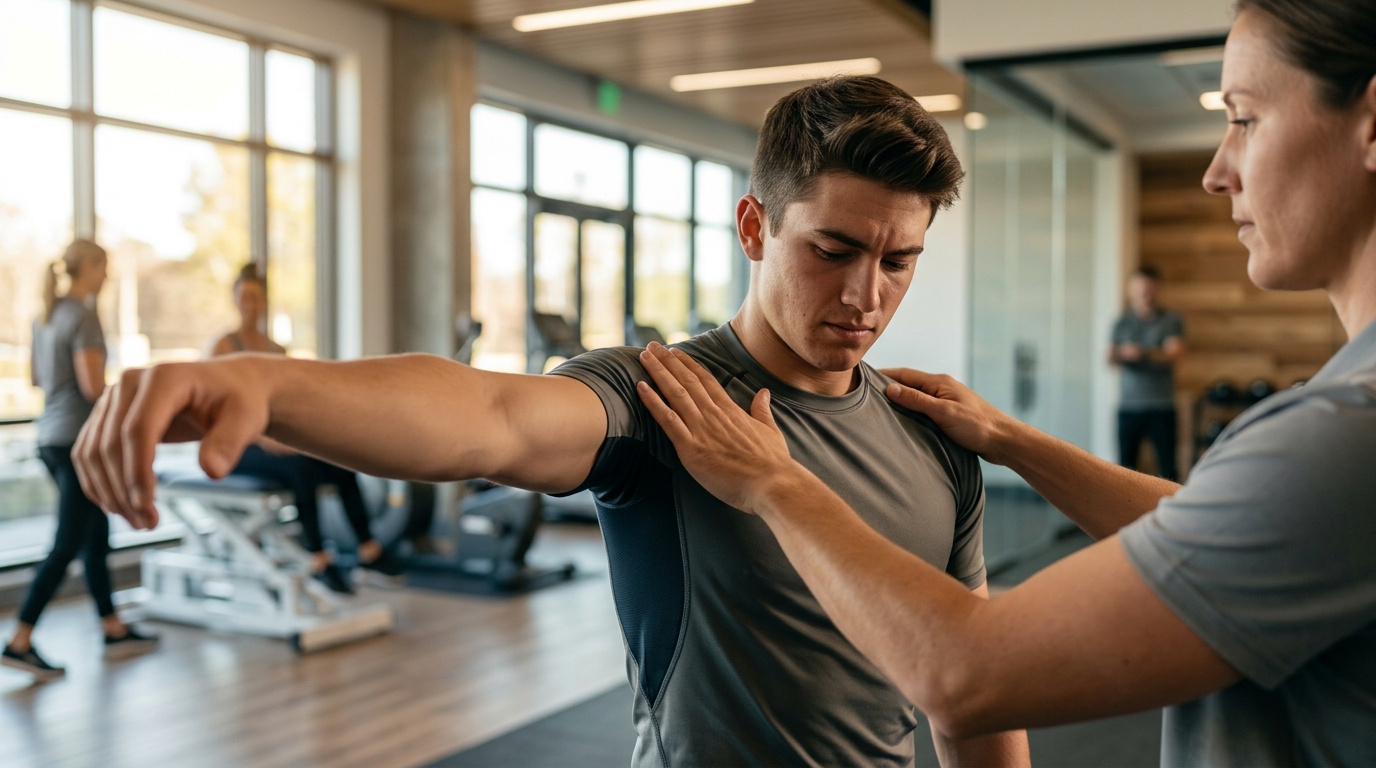
Shoulder instability is a critical concern for athletes, with data showing that over 50% of all sports injuries involve the shoulder joint. According to the American Academy of Orthopaedic Surgeons, repetitive overhead motions place immense stress on the rotator cuff and labrum, leading to structural wear. This article explains why your shoulder clicks and hurts when throwing, and how specialized care can restore your range of motion. (What s that) (About Us Lubbock Sports)
Understanding the Clicking Sound
Many athletes experience a popping or clicking sensation in the shoulder during the cocking phase of a throw. This phenomenon is often referred to as internal impingement. Internal impingement is a condition where the rotator cuff tendons become pinched between the ball and socket of the shoulder joint. This occurs frequently in overhead athletes due to the extreme external rotation required during the throwing motion.
The clicking sound itself is not always a sign of a tear. It can be caused by biceps tendon subluxation, where the tendon slips out of its groove. According to the Arthroscopy Association of North America, biceps tendon instability is a common comorbidity in throwing injuries. When the tendon snaps back into place, it creates an audible click. This mechanical noise is often accompanied by sharp pain at the front or side of the shoulder. (What s that)
Another potential cause is labral fraying. The labrum is a ring of cartilage that deepens the shoulder socket. Over time, repetitive micro-trauma can cause the labrum to fray or detach. This creates a loose flap that catches during movement, resulting in both pain and clicking. Early identification of these mechanical issues is vital to prevent further joint damage.
Common Throwing Injuries
At Lubbock Sports Medicine, we see a wide variety of shoulder pathologies in active individuals. Understanding the specific injury helps determine the correct treatment path. Below is a summary of common conditions affecting throwers.
| Condition | Primary Symptom | Typical Cause |
|---|---|---|
| SLAP Tear | Deep shoulder pain, clicking, instability | Repetitive overhead throwing or falling on an outstretched arm |
| Rotator Cuff Tendinitis | Aching pain, weakness, night pain | Overuse and inflammation of the tendon |
| Shoulder Impingement | Pain when lifting arm, clicking | Bone spurs or swelling narrowing the subacromial space |
| Labral Cyst | Sharp pain, popping sensation | Fluid accumulation from a labral tear |
SLAP tears, or Superior Labrum Anterior to Posterior tears, are particularly prevalent in baseball pitchers and softball players. These tears occur at the top of the labrum where the biceps tendon attaches. The pain is often described as a deep ache that worsens with throwing. According to the American Orthopaedic Society for Sports Medicine, SLAP tears can significantly reduce throwing velocity and accuracy if left untreated.
Rotator cuff injuries are not limited to older adults. Younger athletes can suffer from partial-thickness tears due to the high forces generated during the deceleration phase of a throw. This phase requires the rotator cuff to work eccentrically to slow down the arm, placing it under extreme tension. Weakness in this muscle group can lead to compensatory movements that cause further injury.
The Diagnostic Process
Accurate diagnosis is the first step toward recovery. At Lubbock Sports Medicine, our physicians utilize a comprehensive evaluation process. This begins with a detailed physical examination. Doctors will perform specific maneuvers, such as the O'Brien test or the Speed's test, to isolate the source of pain.
Imaging plays a crucial role in confirming the diagnosis. While X-rays can rule out bone fractures or arthritis, they do not show soft tissue damage. Magnetic Resonance Imaging (MRI) is the gold standard for visualizing labral tears and rotator cuff injuries. In some cases, an MRI arthrogram is required, where contrast dye is injected into the joint to highlight tears more clearly.
Our team of specialists, including Dr. Kevin Crawford and Dr. David Shephard, brings extensive experience in sports medicine. They work closely with Physician Assistants like Jordan Williams and Stan Kotara to ensure every patient receives a thorough assessment. This collaborative approach allows for precise identification of the underlying pathology.
Diagnostic blocks may also be used to pinpoint the pain generator. By injecting a local anesthetic into specific areas of the shoulder, we can determine if the pain originates from the joint, the biceps tendon, or the acromioclavicular joint. This method eliminates guesswork and guides the treatment plan effectively.
Treatment Options
Treatment for shoulder clicking and pain depends on the severity of the injury and the patient's activity level. Most cases begin with conservative management. This includes rest, anti-inflammatory medications, and targeted physical therapy. The goal is to reduce inflammation and restore normal shoulder mechanics.
Physical therapy focuses on strengthening the rotator cuff and scapular stabilizers. Strengthening these muscles helps center the ball in the socket, reducing impingement and clicking. Our physical therapists at Lubbock Sports Rehab use evidence-based protocols to guide patients through their recovery.
If conservative treatment fails, surgical intervention may be necessary. Arthroscopic surgery is a minimally invasive option for repairing labral tears and removing bone spurs. This procedure involves small incisions and a camera to visualize the joint. Recovery times vary, but many athletes return to sport within six to nine months.
In severe cases of joint degeneration, joint replacement may be considered. Lubbock Sports Medicine offers Robotic Assisted Joint Replacement for eligible patients. This technology allows for greater precision in implant placement, leading to improved outcomes and faster recovery. While joint replacement is more common for hips and knees, it is an option for end-stage shoulder arthritis.
Our physicians are members of the American Academy of Orthopaedic Surgeons and the Arthroscopy Association of North America. This membership ensures that our team stays current with the latest surgical techniques and treatment guidelines. We are committed to providing the highest quality of orthopaedic care possible.
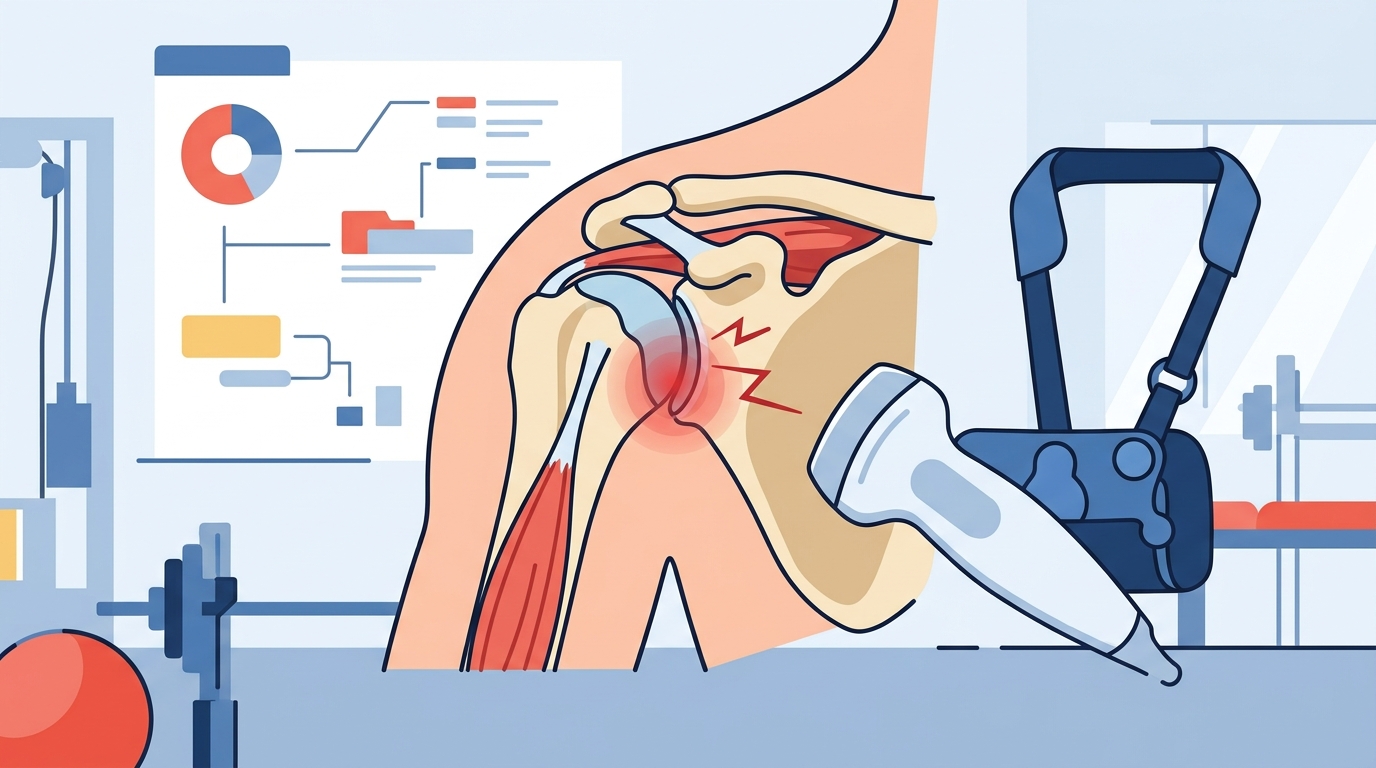
Rehabilitation and Recovery
Rehabilitation is a critical component of shoulder injury recovery. It is not enough to simply repair the tissue; the surrounding muscles must be retrained to support the joint. Rehabilitation is a structured process of restoring strength, flexibility, and function after an injury or surgery. Without proper rehab, the risk of re-injury is significantly higher.
Our rehabilitation program is phased and progressive. Phase one focuses on pain control and range of motion. Phase two introduces strengthening exercises. Phase three involves sport-specific drills. This gradual approach ensures that the shoulder can handle the demands of throwing without compromising the repair.
At Lubbock Sports Rehab, we specialize in returning athletes to their previous level of performance. Our staff includes certified athletic trainers and physical therapists who understand the unique demands of overhead sports. We work closely with our physicians to adjust the rehab plan based on the patient's progress.
Prevention is also a key part of rehabilitation. Athletes are taught proper throwing mechanics to reduce stress on the shoulder. This includes monitoring pitch counts and ensuring adequate rest between games. According to the American Sports Medicine Institute, proper mechanics can reduce the risk of shoulder injury by up to 30%.
Key Takeaways
- Shoulder clicking during throwing is often caused by internal impingement or biceps tendon subluxation.
- SLAP tears are common in overhead athletes and require specific diagnostic tests for identification.
- Accurate diagnosis involves physical exams, MRI imaging, and sometimes diagnostic blocks.
- Conservative treatment includes rest, medication, and targeted physical therapy.
- Surgical options include arthroscopic repair and robotic-assisted joint replacement for severe cases.
- Lubbock Sports Medicine offers specialized care for shoulder injuries with a team of experienced physicians.
- Rehabilitation is essential for returning to sport and preventing re-injury.
Frequently Asked Questions
Why does my shoulder click when I throw?
Clicking is often caused by the biceps tendon slipping out of its groove or by a labral tear creating a loose flap that catches during movement. It can also result from internal impingement where tendons are pinched.
Is shoulder clicking always a sign of a tear?
No, clicking does not always indicate a tear. It can be caused by tendon subluxation or muscle imbalance. However, it is a sign that something is mechanically wrong and should be evaluated by a specialist.
How long does it take to recover from a shoulder injury?
Recovery time varies based on the injury. Conservative treatment may take six to eight weeks. Surgical recovery can take six to nine months for a full return to sport. Our team at Lubbock Sports Rehab provides individualized timelines.
Can physical therapy fix a clicking shoulder?
Physical therapy can often resolve clicking caused by muscle imbalance or impingement. It strengthens the rotator cuff and scapular muscles to stabilize the joint. If a structural tear is present, surgery may be required.
What is a SLAP tear?
A SLAP tear is a tear of the superior labrum anterior to posterior. It affects the top part of the labrum where the biceps tendon attaches. It is common in throwing athletes and causes deep shoulder pain.
Do you offer robotic surgery for shoulder injuries?
While robotic assistance is primarily used for hip and knee replacements, our physicians are experts in advanced arthroscopic techniques for shoulder repair. We utilize the latest technology to ensure precise and effective treatment.
How do I schedule an appointment?
You can schedule an appointment by calling our office at (806) 792-4329 or by using our Online Registration form. We serve patients in Lubbock and the surrounding South Plains area.
Contact Us
If you are experiencing shoulder pain and clicking when throwing, do not ignore the symptoms. Early intervention can prevent long-term damage and get you back to your sport faster. Lubbock Sports Medicine is the premiere sports medicine, adult joint reconstruction, and rehab center in the South Plains.
Our team of physicians, including Dr. Kevin Crawford, Dr. David Shephard, and Dr. Joel Campbell, is ready to help you. We offer comprehensive care from diagnosis to rehabilitation. Visit our Patient Resources page to get started.
Contact us today to schedule your evaluation. We are located at 4110 22nd Place, Lubbock, TX 79410. Our hours are Monday through Thursday from 8:00 am to 5:00 pm, and Friday from 8:00 am to 12:00 pm. Call (806) 792-4329 to book your appointment.