
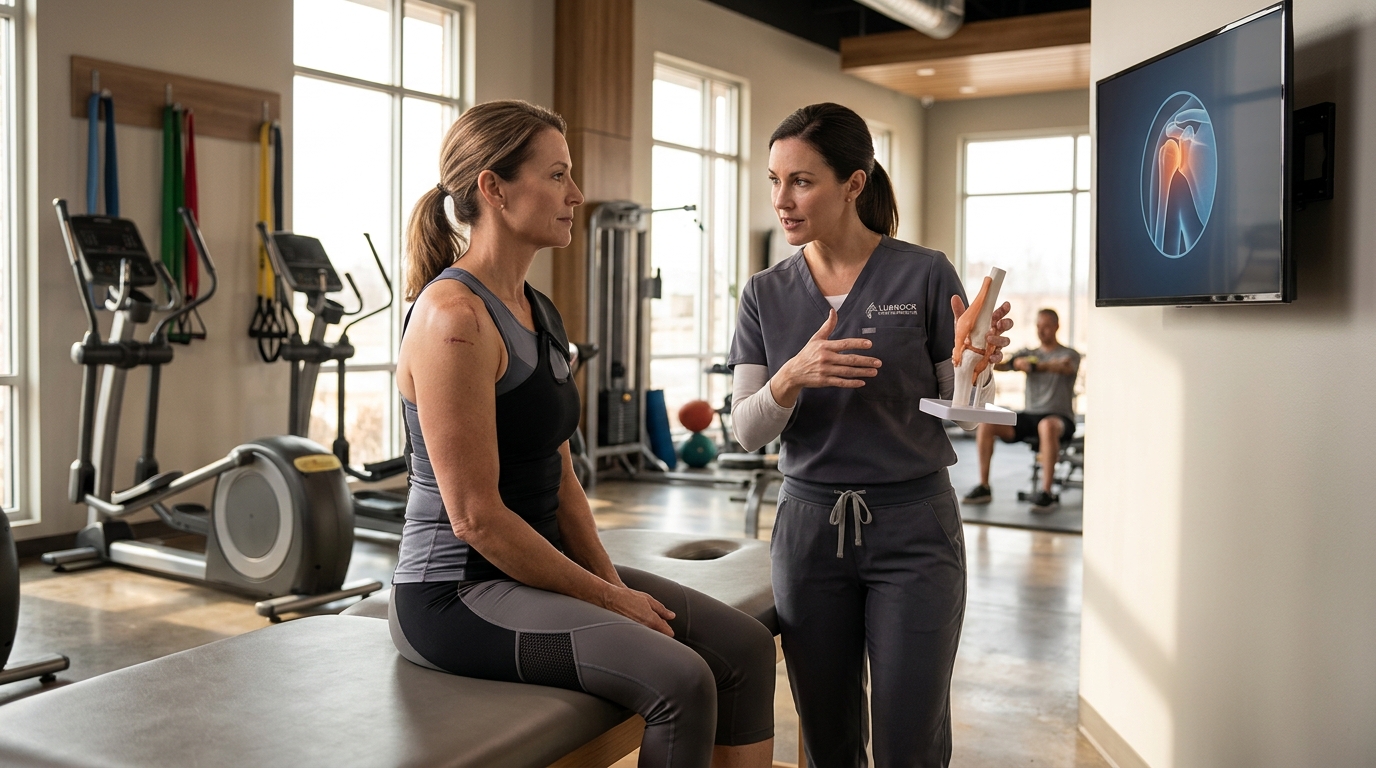
Rotator cuff injuries are among the most prevalent orthopedic conditions affecting active individuals in the South Plains and beyond. According to recent orthopedic data, approximately 50% of adults over age 60 have a rotator cuff tear, with many remaining asymptomatic until a specific incident occurs. Understanding the nuanced differences between surgical intervention and conservative physical therapy is critical for determining the optimal path to regaining shoulder mobility and strength. This guide explores the clinical decision-making process, recovery timelines, and the specialized care available at Lubbock Sports Medicine to help you make an informed choice for your long-term joint health.
Understanding Rotator Cuff Tears
A rotator cuff tear involves damage to one or more of the four tendons that stabilize the shoulder joint. These tendons connect the muscles to the bone, allowing for a wide range of motion. Tears can range from minor partial thickness tears to complete ruptures. The severity of the tear, the patient's age, activity level, and overall health dictate the treatment plan.
Partial tears often respond well to non-surgical management, while full-thickness tears in younger, active patients may require surgical repair to prevent further deterioration. At Lubbock Sports Medicine, our physicians specialize in diagnosing these injuries with precision, ensuring that every patient receives a tailored treatment plan. Our team includes board-certified orthopedic surgeons and certified physician assistants who work collaboratively to address both the acute injury and the long-term functional goals of the patient.
The Role of Physical Therapy
Physical therapy is the cornerstone of conservative management for rotator cuff injuries. It is designed to reduce pain, restore range of motion, and strengthen the surrounding musculature to compensate for the injured tendon. Lubbock Sports Rehab provides a state-of-the-art environment where patients can undergo rigorous, supervised rehabilitation programs.
Phase 1: Pain Management and Mobility
The initial phase focuses on reducing inflammation and preventing stiffness. Therapists utilize modalities such as ice, electrical stimulation, and gentle passive range-of-motion exercises. The goal is to maintain the integrity of the joint capsule while the acute pain subsides. This phase is critical for preventing adhesive capsulitis, commonly known as frozen shoulder, which can complicate recovery.
Phase 2: Strengthening and Stabilization
Once pain decreases, the focus shifts to strengthening the rotator cuff muscles and the scapular stabilizers. This involves progressive resistance exercises using bands, weights, and body weight. Strengthening these muscles helps to offload stress from the torn tendon, improving shoulder mechanics and reducing the risk of future injury. Our clinical coordinators and physical therapists work closely to monitor progress and adjust the program as needed.
Phase 3: Return to Activity
The final phase prepares the patient for a return to sports or heavy labor. This involves sport-specific drills and functional training to ensure the shoulder can handle dynamic loads. For athletes, this phase is crucial for restoring confidence and preventing re-injury. Our outreach athletic training programs also provide valuable support for community sports teams, helping to prevent injuries before they occur.
Surgical Intervention and Robotic Precision
When physical therapy fails to alleviate symptoms or when the tear is large and acute, surgical repair may be necessary. Surgical options have evolved significantly, with a strong emphasis on minimally invasive techniques and enhanced precision. Lubbock Sports Medicine is committed to excellence in patient care, utilizing advanced technologies to improve surgical outcomes.
Arthroscopic Repair
Arthroscopic surgery involves making small incisions around the shoulder joint. A tiny camera, called an arthroscope, is inserted into the joint to guide the repair. This minimally invasive approach reduces tissue damage, decreases postoperative pain, and accelerates the recovery timeline compared to open surgery. Our physicians are members of the Arthroscopy Association of North America, ensuring they adhere to the highest standards of practice.
MAKO Robotic-Arm Assisted Technology
For patients requiring joint reconstruction or complex repairs, we utilize MAKO Robotic-Arm Assisted Technology. This system allows for greater precision in bone preparation and implant positioning, leading to improved results and easier recovery. While primarily known for hip and knee reconstruction, the principles of robotic precision are increasingly applied to complex shoulder procedures to ensure optimal tendon healing and joint stability.
Recovery After Surgery
Postoperative recovery is a structured process that begins immediately after surgery. Patients typically wear a sling for several weeks to protect the repair. Physical therapy starts gently to prevent stiffness and progresses to strengthening as the tendon heals. Full recovery can take six months to a year, depending on the size of the tear and the patient's adherence to the rehabilitation protocol. Our physicians provide detailed postoperative instructions and monitor progress through regular follow-up visits.
Comparison of Recovery Pathways
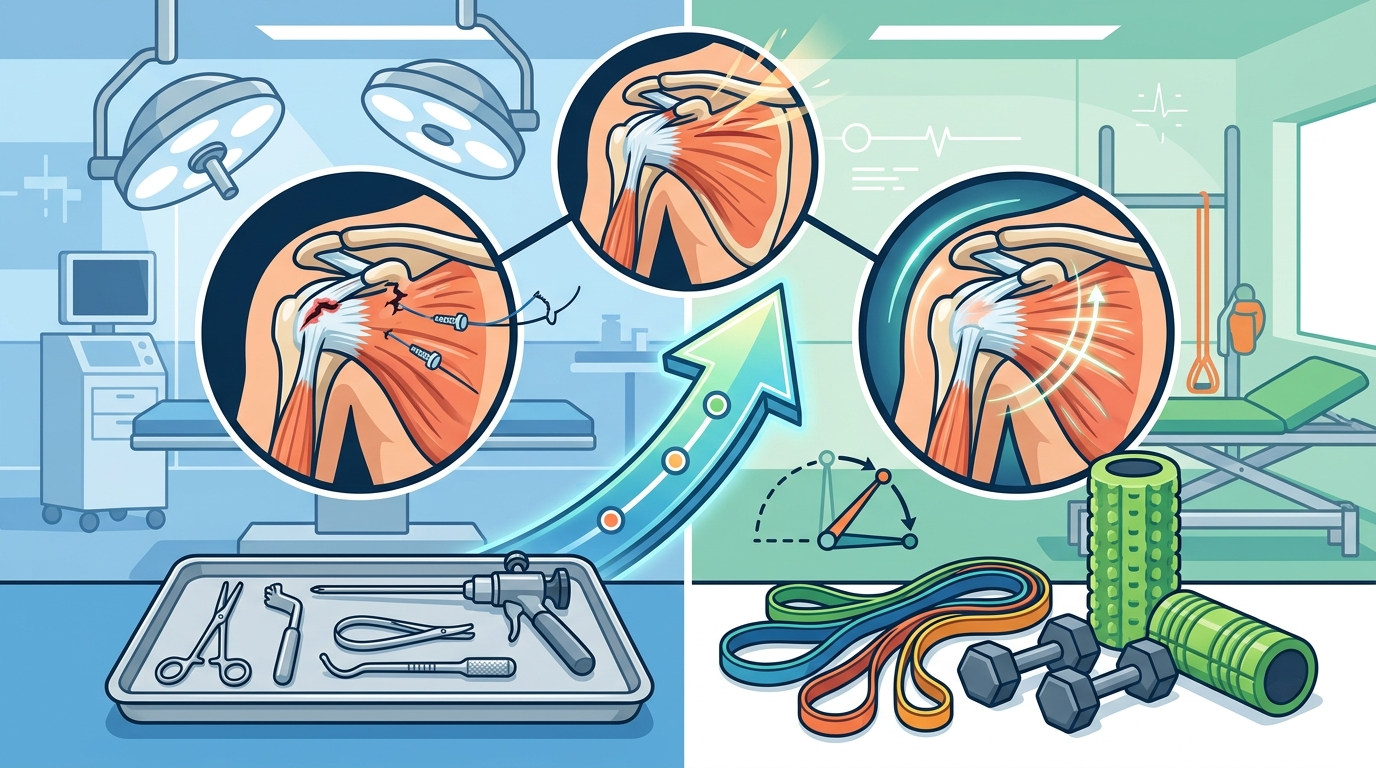
Choosing between surgery and physical therapy depends on individual factors. The following table summarizes the key differences to help guide your decision-making process.
| Factor | Physical Therapy (Conservative) | Surgical Repair |
|---|---|---|
| Best For | Partial tears, older patients, low-demand activities | Full-thickness tears, young active patients, acute injuries |
| Recovery Time | 6 to 12 weeks for significant improvement | 6 to 12 months for full strength and function |
| Risk Profile | Low risk, non-invasive | Surgical risks include infection, stiffness, re-tear |
| Cost | Generally lower initial cost | Higher initial cost due to surgery and facility fees |
| Success Rate | High for partial tears and degenerative conditions | High for acute tears in healthy tissue |
It is important to note that many patients who undergo surgery still require extensive physical therapy to achieve optimal results. Conversely, some patients who choose physical therapy may eventually need surgery if symptoms do not improve. Our team at Lubbock Sports Medicine works with you to determine the most appropriate path based on your specific anatomy and lifestyle goals.
Key Takeaways
- Early Diagnosis is Critical: Prompt evaluation by an orthopedic specialist can prevent further tendon damage and improve outcomes.
- Physical Therapy is Foundational: Whether chosen as the primary treatment or post-surgical rehabilitation, PT is essential for restoring shoulder function.
- Surgical Precision Matters: Utilizing advanced technologies like MAKO robotic assistance can enhance the accuracy and effectiveness of joint reconstruction and complex repairs.
- Individualized Care: Treatment plans must be tailored to the patient's age, activity level, and the specific characteristics of the tear.
- Commitment to Recovery: Successful outcomes depend heavily on patient adherence to both preoperative and postoperative rehabilitation protocols.
- Expert Team Approach: Collaboration between physicians, physician assistants, and physical therapists ensures comprehensive care throughout the recovery journey.
- Local Expertise: Lubbock Sports Medicine serves the South Plains community with specialized orthopedic care, including dedicated services for hip, knee, and shoulder injuries.
Frequently Asked Questions
How do I know if I need surgery for a rotator cuff tear?
Decision-making depends on the size of the tear, your age, and your activity level. Full-thickness tears in active individuals often require surgery, while partial tears may respond well to physical therapy. Our physicians at Lubbock Sports Medicine will evaluate your MRI and physical exam findings to recommend the best course of action.
How long does physical therapy take for a rotator cuff injury?
Conservative treatment typically requires 6 to 12 weeks of dedicated physical therapy to see significant improvement. However, full recovery of strength and endurance can take several months. Consistency with home exercises is crucial for success.
What is MAKO robotic-assisted surgery?
MAKO robotic-assisted technology allows surgeons to create a 3D plan based on your specific anatomy and execute it with greater precision during surgery. This leads to better implant positioning and potentially faster recovery times for joint reconstruction procedures.
Can I return to sports after a rotator cuff repair?
Yes, most patients can return to sports after a rotator cuff repair. However, the timeline varies. Light activities may resume in 3 to 4 months, while contact sports or heavy lifting may take 6 to 12 months. A structured rehabilitation program is essential for a safe return.
What are the risks of rotator cuff surgery?
As with any surgery, risks include infection, blood clots, and stiffness. There is also a risk of re-tearing the tendon, especially if rehabilitation protocols are not followed. Minimally invasive arthroscopic techniques help reduce some of these risks.
How do I choose between Lubbock Sports Medicine and other providers?
Lubbock Sports Medicine offers a comprehensive team of orthopedic specialists, physician assistants, and a dedicated rehab center. Our focus on "Medicine for Motion" and use of advanced technologies like MAKO robotics sets us apart in providing high-quality, patient-centered care.
Is physical therapy covered by insurance?
Most insurance plans cover physical therapy for rotator cuff injuries, but coverage varies. Our administrative staff can assist with insurance authorizations and verify your benefits to ensure you receive the care you need without unexpected costs.
Schedule Your Consultation
Recovering from a rotator cuff tear requires expert guidance and a personalized plan. Whether you are considering physical therapy or surgical intervention, the specialists at Lubbock Sports Medicine are here to help you regain your mobility and strength. Contact us today to schedule an appointment with one of our orthopedic physicians or to learn more about our rehabilitation services.
Contact Information:
Lubbock Sports Medicine
4110 22nd Place, Lubbock, TX 79410
Phone: (806) 792-4329
Hours: Mon-Thurs 8:00am-5:00pm, Friday 8:00am-12:00pm