
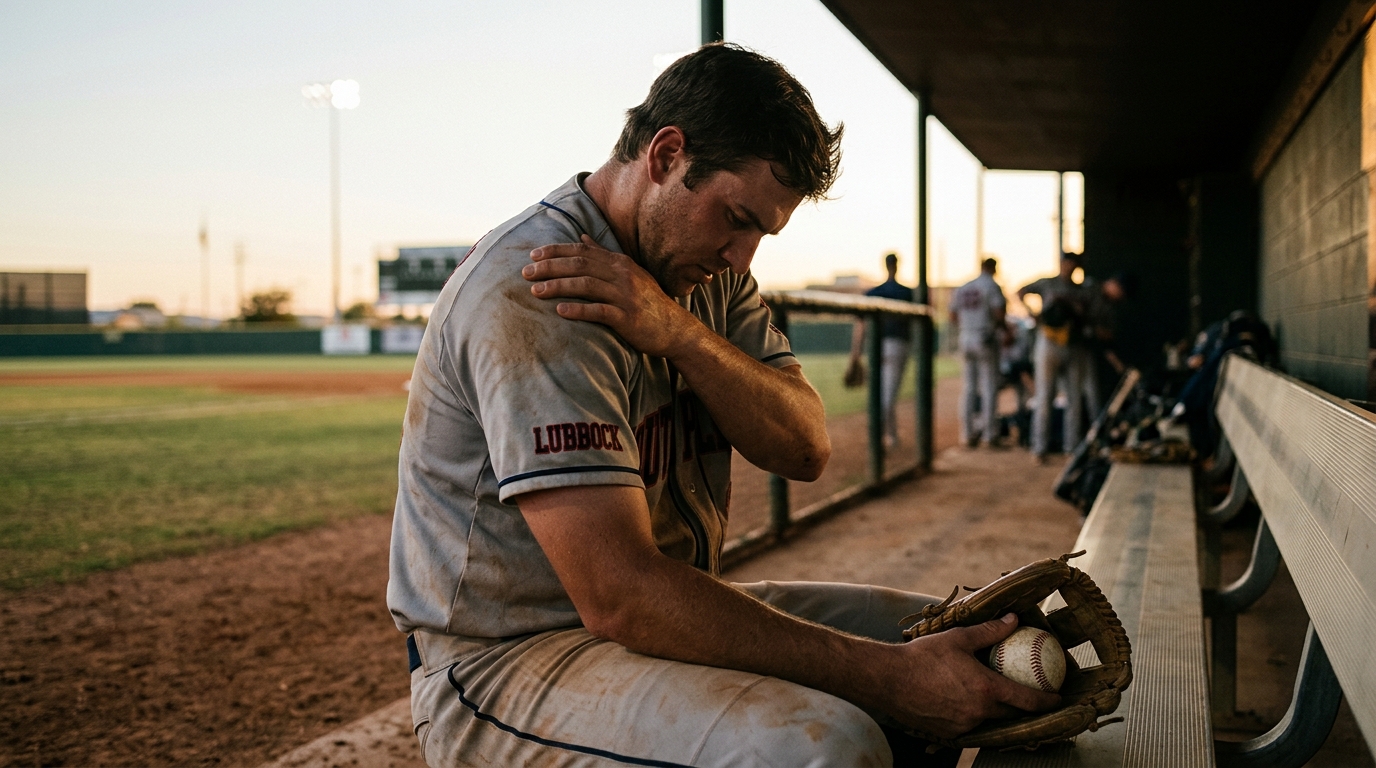
Shoulder instability affects a significant portion of the athletic population, with data showing that throwing athletes are up to 30 times more likely to experience shoulder injuries than non-throwers. This mechanical dysfunction often manifests as a painful clicking sensation during the cocking or acceleration phases of a throw. Understanding the underlying pathology is critical for preventing permanent joint damage and returning to peak performance safely.
Understanding the Clicking Sensation
When a shoulder clicks during a throw, it is rarely a benign occurrence. The shoulder joint is a ball-and-socket joint designed for mobility rather than stability. This design allows for the extreme range of motion required for throwing but makes it highly susceptible to injury. The clicking sound, often described as a snap or pop, usually indicates a structural abnormality within the joint capsule or surrounding soft tissues.
One primary cause is labral tears. The labrum is a ring of cartilage that deepens the socket and stabilizes the ball. When this tissue tears, it can catch between the ball and socket during movement, creating a audible click and sharp pain. Another common culprit is biceps tendonitis, where the tendon becomes inflamed and snaps over the bone as the arm accelerates. Ignoring these signals can lead to chronic instability and early-onset arthritis.
Common Shoulder Injuries in Throwers
Throwing athletes place immense stress on the shoulder complex. The repetitive motion of overhead activities can lead to several distinct pathologies. Recognizing these conditions is the first step toward effective treatment.
SLAP Tears
A Superior Labrum Anterior to Posterior (SLAP) tear occurs at the top of the labrum where the biceps tendon attaches. This injury is prevalent in baseball pitchers and tennis players. The tear disrupts the anchor point of the biceps, leading to pain at the back of the shoulder and a feeling of the shoulder "giving way." According to orthopedic studies, SLAP tears are among the most common injuries in overhead athletes, often requiring specialized rehabilitation or surgical intervention.
Rotator Cuff Tendinopathy
The rotator cuff is a group of four muscles that stabilize the shoulder joint. Overuse can cause micro-tears and inflammation in these tendons. This condition, known as tendinopathy, results in pain when lifting the arm and weakness during throwing motions. If left untreated, it can progress to a full-thickness tear, which significantly impacts shoulder function and requires more aggressive treatment.
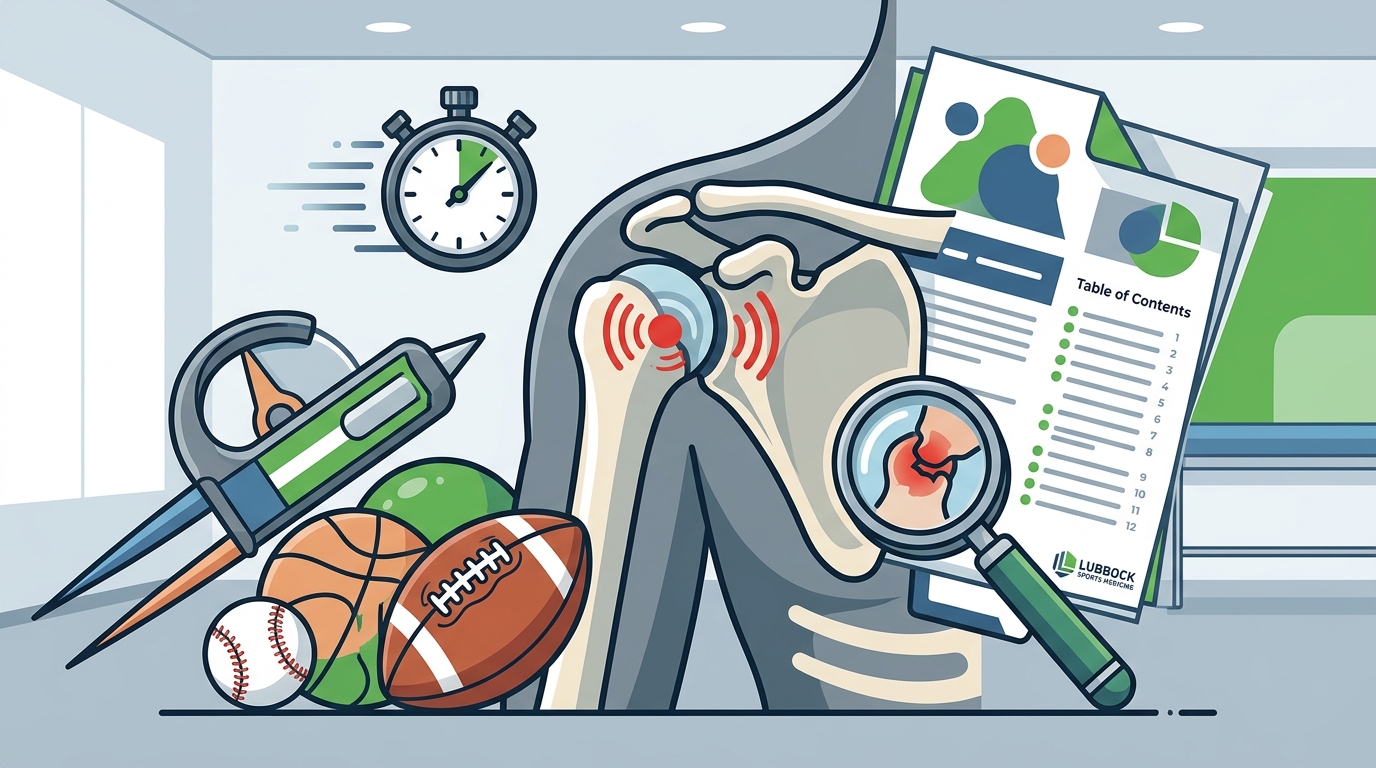
Shoulder Instability
Repetitive throwing can stretch the ligaments that hold the shoulder ball in the socket. This laxity leads to shoulder instability, where the ball partially slips out of place (subluxation) or fully dislocates. Instability often presents with a clicking sensation and a fear of making certain movements. Athletes with instability may experience a loss of velocity and accuracy due to the brain's protective inhibition of the shoulder muscles.
The Diagnostic Process at Lubbock Sports Medicine
Accurate diagnosis is essential for effective treatment. At Lubbock Sports Medicine, we utilize a comprehensive approach to evaluate shoulder pain in athletes. Our team of specialists, including board-certified orthopedic physicians and certified athletic trainers, works together to identify the root cause of your symptoms.
Physical Examination
The diagnostic process begins with a thorough physical examination. Our providers perform specific orthopedic tests to assess shoulder strength, range of motion, and stability. These tests help isolate the injured structures and determine the severity of the injury. For example, the O'Brien's test is commonly used to detect SLAP tears, while the apprehension test evaluates shoulder instability.
Advanced Imaging
In many cases, advanced imaging is necessary to visualize soft tissue injuries that are not apparent on physical examination alone. Medical imaging such as MRI or ultrasound provides detailed views of the labrum, rotator cuff, and biceps tendon. This information allows our physicians to create a precise treatment plan tailored to your specific injury and athletic goals.
Treatment Options and Recovery
Treatment for shoulder pain and clicking depends on the severity of the injury and the athlete's goals. Our approach at Lubbock Sports Medicine prioritizes non-surgical interventions whenever possible, reserving surgery for cases where conservative treatment fails.
| Treatment Type | Description | Best For |
|---|---|---|
| Physical Therapy | Targeted exercises to strengthen the rotator cuff and scapular muscles. | Mild to moderate injuries, post-surgical rehab. |
| Injection Therapy | Corticosteroid or PRP injections to reduce inflammation and promote healing. | Acute pain management, chronic tendinopathy. |
| Arthroscopic Surgery | Minimally invasive surgery to repair labral tears or rotator cuff damage. | Structural tears, chronic instability. |
| Robotic-Assisted Surgery | MAKO technology for precise joint reconstruction and implant placement. | Complex joint issues, advanced arthritis. |
Rehabilitation and Return to Play
Recovery from shoulder injuries requires patience and dedication. Our Lubbock Sports Rehab team works closely with athletes to develop a progressive return-to-play protocol. This process involves gradual strengthening, mobility exercises, and sport-specific drills. Athletes typically return to full activity within 4 to 6 months for non-surgical cases, and 6 to 9 months for surgical cases, depending on the complexity of the injury.
Prevention Strategies for Athletes
Preventing shoulder injuries is crucial for long-term athletic health. Athletes can reduce their risk by adhering to several key strategies.
Proper Throwing Mechanics
Improper throwing mechanics place excessive stress on the shoulder joint. Working with a qualified coach to refine your technique can significantly reduce injury risk. Key elements include proper footwork, hip rotation, and follow-through. Our Outreach Athletic Training program offers biomechanical analysis to help athletes optimize their form.
Strength and Conditioning
A strong shoulder girdle is essential for injury prevention. Athletes should incorporate exercises that target the rotator cuff, scapular stabilizers, and core muscles. Eccentric strengthening exercises are particularly effective for building resilience against the high forces generated during throwing. Regular conditioning helps maintain muscle balance and joint stability.
Rest and Recovery
Overuse is a major contributor to shoulder injuries. Athletes must adhere to recommended pitch counts and rest periods. Listening to your body and seeking early evaluation for pain can prevent minor issues from becoming major injuries. Our Saturday Injury Clinic provides accessible care for athletes who need timely evaluation during the season.
Key Takeaways
- Shoulder clicking during throwing is often a sign of a labral tear or biceps tendonitis.
- Throwing athletes are at a significantly higher risk for shoulder injuries due to repetitive stress.
- Accurate diagnosis requires a physical examination and advanced imaging such as MRI.
- Lubbock Sports Medicine offers specialized care for sports injuries and joint reconstruction.
- Non-surgical treatments like physical therapy are often the first line of defense.
- Proper throwing mechanics and strength conditioning are vital for injury prevention.
- Early intervention leads to better outcomes and faster return to play.
Frequently Asked Questions
What causes the clicking sound in my shoulder?
The clicking sound is typically caused by a labral tear or biceps tendonitis. The torn tissue or inflamed tendon catches on the bone as the shoulder moves, creating an audible snap or pop.
Is shoulder pain when throwing serious?
Yes, shoulder pain when throwing is a serious symptom that indicates underlying structural damage. Ignoring it can lead to chronic instability, further tissue damage, and early-onset arthritis.
How is a SLAP tear diagnosed?
A SLAP tear is diagnosed through a physical examination involving specific orthopedic tests, such as the O'Brien's test. MRI arthrography is often used to confirm the diagnosis and assess the extent of the tear.
Do I need surgery for shoulder pain?
Not necessarily. Many shoulder injuries can be treated successfully with physical therapy, rest, and injection therapy. Surgery is typically reserved for cases where conservative treatment fails or for significant structural tears.
How long does recovery take?
Recovery time varies depending on the injury and treatment method. Non-surgical cases may improve within 4 to 6 weeks, while surgical cases can take 6 to 9 months for full return to sport.
Can I continue to play through shoulder pain?
No, continuing to play through shoulder pain can worsen the injury and prolong recovery. It is essential to seek evaluation and follow a structured rehabilitation plan before returning to play.
What is the role of physical therapy in shoulder rehab?
Physical therapy strengthens the muscles around the shoulder joint, improves stability, and restores range of motion. It is a critical component of both non-surgical and post-surgical recovery.
Contact Lubbock Sports Medicine
If you are experiencing shoulder pain or clicking when throwing, do not wait for the injury to worsen. Our team of experts at Lubbock Sports Medicine is here to help you get back to the game safely. Contact us today to schedule an appointment and take the first step toward a pain-free future.
Phone: (806) 792-4329
Address: 4110 22nd Place, Lubbock, TX 79410