

Shoulder instability and pain during overhead activities affect millions of athletes annually. According to the American Academy of Orthopaedic Surgeons, rotator cuff injuries are among the most common causes of shoulder pain in active populations. This condition often manifests as a clicking sensation combined with sharp discomfort during the throwing motion. Understanding the mechanical failure behind these symptoms is the first step toward effective recovery and returning to peak performance.
Understanding the Clicking Sensation
When you hear a click or pop in your shoulder while throwing, it is rarely a random occurrence. This sound usually indicates a structural change within the joint capsule or the surrounding soft tissues. The shoulder is a ball-and-socket joint designed for immense range of motion, which inherently sacrifices stability. When the stabilizing muscles or ligaments fail, the ball may shift slightly out of place before snapping back into the socket.
This phenomenon is often referred to as subluxation or impingement. The pain follows the click because the displaced tissue or bone is pinching against other structures. For throwers, this is a critical warning sign. Ignoring the click can lead to chronic instability or permanent cartilage damage. Early intervention by a specialist in sports medicine is essential to prevent long-term disability.
Many athletes mistake this pain for simple muscle soreness. However, the mechanical nature of the click distinguishes it from typical overuse fatigue. If the sound is accompanied by weakness or a feeling of the shoulder "slipping," you are likely dealing with a labral tear or ligament laxity. These conditions require precise diagnosis rather than rest alone.
Common Throwing Injuries Explained
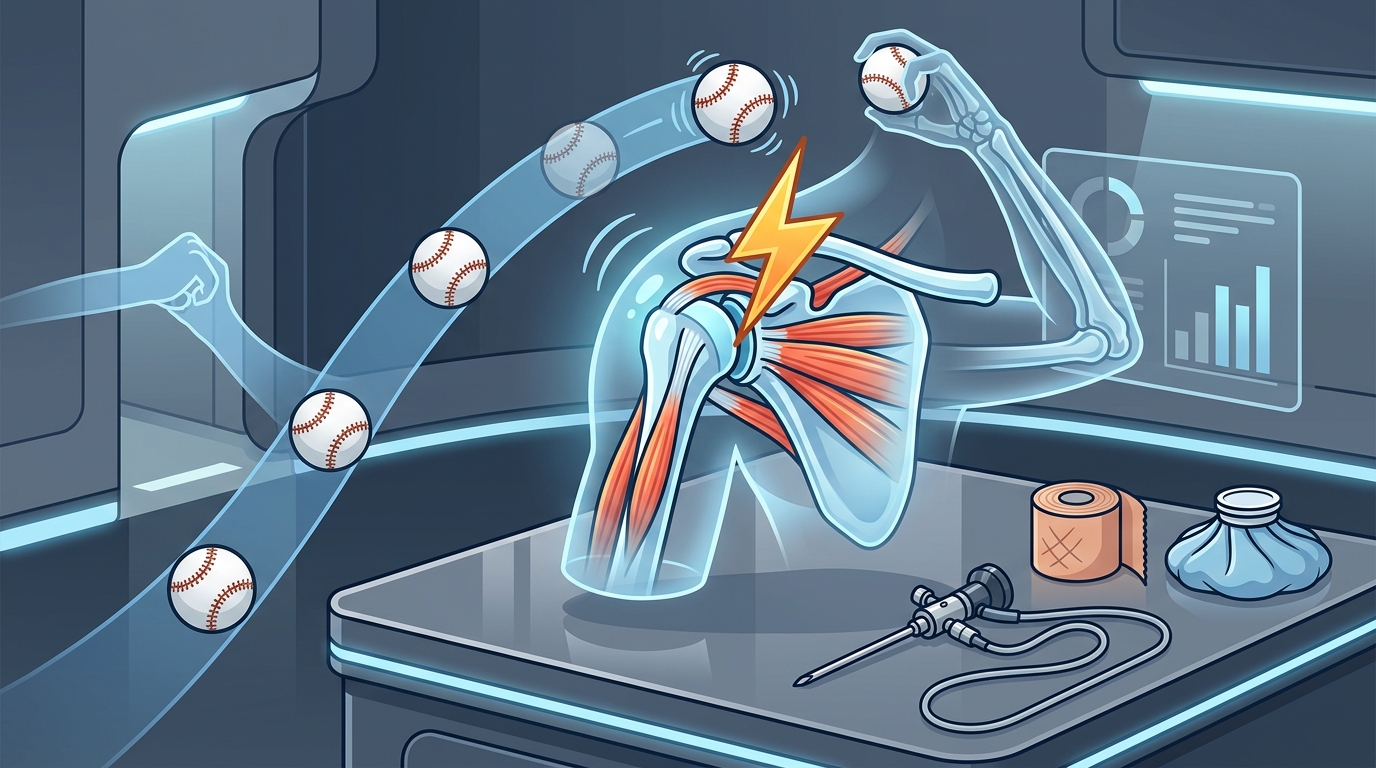
Throwing places extreme torque on the shoulder joint. The deceleration phase of a throw places significant stress on the posterior structures of the shoulder. Several specific injuries are responsible for the clicking and pain you are experiencing.
SLAP Tears
A SLAP tear involves the superior labrum, the cartilage ring that deepens the shoulder socket. This injury is prevalent in overhead athletes. The tear occurs at the attachment point of the biceps tendon. When the biceps pulls on the damaged labrum during the throwing motion, it creates a clicking sensation and deep shoulder pain. According to orthopedic research, SLAP tears are a primary cause of throwing pain in baseball and softball players.
Rotator Cuff Tendinitis
The rotator cuff is a group of muscles and tendons that stabilize the shoulder. Overuse can cause inflammation in these tendons. This condition, known as tendinitis, leads to pain when lifting the arm. The inflamed tendon may catch on the bone, causing a click. Chronic tendinitis can progress to tendonosis, where the tissue degenerates. Treatment often involves targeted physical therapy to restore balance and strength.
Shoulder Instability
Instability occurs when the shoulder joint does not stay in place during movement. This can be due to loose ligaments or previous dislocations. When the joint shifts, it creates a clicking sound and a sense of vulnerability. Athletes with instability often fear throwing because of the risk of dislocation. Surgical stabilization may be required if conservative treatments fail.
The Diagnostic Process at Lubbock Sports Medicine
Accurate diagnosis is the cornerstone of effective treatment. At Lubbock Sports Medicine, we utilize advanced diagnostic tools to identify the exact source of your pain. General practitioners may miss subtle structural issues that sports medicine specialists detect routinely.
The diagnostic process typically begins with a comprehensive physical examination. Our physicians assess your range of motion, strength, and specific pain triggers. They perform specialized tests to isolate the injured structure. For example, the O'Brien test helps identify SLAP tears, while the apprehension test checks for instability.
Imaging plays a crucial role in confirming the diagnosis. X-rays rule out bone spurs or fractures. MRI scans provide detailed images of soft tissues, including ligaments and cartilage. In complex cases, a CT arthrogram may be used to visualize the joint capsule. This thorough approach ensures that the treatment plan addresses the root cause, not just the symptoms.
Our team includes board-certified physicians who specialize in orthopedic sports medicine. Our physicians are members of the American Academy of Orthopaedic Surgeons and the American Orthopaedic Society for Sports Medicine. This expertise allows us to offer the latest treatment options for active individuals.
Treatment Options and Recovery
Treatment for shoulder clicking and pain depends on the severity of the injury and your activity level. Most cases can be managed without surgery. However, severe structural damage may require surgical intervention.
| Treatment Type | Best For | Expected Outcome |
|---|---|---|
| Physical Therapy | Mild to moderate tendinitis, minor instability | Restored strength and pain-free motion |
| Anti-inflammatory Medication | Acute pain and swelling | Temporary pain relief |
| Arthroscopic Surgery | SLAP tears, severe instability | Structural repair and long-term stability |
| Robotic Assisted Joint Replacement | Advanced arthritis in older patients | Pain relief and improved function |
Physical therapy is often the first line of defense. A structured rehab program focuses on strengthening the rotator cuff and scapular stabilizers. This strengthens the dynamic support system around the shoulder. Lubbock Sports Rehab provides state-of-the-art equipment and expert guidance to accelerate your recovery.
If surgery is necessary, arthroscopic techniques are commonly used. These minimally invasive procedures allow for faster healing and less postoperative pain. Our physicians specialize in joint reconstruction and sports injuries. We strive to provide the highest quality of orthopaedic care possible.
Prevention Strategies for Athletes
Preventing shoulder injuries requires a proactive approach. Athletes must focus on proper throwing mechanics and adequate conditioning. Poor mechanics place excessive stress on the shoulder joint, increasing the risk of injury.
Strengthening the muscles around the shoulder is crucial. A balanced program should include external rotation exercises and scapular stabilization drills. These exercises help maintain the ball of the humerus in the socket during high-velocity movements.
Rest and recovery are equally important. Overuse is a major contributor to shoulder pain. Athletes should adhere to pitch counts and take regular breaks from throwing. Listening to your body and addressing minor pains early can prevent them from becoming major injuries.
Our Outreach Athletic Training program offers specialized care for athletes. We work with teams and individuals to develop injury prevention protocols. This proactive approach helps athletes stay healthy and perform at their best.
Key Takeaways
- Shoulder clicking during throwing often indicates a SLAP tear or rotator cuff issue.
- Early diagnosis by a sports medicine specialist is critical for optimal recovery.
- Physical therapy is the primary treatment for most non-surgical shoulder injuries.
- Lubbock Sports Medicine offers specialized care for athletes in the South Plains.
- Proper throwing mechanics and conditioning reduce the risk of shoulder injuries.
- Our physicians are board-certified and members of leading orthopedic societies.
- Robotic assisted joint replacement is available for patients with advanced arthritis.
Frequently Asked Questions
What causes the clicking sound in my shoulder?
The clicking sound is usually caused by a tendon snapping over a bone or a loose piece of cartilage moving within the joint. In throwers, this is often due to a SLAP tear or shoulder instability.
Is shoulder pain when throwing normal?
No, shoulder pain is not normal. It indicates an underlying injury such as tendinitis, bursitis, or a labral tear. Ignoring the pain can lead to chronic issues and long-term damage.
How is a SLAP tear diagnosed?
A SLAP tear is diagnosed through a physical examination and MRI imaging. Special tests like the O'Brien test help identify the injury during the clinical assessment.
Do I need surgery for shoulder clicking?
Not necessarily. Many cases of shoulder clicking can be treated with physical therapy and activity modification. Surgery is reserved for severe tears or cases where conservative treatment fails.
How long does recovery take?
Recovery time varies depending on the injury and treatment. Physical therapy may take several weeks to months. Surgical recovery can take six to nine months for full return to sports.
Can I continue to play sports with shoulder pain?
It is not recommended to play through shoulder pain. Continuing to throw can worsen the injury and prolong recovery. Seek medical advice before returning to activity.
What is robotic assisted joint replacement?
Robotic assisted joint replacement is a surgical technique that uses robotic technology to enhance the precision of joint replacement surgery. It is typically used for arthritis rather than sports injuries.
Contact Lubbock Sports Medicine
If you are experiencing shoulder clicking and pain when throwing, do not wait for the problem to resolve on its own. Early intervention leads to better outcomes and faster recovery. Contact Lubbock Sports Medicine today to schedule an appointment with one of our specialists.
We are the premiere sports medicine, adult joint reconstruction, and rehab center in the South Plains. Our team is dedicated to helping you return to the activities you love. Call us at 806-792-4329 or visit our online registration page to get started.